

Exited founder (Nasdaq Listed) Stanford MSx'26 Thinking in public
Palo Alto
Joined July 2026
- Tweets158
- Following100
- Followers1.5K
- Likes8








1/ Viktor AI went from almost zero to a $50M+ run rate in 7 months. One person runs growth and partnerships: 1,200+ creators, 300 new every month.
2
2
214
1/ A theory going around Silicon Valley on where the money goes in the AI era: the giants building the infrastructure (frontier labs, big tech, NVIDIA) and small companies that pull the tech into their workflow fast.
1
4
335
Google lost ~$500B in market value after earnings.
Total revenue beat. Search ad revenue slowed.
AI Mode answers at the top, fewer people scroll to the ads, and ads still pay Google's bills.
Textbook innovator's dilemma: cannibalize your own product before a competitor does.
6
250
1/ I threw my wife a surprise party at Stanford for 80 people, Brazilian barbecue included. I organized it with Grok Bot.
1
7
407
Gartner projects $576.5B in AI services for 2026. More than AI software, cybersecurity, agents and generative models combined.
Here in the Valley, I'm seeing startups start with services and turn delivery into a product. I think that's a huge opportunity.
2
8
388
Can you vibe-code attention?
I’m testing my own videos and fully synthetic channels. So far, the synthetic ones are growing faster.
AI changes testing, learning and scaling what works. I still believe in human relationships. The GTM operation around them has already changed.
5
275
Every job title ends in engineer now.
Go-to-market engineer. Finance engineer. Sales engineer. Social media engineer.
What interests me is how much the job description is changing along with the name.
3
3
235
The most genius part of Dyson's R$2,500 AI toothbrush, for me, is the toothpaste.
Putting AI and cameras in a toothbrush is the easy headline. The killer move is the business model on top.
1
2
305
You live in a bizarre AI bubble.
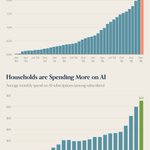
In April 2026, only about 2% of US households in the base PNC analyzed were paying for an AI subscription. That's the data a16z shared in this chart.

1
150
$100M in revenue in the first 7 days, after one video posted on X.
Told like that, it sounds like they posted a great video and waited. Behind the Jev launch there was brutal distribution orchestration.
1
1
156
In 2018, I built my personal profile before I had a product. Or a company.
It later became the business's main acquisition channel.
Today we'd call that founder-led growth. Apparently, an old idea needed a new name.
A recent piece by Nizan put it well: before you have a brand, you have a story.
Founders can get so obsessed with the product that their positioning becomes a comparison chart. Look at the competitor's features, pricing and messaging. Try to do the same thing a little better.
Once you're comparable, you're also replaceable.
Patagonia combined clothing with a manifesto. Tesla combined cars with software. Those combinations changed how people understood the companies and who they compared them with.
Your story can do that too. A competitor can study your features. They can't copy the choices that got you here.
I'm thinking about this as we prepare to build a B2B company.
We might be completely wrong, but we're betting that B2B positioning doesn't have to be boring. Marketing can go beyond dinners, outbound and data enrichment.
We may sell to a company. A person still decides to buy.
I'd rather put my face and story behind that bet than spend years trying to be a slightly better version of somebody else's company.
I feel like a pain in the ass doing follow-ups.
One of the less obvious lessons of building an AI company: once you get someone's attention, you have to come back. And come back again.
1
119
I live in a place that values questions more than answers.
Some questions say a lot about a company's AI maturity. Four I'd ask if I were leading that agenda:
1
3
236
I think marketing just got a third axis beyond B2B and B2C.
B2A.
Someone traveling asks a chatbot for a restaurant nearby. Then does the same to pick a supplement, compare an appliance, or find a lawyer or doctor.
1
3
153
1/ Instinct reminds me of Ronaldinho's no-look pass.
It looks like a personal assistant. My read is that the bigger bet is fintech: build a relationship with users, then become their personal shopper.
2
4
234
One of the biggest marketing contradictions of the year: the making-of for the new Mac Mini ad got more views and engagement than the launch video itself.
1
111
Don't rent your intelligence.
A lot of companies are turning into dashboard factories. HTML factories. Everyone produces more, builds their own agents and workflows. But most of it sits in silos.
1
4
173
Learn to code.
Coding doesn't matter anymore.
What matters is product.
Building product is easy. Distribution is what matters.
Forget distribution. The hard part is solving hard problems from first principles.
First principles are abstraction. Value is in the application layer.
1
1
140
If part of your revenue depends on customers not paying attention, agentic commerce should worry you.
Patrick Collison wrote a reflection on agents in the economy that stuck with me: companies have always had more optimization power than consumers.
5
5
309