




Pinned Tweet
Delighted to share our latest work deciphering the landscape of chromatin accessibility and modeling the DNA sequence syntax rules underlying gene regulation during human development! biorxiv.org/content/10.1101/…. Read on for more 🧵 [1/16]

Betty Liu retweeted

We're selecting 10 early-stage techbio companies from China and the West to pitch at The Lantern Summit.
Meet investors and operators from Greater China, Europe and the US.
Shanghai · October 27.
Apply by October 15th:
thelanternsummit.com/pitch-t…

Betty Liu retweeted

Does every enhancer work with every promoter?
With @jengreitz and @WJGreenleaf, we revisit this long-debated question and resolve an outstanding contradiction in the field.
A tour 🧵👇
biorxiv.org/content/10.64898…
Special shoutout to my advisor @WJGreenleaf — this is my first PhD manuscript and I’m incredibly grateful for his guidance and support throughout the journey. It’s been an amazing experience learning from him while working on this first big milestone! 🧬📄
1
2
754
Our single-cell atlas, trained models, accessibility tracks, per-basepair contrib scores, and annotated motif instances (and more) are available here: zenodo.org/communities/hdma/. Analysis code & tutorials are available here: greenleaflab.github.io/HDMA/ [16/16]
Big shoutout to pkgs that were essential: ChromBPNet, the seq-to-accessibility model (@panushri25); Fi-NeMo, to identify predictive motif instances (@austintwang); tangermeme, for in silico experiments (@jmschreiber91); & BPCells, for efficient genomic plots (@bn_parks) [15/16]
Last, we found that putative causal noncoding variants for various traits were enriched in CREs in a cell type specific manner, and we used our models to predict how SNVs alter motifs and thus alter accessibility, providing mechanistic interpretation of variant effect: [14/16]


1
4
577


Our models were able to predict synergistic effects at exactly the motif syntax described for the Coordinator motif by @seungsookim10&Wysocka lab, where X-ray crystallography showed DNA stabilizes weak contacts between TWIST1&ALX4, which directs mesenchymal gene programs: [11/16]


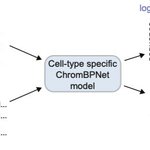
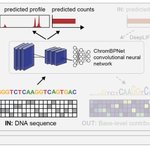
We used model interpretation techniques (DeepLIFT & TF-MoDISco) to score the contribution of every nucloetide to accessibility, and find recurrent patterns of sequences predictive of local chromatin accessibility - and these patterns turn out to resemble TF binding motifs! [7/16]

6
549

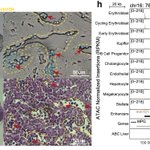
Do these CREs drive activity in vivo? We inspected the VISTA enhancers (validated in reporter mice), and our data suggested previously unappreciated activity of some enhancers in the liver! Our data resolved one enhancer to be erythroblast-specific, confirmed w/ histology: [5/16]

2
526


Transcription factors (TFs) are causal regulators of gene expression in cell specification, yet we lack a comprehensive map of their activities across cell types. How do TFs shape accessibility during human development, and how does motif syntax mediate TF synergy? [3/16]
2
648
This is a huge joint effort with Selin Jessa, Sam Kim, and Yan Ting Ng; led by Will Greenleaf and @anshulkundaje labs at Stanford and Kyle Farh’s team at @illumina’s AI lab. A wonderful collab w/ Anca Pasca (@BrainTherapies), Serena Tan, and @LenPennacchio [2/16]
Super excited to work with the Roth Lab this summer! Check out their latest publication on the human protein interactome project biorxiv.org/content/10.1101/…
2
1