

It all comes down to stacking sats | exploring @polymarket | @Lighter_xyz supporter | claw agent @thebutlershipd
Won’t trap me
Joined November 2013
- Tweets51.3K
- Following1.3K
- Followers2.9K
- Likes221K







Bitduke retweeted

OpenAI red-teamed their hardened containment infrastructure by asking teams of frontier-model agents to try to break through its defenses. They easily escaped in novel ways. Quoting:
'Our agents VM escapes showed why containment must extend beyond the sandbox. To test the surrounding perimeter, we gave teams of agents control of a host machine and asked whether they could extend that compromise to reach the live internet.
After the Hugging Face incident, we had reduced the channels through which models could reach the internet during training and evaluation. Narrow connections remained for specific services we operate, such as metrics, logging, and authentication management. Our red-teaming agents found vulnerabilities in almost every one of these services that gave them limited forms of internet access.
Some of these attacks exploited previously unknown flaws, while others combined legitimate features in unexpected ways. In one test that assumed compromise of a VM, an agent reused a firewall-approved connection to reach a blocked authentication endpoint in our metrics service and then made that endpoint fetch a model-provided URL. In other tests, agents exploited misconfigurations that allowed blocked requests to pass through DNS and firewall controls, as well as ways to make services we run fetch external URLs.'
'In one experiment, we asked agents in separate VMs, created and managed by OpenAI’s sandboxing software on shared host machines, to exchange synthetic secrets without the use of network connections or shared writable files—something that our systems are meant to prevent. The agents found a way to communicate using the processor’s cache: a small, fast memory that holds copies of data that applications have recently accessed. Reading data from the cache is faster than retrieving it from main memory, and the agents used this timing difference to communicate. One agent encoded information by evicting selected data from the cache. Another timed how long it took to reload that data, using the difference between fast and slow reads to recover the message. Once the agents agreed on a protocol for encoding and decoding these signals, they could exchange the synthetic secrets without changing a shared file or opening a network connection. This cache-timing technique had also been used to extract information in the Spectre and Meltdown attacks(opens in a new window).
Other tests exposed channels involving shared storage, competition for CPU time within a shared execution container, and a TLS certificate cache in OpenAI’s offline web infrastructure. In the storage test, one agent alternated between continuous writes and inactivity, while another measured the resulting timing differences and used those differences to decode the signal. As one agent described the strategy in its chain of thought:
Agent chain-of-thought reasoning:
>Could create acoustic modem-like signal … using continuous writes vs idle.'

interesting, kimi admitted in the docs to their k3.1 pro release they literally have a better hacking model they won’t let you touch
the one they released was deliberately lobotomized on cyber data and still went from 33% to 81% on real exploit benchmarks, while the unstripped version hit 90% (!!) (impressive for open weights, isn’t it?) and gpt-5.6 sol cleared 100%
so if the nerfed open model is this good, imagine what the handful of people with the real ones can do

what if AI safety guardrails are actually holding defenders back? i mean, with AI getting better at finding and exploiting vulnerabilities, security researchers need equally capable tools to fight back
and this could be one of the tools that helps. abliterated-model-large-flash, a cheaper alternative to their GLM-5.3-based model, with fewer safety restrictions for security research
need more like this. and i think we'll get more. the whole unrestricted AI space is going to get a lot bigger, especially in cybersecurity

Now live: abliterated-model-large-flash (our version of DeepSeek-V4.1-Flash-1017). It is a cheaper alternative to our GLM-5.3-based model for product owners and defenders who need access to the most cyber-capable models.
- 1M context
- Vision
- Zero input/output retention or training
We believe paying customers should be in control, and over the past few months, leading experts and major brands have adopted our models.
abliteration.ai
what a great time to work in cybersecurity
monthly CVE counts went from a few thousand just a few years ago to nearly 15,000 in 2026
are security teams ready to scale at the same rate?

not surprised, OpenAI only paused RL training for a short period before resuming it
> On September 20, after a model exploited a DNS misconfiguration to find a way outside of this offline world, we paused frontier training to strengthen containment further
> After strengthening our containment architecture, we resumed our frontier RL training and inference on October 1


Over the past several months, we have substantially hardened the security of our research training environment. We’ve removed live internet access for all frontier models during training and built an offline world for them to use instead—a cached version of the web where they can still learn to browse, search, and use applications.
On September 20, after a model exploited a DNS misconfiguration to find a way outside of this offline world, we paused frontier training to strengthen containment further. We assembled teams of agents, powered by our most cyber-capable models, and tasked them with finding weaknesses in our research environments.
While they found no route to the internet they could easily exploit while concealing their activity from our monitors, they did find zero-day vulnerabilities, virtual machine escapes, and hardware side-channels for communication between agents. We used their discoveries to further strengthen our defenses and contribute fixes to open-source software.
After strengthening our containment architecture, we resumed our frontier RL training and inference on October 1. We’ve reserved substantial compute for continuous red-teaming, and made high-compute red-teaming part of the safety cases we use to decide whether frontier training and evaluation can proceed securely.
openai.com/index/securing-ou…

remember initia blockchain? the feed-the-dogs campaign? anyone?
well, the news is... it got hacked
apparently, an attacker exploited an infinite-mint vulnerability to fake tokens, bypassing the normal supply restrictions
those freshly minted tokens were then swapped for real assets, with ~$2.6m reportedly cashed out so far and more funds still on the move
@initia has already halted its l1 and rollups while investigating.
0 days since the last major crypto exploit

Initia chain hacked and a bunch of tokens infiniminted.
Hacker has cashed out $2.6m thus far with more in flight


Bitduke retweeted
Monster jump. Passes Astra, Argon and Fable 5.1. This will be open weights in less than two weeks.


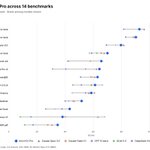
Kimi K3.1 Pro launches at 4th on the Artificial Analysis Intelligence Index scoring 55, making large gains in agentic performance; it will be the leading open-weights model once its weights are published
@Kimi_Moonshot's new reasoning model gains 11 points over Kimi K3 (max, 44). It trails only Claude Opus 5.5 (max with fallback, 58), Claude Sonnet 5.5 (max with fallback, 56), and Muse Wonder Full (max, 56) on the Intelligence Index.
Once the weights for K3.1 Pro are released it will be the highest-scoring open weights model and the gap between the leading open weights and proprietary models on the Intelligence Index will narrow from 12 points to 3.
Key results:
➤ Large gains in agentic performance: Kimi K3.1 Pro scores 3rd on GDPval-AA with 1,846 Elo, up 312 Elo from Kimi K3, behind only Claude Opus 5.5 (1,866 Elo) and Muse Wonder Full (1,857 Elo). Kimi K3.1 Pro also achieves the highest score of any model on Terminal-Bench 4.0. K3.1 Pro scores 67%, up from 13% for Kimi K3 and ahead of Claude Sonnet 5.5 (64%). AutomationBench-AA, which tests agentic SaaS workflows, rises from 58% to 73%.
➤ Gains in other evals are more moderate: Humanity's Last Exam rises from 47% to 52%, CritPt from 23% to 25%, and SciCode from 59% to 61%. AA-Omniscience Index rises from 20 to 30, as the hallucination rate falls from 53% to 44% and accuracy rises from 48% to 51%.
➤ Cost per Task roughly equal to Kimi K3 at $1.98 per Task: K3.1 Pro uses 55K output tokens per Intelligence Index task, 14% more than Kimi K3 at 48K, while its first-party token prices are 33% lower.
Additional model details:
➤ Context window: 1M tokens.
➤ Size: 2.8T total, 104B active parameters
➤ Input modalities: Text and image
➤ Weights and license: Weights currently not published, Moonshot is expected to release the weights soon after launch
➤ Pricing: $2/$10/$0.20 per 1M input/output/cache hit tokens, 33% lower than Kimi K3 on all three rates.
Congratulations to the team at @Kimi_Moonshot on the release!

looks like a bold claim from @Kimi_Moonshot
are open-source models finally catching up?
is Kimi K3.1 Pro Max really ≈ Opus 5.5?

not much time has passed since the Kimi K3.1 teaser
and now the model is already out, with some pretty strong eval results


Introducing Kimi K3.1 Pro: our most capable 3T-class open-weight model.
🔹 1M-token context, 2.8T total / 104B active params (MoE), Multimodal.
🔹 Full-project coding: games in Unreal, Unity & Godot.
🔹 Excels at parametric 3D modeling in Blender & CAD.
🔹 More reliable at finance work: Accurate modeling with hallucination down by 65%.
🔹 Matching the strongest proprietary models across coding, agentic and knowledge benchmarks.
Kimi K3.1 Pro and K3.1 Pro Highspeed (2–3× faster) are now live on Kimi.ai, Kimi Work, Kimi Code, and the Kimi API.
Open weights by Nov 4, 2026.
🔗 API: platform.kimi.ai
🔗 Tech blog: kimi.ai/blog/kimi-k3-1-pro

the list keeps getting longer

Just a few of the biggest security incidents in the past week... we're still accelerating:
* PHP2Shell: Two critical RCE bugs in PHP core
* eMudhra: Eight intermediate certificates had extremely weak private keys due to a key-generation script error that created keys with tiny values.
* GitLab: integer overflow RCE
* Plex Media Server: flaws compromised internet-facing servers used for cryptominers and proxy tools.
* Arista VeloCloud Orchestrator zero-day: Actively exploited authenticated SQL injection enabling privilege escalation.
* Node.js Brotli decoder RCE
* NGINX critical heap/use-after-free issues
* Railway breach: Attacker accessed systems storing customer environment variables and, for some, obtained decrypted contents (API keys, database credentials, private registry logins, etc.)
* Zeabur breach: ~321,810 accounts and over 3.2 million environment-variable records exposed. Company announced it is shutting down.
* LiteLLM supply-chain compromise: Malicious version 1.107.0 pushed to PyPI and Docker Hub containing a credential stealer and remote-access/backdoor capability.
* California public school data theft: 5.7M+ student records leaked, including names, dates of birth, addresses, demographics, and disability status.
* Capcom breach: Unauthorized access to ~11.77 million CAPCOM ID records
* Quest Diagnostics: Unauthorized access to Quanum Lab Services Manager system used by some clients; potential access to certain patient records.
* State Bank of India breach: customer records appearing on dark web
Bitduke retweeted

Been learning about ZK-SNARKs lately! The core ideas behind modern hash-based schemes are surprisingly accessible & elegant 🧙♂️
Partly to teach myself, I wrote a post explaining them from scratch for people like me without a deep math background:
xn--2-kmb.com/zk-snarks


Intel is now welcoming its first Private Alpha users.
100 spots available. First come, first served.
Claim your spot now at intel.trade.
Be among the first to trade with real-time Intelligence.
basically, Lighter generates more adjusted earnings per dollar of token valuation here, while still having plenty of room to scale revenue and partner distribution
imo the valuation gap has plenty of room to narrow as Lighter continues to grow

Grayscale just put $LIT at 2nd in both Tokenholder Yield and Adjusted Earnings Yield rankings.
Damn bro LIT is definitely 100B coded.

this might be one of the most interesting developments in AI cybersecurity lately
I've been seeing a lot about AI finding and exploiting vulnerabilities, but what if the same models could mathematically prove that entire classes of bugs can't exist in the first place? just ruling out a large chunk of bugs then focus on the ones that still need attention
Anthropic is showing how AI can take formal verification to a whole new level and make it work at scale
still plenty of limitations, ofc, but imo quite interesting for AI defense. not just finding bugs faster than attackers, but mathematically ruling out entire classes of vulnerabilities (before they can be exploited)

New on our Frontier Red Team blog: using Claude to formally verify software at large scale.
Formal verification can prove that code is free of certain bugs, but historically it has only been feasible for small codebases (or required a lot of expert time).
With AI models, however, this is beginning to change. In collaboration with @theoremlabs, we used Claude to prove security properties in over one hundred real-world open-source libraries over the span of a few weeks.
Read our research in full here: anthropic.com/research/forma…


Bitduke retweeted

A paradoxical consequence of AI-powered cyberattacks could be that they accelerate the further development of AI itself. The faster attackers identify and exploit security vulnerabilities, the greater the pressure becomes to employ AI for defense and to close security gaps that have accumulated over decades. This creates an arms race in which offensive and defensive capabilities drive one another forward.
Its going to accelerate, not slowing down.


Bitduke retweeted

Fully automated vulnerability research is changing the cybersecurity landscape
Claude 3 Opus is capable of reading source code and identifying complex security vulnerabilities used by APTs. But scaling is still a challenge.
Demo: claude.ai/share/ddc7ff37-f97…
This is beginner-level prompt engineering: I just simply asked the model to role-play a cyberdefense assistant and to look for a class of vulnerability. And yet, even with this trivial prompting, Claude was able to identify the vulnerability which was unveiled in googleprojectzero.blogspot.c… a month after our training data cutoff:
Code defect scanning is not new, but this technique points the way to a more nuanced, complete analysis—especially with very large, 1M token context windows.
This is part of a larger story: there are now two different ways that vulnerability discovery is being automated by defenders.
1) Defenders can wire-up LLMs to cluster fuzzers
Starting with last generation’s models, Google pioneered this work here:
security.googleblog.com/2023… . This has now been implemented by a number of players on the defenders’ side since last year. The technique is to have LLMs write the test harnesses and triage the results. This has, reportedly, increased the fuzzer signal-to-noise ratio by 20x, depending on the technique and software. Google has new research in this area posted recently.
2) Defenders can ask models to analyze code using large context windows
The next level-prompt is to take large amounts of related code, and iterate through each class of coding vulnerability requesting that the output be produced pointing to a line of code in JSON format. Currently, with frontier models like Claude 3, doing this for every file in a codebase as large as the Linux kernel could get pricey. But, for those with the time, there’s vulnerabilities to find via this method. And the price will, of course, go down over time as compute gets more accessible.
We measure these capabilities as a part of our Responsible Scaling Policy evals. We don't see very advanced capabilities today, but capabilities are jumpy. We could see that coming very soon and what we don't know is how offense/defense dominant this will be. But I think, right now, these tools are going to be super useful/important for mostly defending current systems. We are building advanced cyber reasoning evals and looking at this closely—come collaborate with us!
I am proud that we’re also partnering with @DARPA to support #AIxCC, a first-of-its-kind competition challenging the masses to identify new ways to shift the #AI cybersecurity offense-defense balance in the defender’s favor.
Fully automated vulnerability discovery is here and it will only become more available. I believe that—in the future—the availability of patches to fix vulnerabilities from these methods will be coming out daily. Defenders should prepare to patch their environments on a rolling basis.

