

Christ-follower, Husband, Father, Pastor
Peabody, MA
Joined August 2009
- Tweets522
- Following313
- Followers200
- Likes158






Brady Glaser retweeted

As a young minister, I aspired to "do great things" for God.
But after watching many fizzle out and fall away from Jesus, my ambitions have been refined.
Today I aspire to simply grow in my love for God, make it to glory, and bring as many with me as I can.
Jesus, hold me fast
Brady Glaser retweeted

𝐖𝐡𝐚𝐭 𝐌𝐲 𝐀𝐥𝐥-𝐒𝐭𝐚𝐫 𝐌𝐋𝐁 𝐏𝐢𝐭𝐜𝐡𝐞𝐫 𝐃𝐚𝐝 𝐓𝐚𝐮𝐠𝐡𝐭 𝐌𝐞 𝐀𝐛𝐨𝐮𝐭 𝐆𝐨𝐝𝐥𝐲 𝐂𝐨𝐦𝐩𝐞𝐭𝐢𝐭𝐢𝐨𝐧
It was a hot summer evening and getting hotter as I worked up a sweat, trying in vain to get an out as a pitcher on my Little League team. After another bad pitch, my frustration boiled over. I simply walked off the field. After the game, I headed to the car but was stopped by my dad. His posture suggested getting in the car wasn't an option. Instead, he said, I was going to walk over and apologize to my teammates and coach for how I acted.
That was my dad, always more concerned with the man I was becoming than the athlete I was.
My dad is Scott McGregor, a Major League Baseball pitcher for 11 years with the Baltimore Orioles. As a pitcher, he won 20 games, went to an All-Star game in 1981, and won a World Series in 1983—pitching the decisive game (a complete game shutout against the Phillies).
But of all his accomplishments, the thing I’m most proud of about my dad is how he has always prioritized character and his faith in Christ above athletic achievement.
Athletic competitions can be cutthroat and ugly. Many sports are mired in scandal and corrupted by greed and narcissistic glory-seeking. Winning at all costs often comes above playing with integrity.
As a faithful Christian who was also a professional athlete, my dad modeled a different way of being a competitor—no less ambitious and hard-working but with a posture that glorified Christ above himself. Here are a few lessons I gleaned from him, and other Christian athletes, that might be helpful for believers seeking to glorify God through sports.
𝟭. 𝗣𝗿𝗶𝗼𝗿𝗶𝘁𝗶𝘇𝗲 𝗰𝗵𝗮𝗿𝗮𝗰𝘁𝗲𝗿.
In whatever we do, including competing, our highest aim should be to honor God (Col. 3:23). And God is more honored in how we play than in whether we win.
During the 1925 U.S. Open major championship, legendary golfer Bobby Jones called a penalty on himself. His opponent and the rules official tried to discourage him from going through with it, but he signed his scorecard with a one stroke penalty and it cost him the tournament. John Wooden benched star players who’d violated team rules during big games. Eric Liddell said no to his dream of running his event at the Olympics to honor his conscience by not running on a Sunday. Most recently, Scottie Scheffler—in spite of his mounting victories—has continued to downplay the ultimate importance of winning compared to greater goods like family and faith.
𝟮. 𝗦𝗲𝗲𝗸 𝗵𝗶𝗴𝗵𝗲𝗿 𝗽𝗲𝗿𝗳𝗼𝗿𝗺𝗮𝗻𝗰𝗲, 𝗻𝗼𝘁 𝗽𝗿𝗶𝗱𝗲𝗳𝘂𝗹 𝗱𝗼𝗺𝗶𝗻𝗮𝗻𝗰𝗲.
Athletes can likely think of a big game or match that elevated them to their highest ability level. The potential was always there, but the competitive challenge unlocked it. As Christians, instead of seeking to dominate our opponents and crush the competition, we should enjoy the thrill of high performance that comes when we go up against other excellent athletes. We can root for them to do well—this honors them, and it glorifies God as we're pushed to new heights of skill.
𝟯. 𝗛𝘂𝗺𝗯𝗹𝗲 𝘆𝗼𝘂𝗿𝘀𝗲𝗹𝗳 𝗮𝗻𝗱 𝗴𝗶𝘃𝗲 𝗚𝗼𝗱 𝘁𝗵𝗲 𝗰𝗿𝗲𝗱𝗶𝘁.
Paul writes in 1 Corinthians 4:7, “What do you have that you did not receive? If then you received it, why do you boast as if you did not receive it?” Not everyone is born with athletic skill and ability. We're responsible for stewarding the gifts we have, which requires gratefully acknowledging they are gifts. We didn’t do anything to deserve them.
Rather than giving ourselves all the credit when we achieve success, we should praise God first and foremost. He made us. He sustains us. He’s the One who deserves the glory.
𝟰. 𝗕𝘂𝗶𝗹𝗱 𝘆𝗼𝘂𝗿 𝗵𝗼𝘂𝘀𝗲 𝗼𝗻 𝘁𝗵𝗲 𝗿𝗼𝗰𝗸.
Building your life on athletic achievement is like building a house on sand. It won’t last. It’s foolish. Only Christ is the rock that never moves. Building your life on him is wisdom (Matt. 7:24).
Colt McCoy modeled this posture after the 2010 NCAA football national championship. Despite leading his team to the title game, McCoy got injured in the first quarter and was forced to cheer on his team from the sidelines. His team lost. During a postgame interview, with the opposing team’s celebratory confetti falling around him, McCoy was emotional and struggled to find the words. Then he showed the world why Christ is immeasurably more valuable than championships: “I always give God the glory. I never question why things happen the way they do. God is in control of my life and I know that if nothing else, I’m standing on the rock.”
Scheffler echoed this recently. He's highly competitive, saying, “I love winning. I hate losing.” Yet his identity is rooted in the cross of Christ, not in athletic success. He continued, “It doesn't matter if I win this tournament or lose this tournament. My identity is secure forever.”
For Christian athletes in high-pressure competitive contexts, this is perhaps the greatest reminder—and ironically, the biggest motivating boost. It’s OK to love winning and hate losing. It’s OK to be highly driven and fierce in your sport. But none of that is the foundation of your identity, which is already secure in Christ. So let that foundation fuel you to compete for a glory and purpose beyond yourself.
My dad had many accomplishments throughout his baseball career, but I was especially proud of him at his retirement press conference. After thanking the Orioles organization and the fans, he got up to leave the room. To the surprise of many, the press gave him a standing ovation. My dad’s friend turned to him and said, “Scott, I’ve been here when all the greats have retired, and I’ve never seen the press give a standing ovation to anyone.”
Why did they stand for him? It was because of the way my dad treated people, including the press. It was because he sat by his locker and answered all their questions even after tough losses. It was a testament to his faith and integrity. It was a reflection of how, amid all his success, he prioritized things—like other people—that were more important than baseball.
("𝗪𝗵𝗮𝘁 𝗠𝘆 𝗔𝗹𝗹-𝗦𝘁𝗮𝗿 𝗠𝗟𝗕 𝗣𝗶𝘁𝗰𝗵𝗲𝗿 𝗗𝗮𝗱 𝗧𝗮𝘂𝗴𝗵𝘁 𝗠𝗲 𝗔𝗯𝗼𝘂𝘁 𝗚𝗼𝗱𝗹𝘆 𝗖𝗼𝗺𝗽𝗲𝘁𝗶𝘁𝗶𝗼𝗻" by Mike McGregor (@m5mcgregor). We can understand a culture’s longings by looking at what it creates. Sign up to receive monthly updates from Brett McCracken as he offers timely insights into the latest movies, music, and cultural trends at tgc.org/newsletters)

Brady Glaser retweeted

Student ministry is the HARDEST ministry in the church.
Why?
- age/maturity gap (6th-12th grade)
- availability (sports, dance, etc.)
- cultural acceptance
The church with an effective student ministry will reach (and keep) families.
🧵 5 things you must get right:
Brady Glaser retweeted

🚨GIVEAWAY ALERT🚨
Enter to Win an ABHS Hoodie!
These hoodies feature a hockey jersey lace and are perfect for spring. Winners will select their preferred style and size.
Open to residents of the US and Canada. See contest rules for details.
allblackhockeysticks.com/giv…
Brady Glaser retweeted

A Ukrainian family sings “He Will Hold Me Fast.”
HT: @donald_cline
Brady Glaser retweeted

We've commended the expressive, individualistic, sovereign self, as an ultimate identity & moral virtue, yet are puzzled when fellow citizens care very little about the common good. We've planted selfishness in every institution & are reaping its harvest as a society.
Brady Glaser retweeted

You know the politically acceptable posture of a room, whether left or right, by who is given license to be rude or angry without the room taking offense.

Just wait until your 2003 version asks you who won the simulation game on EA Sports NCAA Football

Minnesota fans are arguing CFP worth over a Nick Saban-coached Alabama team that just lost to Ed Orgeron’s top-ranked LSU team in a game that featured 87 total points and took place in front of President Donald Trump.
The 2003 version of me is very confused.
2
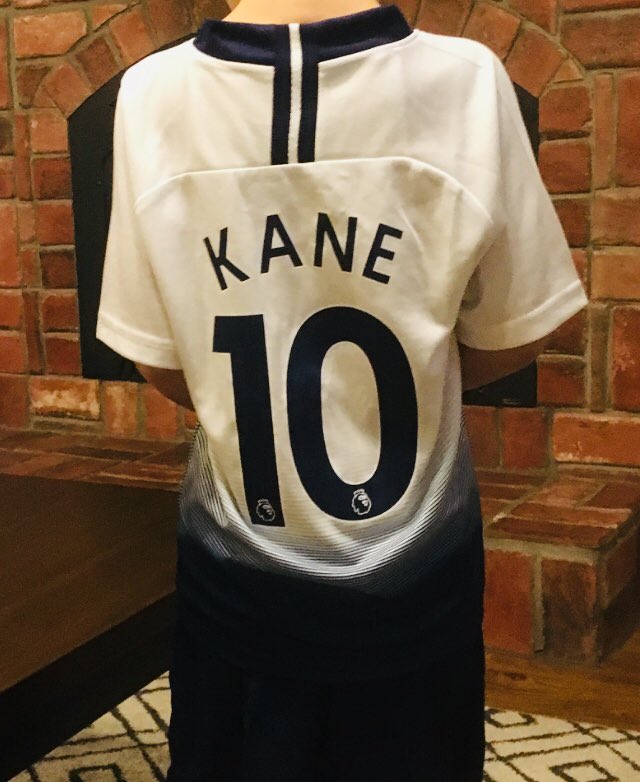
Happy Birthday to Jonah, our 6-year old Spurs fan! He’s pumped about his new @HKane kit, and I’m quite sure he’s the only kid in Louisiana wearing a full @SpursOfficial uni to school today!

1
4
Brady Glaser retweeted

I’m about to offer my opinion about how we should conduct online discussions. Before I do so, I want to acknowledge what you surely already know: Every wrong way to carry on an online discussion, I’ve done it. I’ve made every mistake you can make online. – at Mount Juliet, TN
Brady Glaser retweeted

One of the unexpected benefits of working in the @SEBTS #PhD office while pursuing a PhD has been observing and listening to other PhD students walk through the process.
Here are some things I’ve learned:
#phdchat #phdlife @AcademicChatter
For this #AprilFools Day, I pranked last night’s version of myself and ignored all the alarms we set. I got him.

4
I needed this encouragement today

I pastor a small church. We’ve seen some growth, but I can be discouraged by our comparatively small numbers, wondering how we’ll ever make even the smallest dent in our city.
In these moments, I must remember the wonderful doctrine of irresistible grace. 9marks.org/article/dilapidat…
4
Brady Glaser retweeted
Just finished my last major @SEBTS PhD seminar! What a joy it’s been to study theology with these brothers. Thanks @kswhitfield and @BruceAshford for a great week.

