

Head of GTM @Pipeline_tech | Building AI-native outbound systems for the most innovative B2B brands | Managed 3.5M+ cold emails/mo
Calgary, Alberta
Joined October 2013
- Tweets857
- Following85
- Followers1.4K
- Likes1K




Pinned Tweet
814 leads in 18 days from 59,340 cold emails.
The client manufactures custom cups, bowls and plates for local businesses ordering 5,000+ disposables a month.
Their market was huge, and the contact data on it was a mess.
Here's the full system we built, from the first scrape to their sales team's inbox:
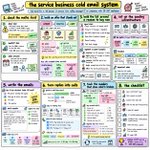
1. Map the market off Google Maps
> Pulled every local business that could buy
> Ran it through Serper and Clay
> Found a segment we didn't expect: megachurches
2. Find an inbox when there's no owner
> No owner? Claygent finds a personal or info@ email
> The copy skips {first_name}, so it reads right
3. Make the offer easy to say yes to
> Faster delivery
> Smaller minimum orders
> A free mockup of their logo on a cup
They see what they'd get before they reply, so the email stays short and lets the mockup do the selling.
4. Route every reply
> Every reply goes through n8n to tag the intent
> Slack pings the sales team
> Interested leads sync from EmailBison to HubSpot
> Round-robin across their 5-person sales team
5. The numbers (18 days)
> Emails sent: 59,340
> Opens: 0 (tracking stays off on purpose)
> Replies: 2,083
> Interested: 814
That's 1 lead for every 58 people contacted (I call anything under 500 a solid campaign).
6. What it's turned into
> 8 deals a month, closed over email (no sales calls)
> $40,000/month in net new revenue
> $120,000/month in LTV added
We've tripled their positive replies against their old monthly quota.
That puts them on pace for 24 deals a month, $120,000/month in net new revenue and $360,000/month in LTV.
If you're a B2B company looking to scale pipeline, book a call at the link below:

Our company page just published the full build behind 1,100 leads in 21 days.
> The Google Maps scrape
> The offer change that made owners say yes
> The agent answering every reply in 30 seconds
Written out step by step.
I'm not sure we should be giving this one away, but it's free in the post below.

Local businesses still answer cold email like it's 2016.
We helped a B2B manufacturer get 1,100 leads from them in 21 days.
> 1 lead for every 60 people contacted
> 84,000 emails, sent at 4,000 a day
> $500K closed from cold email this year
All from a list pulled off Google Maps.
A well-run campaign needs around 500 contacts for one lead.
This client's buyers are local businesses, and those owners aren't on LinkedIn.
Apollo and ZoomInfo barely cover them, which keeps their inboxes quiet.
So we built the list ourselves and offered every owner a free mockup with their own logo on it.
We put the whole method into a 14-part doc.
Here's what's inside:
> How we pulled a whole market off Google Maps
> Why we kept the info@ emails everyone deletes
> The offer change that made saying yes easy
> Sending 4,000 a day without landing in spam
> How AI answers every positive reply in 30 seconds
> The revenue math, from the client's own HubSpot
If you sell to businesses and can name who buys from you, most of this transfers.
Like + comment "LEADS" and we'll send it over.
(Must be following us to receive it)
Kevin O'Leary says he never reads an email past the first paragraph...
When strangers ask him to lunch, he tells them to skip the lunch and say what they want.
His rule is get to the main point in 2 lines or less.
Cold email for service businesses works the SAME way, so I broke down the full build:
- Checking the maths
- An offer that stands out
- A list with a reason to buy
- The sending setup
- The emails
- Turning replies into calls
- The numbers that matter
Full breakdown in the article:


How I'd build outbound from zero in 30 days, day by day.
Writing the emails is the last thing I touch. Domains need about 14 days to warm up, so day one is infra and everything else gets built inside that wait.
Full breakdown below.
All you need to book 30 meetings a month with outbound:
> EmailBison to send (isolated IPs)
> ScaledMail Google inboxes, live in 24-48 hours
> Porkbun domains, never your main one
> Blitz and GetLeads for contact data
> Prospeo for phone numbers that connect
> Salesfinity to call the same list
> Claude Code building the lists and the copy
> A free offer up front (an audit, a sample list)
> Every positive reply called the same day
Run it at 25,000 emails a month and 500 dials a day.
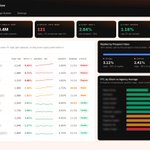
What I check on our dashboard every morning:
> Reply rate per domain
> Bounce trend
> Domains due for rotation
> Domain renewal dates
> Each client against our averages
> Positive share of replies
> Time to first response
> PTL by segment
Will Breton retweeted
I said yes to cold email before I knew how to run it.
Now I'm Head of GTM at Pipeline Tech, and our team has sent 10M+ cold emails for 100+ B2B companies.
I'm 24 and came from a short-form content agency (not a technical guy at all), and looking back, one thing decided all of it.
RESULTS ON DEMAND.
Running outbound for a client means a lot has to go right at once:
> Who you target
> An offer worth replying to
> Inboxes that land
> Copy
> Replies inside 5 minutes
> Reporting the client trusts
> Booking the meeting
Producing results whenever a client needs them is what keeps them around.
3 moves I made to get there:
1) I turned my content agency into a cold email agency, because a lot of my clients weren't big personalities and content needed them to be
2) I told the first client who asked "I'll learn how to do it and I'll run it for you", then learned it through a couple of courses and a lot of trial and error
3) I built my own dashboards (every client against our agency averages) and I check them every morning
Once results stopped depending on how a client came across on camera, I could convert clients much faster.
If your clients' results depend on their personality, add a channel that doesn't.
an agency who's sent 10M+ cold emails just revealed exactly how they launch outbound campaigns for B2B companies:
most founders have no idea how much goes into month 1.

Will Breton retweeted
We've been running our ENTIRE GTM through a Hermes agent…
The results have been unreal (list building is a Slack message now)
So I wrote the whole system up in a 14-part doc..
It covers how our team built it and the exact briefs we send it, from a laptop or a phone at any hour
Here's what's inside the doc:
> The architecture, piece by piece
(6 components, starting with a $9/month server that stays on 24/7)
> The security rules
(so it can run overnight without spending your money)
> The skills library
(what goes in a skill file, and the part that matters most)
> A request, start to finish
(the 5-row sample that catches a bad brief before it hits 5,000)
> The 5-part brief formula
(with 3 real requests you can copy and run today)
> The lists no database holds
(how the team mapped 69,204 businesses for one client on 19 data points)
> The quality layer
(how raw exports go from 50-60% ICP fit to 90-95%)
> The reply side
(5 agents, and the one booking ~10 meetings a week on our own offer)
> Building your own, in order
(what to set up first, and the one skill to start with)
All backed by what our team learned sending 10M+ cold emails and generating $70M+ in pipeline for 100+ B2B companies
Like + comment "HERMES" and I'll send it over
(Must be following me to receive it)
A new blocklist has flagged 1M+ domains for fake warm-up.
It's called Heatwave, Validity launched it on 3 September, and it's aimed straight at cold email.
A week in, it had 1,052,595 domains listed, with 6,981 added in a single day.
In case you're new to this: warm-up is when your inboxes trade emails with a network of other inboxes.
Those inboxes open, click and reply on autopilot, so a fresh domain looks trusted.
That's the exact pattern Heatwave lists.
Spamhaus, Proofpoint, Comcast and SURBL are already using or testing the signal.
And the listings don't expire (stopping the warm-up won't get you off it).
What I'd do before your next send:
> Check every sending domain at lookup.validity(.)tools
> Treat a listed domain as burned and swap it out
> Judge every domain on real replies, 1%+ or it goes
Removal only happens if Validity got the call wrong (misattribution, a hacked domain), so don't plan on appealing your way out.
7 things to check when replies are positive but meetings aren't happening,..
1. Reply speed
Take over a day to answer and you've already lost the lead.
I've seen positive reply-to-meeting go from 20% to 80% once someone replies within 5 minutes.
2. Your first reply
Offer 2-3 specific times.
It's an easier yes than "let me know when works."
3. Follow-ups
A lot of positives go quiet after one message.
Follow up on day 2 and day 4.
4. The phone
Call every positive reply right away.
They just put their hand up, so they're still warm.
5. What "positive" means
"Interested," "send more info," "what's the price" and "check back later" are 4 different replies.
Each one needs its own answer.
6. The pricing reply
Give them how you price instead of a number, then offer a quick call to go through it.
7. The fit
A strong offer gets yeses from people outside your ICP too.
If the positives aren't your buyers, the meetings were never going to happen.
Start with number 1.
4 pieces of a no-brainer cold email offer...
Get the offer right and you can get away with bad lists and sloppy deliverability (within reason).
1. A free first step
Something they can say yes to without paying, like a free trial or a sample of the work.
2. A guarantee
If it doesn't work, they don't pay, so the risk sits with you instead of them.
3. Proof
A case study from someone like them.
Even 1 line like "we do this for [name]" helps.
4. Something custom
Work made for their business specifically, that they've never had before.
That's what turns "maybe later" into "why not?"
One of our live campaigns leads with a free piece of custom work and gets a positive reply for every sub 100 emails.
Fix the offer before you touch the copy.
Will Breton retweeted
Every layer of our cold email stack has to pass one test:
Does it have an API?
If it doesn't, the AI agent gets to that step and stops (then it sits there waiting for me).
Our team has sent 10M+ cold emails for 100+ B2B companies.
Here's the stack layer by layer, including the one I still do by hand:
1. Targeting doc
The ICP down to job titles and headcount, in a plain-text doc.
It also lists the dream companies, and the agent reads it before it touches anything else.
2. Lead list
Pulled through our data provider's API, with one contact per company.
Every email gets verified before anything sends (a client once handed me 20,000 leads and only 1,600 were sendable).
3. Copy
A Claude Code skill writes the sequence once it has the ICP and case studies.
Then a QA pass checks every email:
> 25-55 words
> Soft CTA
> Zero links
> No spam words
Anything that fails goes back to the skill for a rewrite.
4. Mailboxes (the manual one)
We run on InboxKit, which already has an API and an MCP server agents can plug into.
I haven't wired our agent into it yet, so a person checks warmup and blacklists on every mailbox before launch.
5. Sequencer
The agent builds each campaign through the sequencer's API.
6. Replies and do-not-contact
Both run through n8n, which we host ourselves.
7. Alerts
Thresholds push straight to Slack.
Bounce rate is the first alert, and a lead count running low is the second.
Two calls never go to the agent: the ICP and the offer.
And every campaign it builds sits as a DRAFT until someone on our team presses start.