

A Biologist, Professor, Taiwanese American, and Backpacking Traveler always in adventurous trips 🇺🇸 🇹🇼
Grafton, MA
Joined July 2013
- Tweets294
- Following122
- Followers262
- Likes863




Happy holidays/Merry Christmas/Happy New Year! From Lin lab 🎄 🎅
Lin lab tradition: everyone gets a bottle of wines Yi-Pin collected when traveling all over the world this year! (We have wines from Japan, Australia, Taiwan, Turkey, & France)s

Koala. 🐨 Aww….
Whole conference of people (200 people) are waiting to pet koala ($100 to pet for 10 seconds 🤣) glad this is included in the conference registration fee.


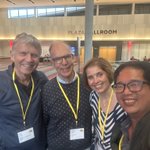
My second time in International Complement Workshop. So happy to meet my Danish collaborator/friend, Gregers Andersen!
my Swedish collaborator, Anna Blom (thanks for the the tick anti-complement OmCI)
& Meiqing Shi, George Chaconas’s former postdoc (professor in Univ Maryland


After traveling thru N. America (Chicago), Europe (Istanbul), Egypt (Cairo), Shanghai (Asia), finally I’m in Brisbane, Australia! Excited to meet old friends and new colleagues in International Complement Workshop (ICW).


Tick meeting is done, now I’m traveling to Australia for international complement conference (ICW). First stop, Istanbul, Turkey! Before that, absolutely enjoy some vodka cocktail in the lounge at Chicago airport!


I gave a talk for the story of our CspZ Lyme disease vaccines. I enjoy this tick-Lyme conference for meeting old and new friends
I met people in the pic when we all were trainee. We now all have our own lab and field of expertise in different university!


I’m in Chicago! Welcome to International Conference of Lyme disease and other tickborne diseases (ICLB)!


My September business + personal trip starts! The first stop: Chicago for ICLB conference (international conferences of Lyme Borreliosis)


Autumn is the bird banding season because of the migration. Working on ticks, birds and Lyme again
My collaborator Ai Takano and I visited our local bird banding station. Met so many enthusiastic volunteers bird banders!


Today is also our research day at @tuftsvet . Thanks for my DVM students, Renner Thomas and Audrey Ponder, and PhD student, Sergio Hernandez giving great talks. So proud that Sergio got the best poster award!


Remember I went to Japan to collect ticks this May? So happy to host my collaborator, Ai Takano, from Yamaguchi Univ. at Japan to to talk about her work on tickborne pathogenss, wildlife animals, and Lyme disease in Japan. IImpressed on >200 people attending her talk!


My postdoc boss, John Leong, invited me to give a talk at Tufts Medical School yesterday. Very happy to see many old and new friends/colleagues as well as my drinking picture (when I was a postdoc) still on the refrigerator in the lab. I have no idea but I look nice and young 🤣


Complement kills Lyme disease bacteria, but bacteria evolve to produce anti-complement proteins to escape killing. Our work @jimmunol turned such escaping to killing as a Pre-exposure prophylaxis, which can a hope for people refusing vaccines to handle LD academic.oup.com/jimmunol/ar…
Thanks for the support from @TuftsUniversity , @tuftsvet @UMD_Vet_Med and the collaboration with the team from @PalLabUMD, Keith Wycoff from Planetbio technolog
Thanks for the Association of American University sharing our work!

Lyme disease infects about 476,000 people in the U.S. each year, but "no human vaccine has yet been commercially viable." @TuftsUniversity researchers are working to change that:
aau.edu/research-scholarship…
We then have to be very careful to collect samples (blood) and take out the ticks. Some birds (like Veery) really had loads of the ticks.
Let’s culture the Lyme bacteria from ticks and see what genotypes we got!


The most challenging work of mist netting is to take the birds from entangled net while the birds are screaming. Here are examples of woodpeckers and catbirds. My DVM student, Renner, worked very hard to take out the birds from the net. That’s his first time!
The first step of trapping the birds is to identify the sites that is at the edge of the wood so you’ll have lots of birds passing by.
Setting up the net absolutely needs some efforts. Check on my DVM student, Audrey, working very hard to set up the net
Come to join my technician, Miranda, and the summer DVM students, Renner and Audrey. We are going to the field to trap birds in understanding wild birds’ role in tickborne diseases!


