














Camilo Nova retweeted

Hamilton y su equipo diseñaron el software del Apolo 11 pensando en el día en que algo saliera mal.
En tu empresa, ¿alguien decidió qué se protege primero cuando un sistema se satura?
#IngenieríaDeSoftware #TransformaciónDigital #MargaretHamilton
Camilo Nova retweeted
Vender por apps de terceros te cuesta una comisión en cada pedido y te deja sin saber quién compró.
Crepes & Waffles construyó su propio e-commerce, y hoy sus ventas digitales son 5x y tiene +70K clientes registrados.
El caso completo: axiacore.com/case-studies/cr…







Camilo Nova retweeted

A 1920's Vintage Razor Blade Sharpener Restoration
Wait till you see the final result… 🤯
Camilo Nova retweeted
La IA no va a acabar con nada. Es una herramienta que hay que aprender a usar bien. — Camilo Almonacid, Axiacore. Por eso hoy somos OpenAI Select Partner. 🤝
axiacore.com/blog/axiacore-n…
-
AI isn't going to end anything. It's a tool we have to learn to use well. — Camilo Almonacid, Axiacore. That's why we're now an OpenAI Select Partner. 🤝
axiacore.com/blog/axiacore-n…



Camilo Nova retweeted

The key to happiness - always leave the house. You need to force yourself to get out. (Especially when you don’t want to.) Get dressed and go. WFH was (one of) the worst things to happen to our generation. You gotta go meet people. In real life. Life happens outside the four walls of your apartment. I remember a sober person said to me once “life happens at the bars.” And it’s funny bc it’s true. And even though he didn’t drink, he went out to see music and meet people and talk to the bartenders and the locals. Life happens in cafes and bars and gyms and bookshops and parks and sidewalks and vintage stores. Life happens in the late night talks in the car parked in a sketchy lot somewhere you couldn’t get back to if you tried. It happens on the trails and in the oceans and in taxis and on the subway. Get out. Talk to people. Make friends. Then bring them home. Cook them a nice meal. Play cards. Keep the door unlocked. Come and go as you please.


Camilo Nova retweeted
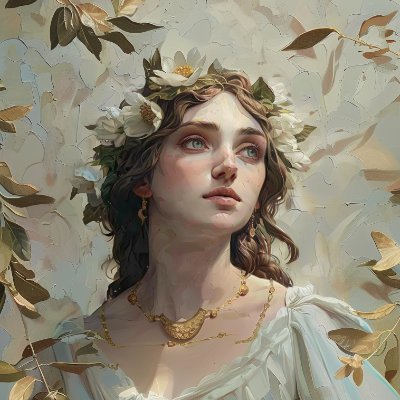
C.S. Lewis: favorable conditions NEVER come

ALT There are always plenty of rivals to our work. We are always falling in love or quarreling, looking for jobs or fearing to lose them, getting ill and recovering, following public affairs. If we let ourselves, we shall always be waiting for some distraction or other to end before we can really get down to our work. The only people who achieve much are those who want knowledge so badly that they seek it while the conditions are still unfavorable. Favorable conditions never come.
Camilo Nova retweeted

Rome conquered Greece in 146 BC when they burned Corinth to the ground. And then the strangest thing in ancient history happened. The winners spent the next few centuries desperately trying to become the losers.
It actually started before the final conquest. When the general Marcellus sacked Syracuse in 211 BC, he shipped boatloads of Greek statues and paintings back to Rome, and the city went crazy for it. Suddenly every rich Roman had to have Greek art in his house. Decades later Cicero built an entire court case around prosecuting a governor named Verres for looting Greek masterpieces, and Romans ate it up.
Then came the schools. Wealthy families started buying Greek slaves specifically because they were educated, and handed them the job of raising their children. So the sons of the men who crushed Greece grew up speaking Greek, memorizing Greek poetry, and learning philosophy from Greeks. The elite eventually sent their teenagers abroad to Athens and Rhodes to finish their education, the way people today send kids to study overseas. Cicero did it. Julius Caesar did it.
Their gods were Greek gods wearing name tags. Zeus became Jupiter. Hera became Juno. Aphrodite became Venus. Ares became Mars. Same myths, same family drama, mostly just relabeled.
Their entertainment was borrowed too. The first big Roman playwrights, Plautus and Terence, basically adapted Greek comedies into Latin. Their doctors were Greek. Their architecture leaned on Greek columns, the Doric and Ionic and Corinthian orders you still see on bank buildings today.
And the art obsession left a strange fingerprint on history. Romans loved Greek bronze statues so much that they mass produced marble copies of them. A huge chunk of what people walk past in museums today and call "Greek sculpture" is actually a Roman copy. The Greek originals melted down or vanished long ago. The knockoffs are what survived.
Not everyone was thrilled. Cato the Elder spent his whole life warning that Greek culture would rot the Roman character. He sneered at Greek philosophers, distrusted Greek doctors, and wanted them kept out of the city. And then, as an old man, he quietly sat down and learned Greek anyway. Even the loudest hater caved.
The trend went all the way to the top. Virgil wrote the Aeneid, Rome's national epic, by openly modeling it on Homer. The emperor Nero competed in Greek games and toured Greece like a superfan. Hadrian was so obsessed he grew a Greek philosopher's beard and poured money into rebuilding Athens. And Marcus Aurelius, master of the entire Roman world, wrote his private journal not in Latin but in Greek, because that was the language of serious thinking.
The poet Horace nailed it in a single line: captured Greece took her savage conqueror captive. Rome won every war on the battlefield and then handed its whole soul to the people it had beaten.

