

Group Leader at MPI-BI, studying neuronal dev and differentiation. Also on Mastodon (@cmayer@fediscience.org ) where I value open, community-driven science.
Munich, Germany
Joined September 2012
- Tweets169
- Following422
- Followers948
- Likes162


Pinned Tweet
Now out in #NatureNeuroscience: new paper from our lab — "Temporal control of progenitor competence shapes maturation in GABAergic neuron development in mice." Congrats to first authors Ann Bright, Yana Kotlyarenko, Florian Neuhaus!
nature.com/articles/s41593-0…

Christian Mayer (@[email protected]) retweeted

What a journey this paper has been 🎢
Excited to see some early data back from @chr_mayer lab @MPIforBI grow into such a beautiful piece of neurodevelopmental biology ⭐️
Huge kudos to @Alan_Zhou_95 and @Bocchi_Ric for the fantastic work! 🙌🏻

🚨 First paper from the Bocchi lab out now in @NatureComms!
We show that astrocytes in the cortex arise from not one, but two distinct progenitor lineages, each giving rise to specialized subtypes with distinct roles.
Here the story📖 doi.org/10.1038/s41467-025-6…
See 🧵below for more.

Attended the Neurogenomics Conference @humantechnopole in Milan earlier this week. Great venue and an inspiring environment. Thanks to the organisers for putting together a strong and engaging meeting.
#NeuroGen25
Christian Mayer (@[email protected]) retweeted

Interested in single cell genomics but need help getting started? Check out the full agenda for our Single Cell Genomics Day on Friday 4/25. All talks will be live-streamed (no registration required) at satijalab.org/scgd25

Christian Mayer (@[email protected]) retweeted

The Single-cell Analytics Innovation Lab @MSKCancerCenter is expanding and looking for Junior Research Technician! Join our team based in NYC to work on cutting-edge single-cell & spatial genomics methods in collaboration with leading research labs. sail.mskcc.org/
Christian Mayer (@[email protected]) retweeted

🚨🎓 New application round: Join us in researching the multiple facets of biological intelligence and become a PhD student at our fully funded graduate school IMPRS-BI in the Munich area!
🔔 Application period: October 1 to November 10
🌐 Apply here: imprs-bi.mpg.de/

Christian Mayer (@[email protected]) retweeted

Hiring alert 📢 my lab has TWO openings for a postdoc in computational biology! Please apply if you're interested to work with large in situ RNA-seq datasets and amazed by developing biological neural networks (mouse brains):
ki.varbi.com/en/what:job/job…
ki.varbi.com/en/what:job/job…

Christian Mayer (@[email protected]) retweeted

📅 Save-the-date! We are excited to welcome @chr_mayer to @mpi_psychiatry as our next MPLS speaker on 11. July (Thu). His talk will shed light on fundamental neuronal mechanisms 🧠 and the pathways 🧬 contributing to #neurodevelopmental disorders. This talk is open to everyone!

Christian Mayer (@[email protected]) retweeted
My lab is looking for a research assistant to work on barcoded viral tracing in the developing mouse brain: ki.varbi.com/what:job/jobID:…
Please apply if you’re interested to explore molecular mechanisms of neural circuit assembly in vivo!

Christian Mayer (@[email protected]) retweeted

Our latest from @briscoejames lab: How temporal & spatial pattering cues are integrated in the vertebrate neural tube to organise cell type generation during development.
biorxiv.org/content/10.1101/…

Christian Mayer (@[email protected]) retweeted

Outstanding PhD work by our super-talented Lucia Del Valle, with the help of superb collaborators at @NeuroAlc @MPIforBI @LMU_Muenchen
@CsicLifehub @CSIC @SENC_
science.org/doi/10.1126/scia…

Christian Mayer (@[email protected]) retweeted
Happy to see our new story published. 3 types of cortical Radial Glia Cells revealed: alpha, beta and gamma, with different amplificative behavior and involved in different cell lineages, that run together and in parallel in different germinal layers. Ferret is a superb model (1)
Study "Multiple parallel cell lineages in the developing mammalian cerebral cortex" led by @LdelValleAnton and @BorrellLab is published. Congrats to our lab members @flo_neuhaus @edvoretskova @BabalKoray @ChaoFeng for their contribution! Link: science.org/doi/10.1126/scia… @MPIforBI
Here is the correct link: science.org/doi/10.1126/scia…
Christian Mayer (@[email protected]) retweeted

Using in vivo CRISPR perturbation, lineage tracing, and ChIP–sequencing provides insight into how inhibitory neuron identity is determined in the developing germinal zone
@edvoretskova • @chr_mayer • @MPIforBI
nature.com/articles/s41593-0…

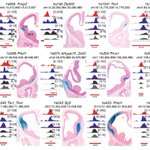
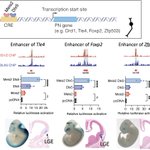
Excited to announce that our study "Spatial enhancer activation influences inhibitory neuron identity" is now online in Nature Neuroscience nature.com/articles/s41593-0… Big thanks to the Winkelmann (@HelmholtzMunich @TU_Muenchen) & Torres (@CNIC_CARDIO) labs for the collaboration! 1/7
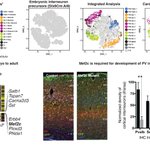
In Bandler et al. we showed that in the GE single cell trajectories of projection and interneurons diverge from a common pool of mitotic progenitors (doi.org/10.1016/j.conb.2023.…). We now show that MEIS2 expression is the strongest predictor of projection neuron fate. 2/7

Here is the correct link to the Bandler et al. paper: nature.com/articles/s41586-0…
Christian Mayer (@[email protected]) retweeted
Looking forward to diving into the final version of this work. Excited that others also find differential binding as a chromatin strategy for alternative cell fate choice.

Christian Mayer (@[email protected]) retweeted
A team led by Christian Mayer discovered that a protein called MEIS2 plays a crucial role in the formation of GABAergic projection neurons. These neurons enable various brain functions, and a failure of MEIS2 to control their development may contribute to neurodevelopmental disorders.
Read more: bi.mpg.de/news/2024-03-mayer
@chr_mayer

Enhancers that drive projection neuron-specific gene expression are accessible in all parts of the GE (ATAC-seq Rhodes et al). Yet, their activity is restricted to the LGE. Thus, "differential TF binding" rather than "differential accessibility" induces projection neuron fate 6/7

Thanks to a fantastic team for making this work possible, especially @edvoretskova, @MayHo_, Volker. @ERC_Research for the funding! @MPIforBI for support in the establishment of our research group. 7/7