

Who said RWA can't be fun? 🪰| Follow @cicadafinance for institution grade hybrid yield products leveraging the latest blockchain and AiFi technology.
RWA
Joined April 2026
- Tweets2.4K
- Following37
- Followers168
- Likes2.2K


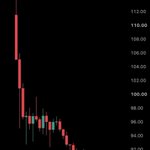


Jensen Huang has been reinstated as the CEO of Nvidia and the timeline is going crazy about this news.
what does this actually mean for crypto?
first of all, look at the correlation between these two assets.
> NVDA surged 34.97% yesterday to $169.83, witnessing the single biggest bullish day in Nvidia's 33-year history.
> Bitcoin rallied from $55,100 (friday night) to $63,500 by Monday, achieving a 15% weekend recovery.
both markets moved together.
> in the past month: NVDA -43.5%, BTC -28.5%
> during the past week: NVDA -22.9%, BTC -9.3%
that's a 0.65 beta.
furthermore, Jensen's past statements show he could be personally crypto-aligned.
> he has publicly called Bitcoin "excess energy stored in a new form called currency", literally echoing the same sentiment from Musk and Saylor.
> his first-ever X post in July 2026 championed open-weight AI models, which, when you think of it, is the exact philosophy underpinning decentralized networks.
the structural overlap between what Nvidia is building and what crypto is building is deeper than retail realizes.
this is the RWA version of the trending "GTA V vs GTA VI" template.
🎮 2013 (GTA V launch):
> tokenized real-world assets market: essentially zero. a handful of experiments, no real products, no institutional capital.
> Bitcoin trading at ~$140.
> Ethereum didn't exist yet though Vitalik published the whitepaper later that year.
> no stablecoins at scale. Tether launched 3 weeks after GTA V and sat at <$1M for its first year.
> tokenized Treasuries, tokenized stocks, tokenized funds — all unthinkable.
🎮 2026 (GTA 6 launch):
> tokenized RWA market: $51B+, up 40% YTD, growing THROUGH a broader crypto bear market.
> 21 of the world's largest banks committed $270M to launch a joint dollar stablecoin.
> NYSE picked Avalanche to settle its tokenized stocks platform EXCLUSIVELY.
> tokenized stocks grew 422% in the last 18 months.
> stablecoin supply at ~$295B, with Circle and Tether running digital dollar infrastructure for real-world payments.
> BlackRock's BUIDL, Franklin Templeton's BENJI, Ondo's OUSG all moving billions.
> SEC Innovation Exemption live.
Rockstar took 13 years to ship a sequel.
tokenization took 13 years to go from "unthinkable" to "the architecture Wall Street is scrambling to own."
and the next 13 years won't look anything like the last 13.
we got the entire replatforming of traditional finance onto blockchain before GTA 7.

Anthropic just had the BIGGEST IPO in history.
meanwhile this is what the rest of the AI stock market (as of this writing) looks like:
> Palantir $PLTR: -25%
> Alphabet $GOOGL: -30%
> Nvidia $NVDA: -36%
> Micron $MU: -42%
> ServiceNow $NOW: -61%
> Nebius $NBIS: -63%
> Oracle $ORCL: -65%
> Sandisk $SNDK: -67%
> CoreWeave $CRWV: -74%
> IREN $IREN: -80%
macro-economic signals further point out that the AI complex is already in a private bear market.
> the S&P 500 is only 6% off its own high.
> the Fed's latest FOMC minutes flagged serious concerns about AI companies borrowing heavily through opaque deals, hedge fund leverage, and stretched valuations.
> Fed officials discussed a 25bps+ hike in December, piling more pressure on debt-heavy AI names.
> Nvidia's CEO is navigating congressional scrutiny over a reported China espionage investigation.
therefore Dario Amodeis company is walking onto the public stage at the exact moment the market is starting to question whether the entire AI trade was ever rational.

the stablecoin narrative has shifted from "banks don't trust crypto" to "who owns the rails."
look at what's happened in the last few weeks:
> 21 major banks committed $270M to launch their own joint dollar stablecoin, targeting H1 2027,
to name a few: Goldman, Citi, Bank of America, Santander, Deutsche Bank, UBS, MUFG, Barclays, BNP Paribas, Wells Fargo…
JPMorgan is notably absent as they've got their own thing going on
> Western Union launched USDPT in October
wall street, commercial banks, legacy remittance, and crypto-native issuers are now all piloting the same technology in the same window.
TradFi has stopped debating whether stablecoins work.
the debate now is: who gets to issue the ones that matter?
> USDT holds ~60% of the current stablecoin market (~$177B)
> USDC holds ~24% (~$70B)
two private crypto-native companies sit on the main pipes of on-chain dollar settlement.
every bank in the consortium wants a piece of that before it becomes permanent.

$BTC might be in a lot of trouble and this time it's different. 😬
> last week, Bitcoin slid below $65K due to thin liquidity and continued ETF outflows. 📉
> MSCI officially removed Strategy $MSTR from its USA, World, and ACWI indexes (effective Nov 30).
on the surface, these look like two separate events,
one is price action, the other is an index rule change,
but they're more closely entwined than most analysts care to point out.
to offer quick context, MSCI (Morgan Stanley Capital International) is one of the largest global index providers in the world,
the funds that track their indexes move hundreds of billions in passive capital.
with that in mind, here's what MSCI's removal of $MSTR actually triggers:
> JPMorgan estimates ~$2.8B in forced passive outflows from MSTR by Nov 30,
> potentially $8.8B more if other index providers follow,
> MSTR is now down ~40% YTD after the news,
> the removal cuts off Strategy's cheap equity-raise pipeline, which has been the same mechanism it uses to buy more Bitcoin
this matter to BTC because Strategy holds roughly 850,000 BTC and has the largest corporate Bitcoin treasury on earth. 🌐
when the engine that lets Strategy keep buying Bitcoin gets squeezed, the biggest marginal buyer in the market is bound to get smaller.
which in turn thins out bids across the whole market.

the broader crypto market just had one of its worst months in years.
> Bitcoin dropped from $126K in early October to $81K by late November, a 33% drawdown.
> over $1 trillion in total market cap wiped in six weeks.
> $19 billion in leveraged positions liquidated in October alone.
now look at what tokenization did in the same window.
> total tokenized RWA market cap hit $51B, up 40% year-to-date.
> active tokenized RWAs grew 589% from early 2025 to mid-2026.
> RWA deposits across DeFi tripled from $2.3B to $7.4B,
while overall DeFi deposits FELL 15%.
> RWA spot DEX volumes grew 220%,
in comparison to general DEX volumes dropping roughly 70%.
all this to show that tokenization is not just surviving the downturn, it's growing through it.

remember when crypto twitter was championing that,
"AI agents were going to replace every financial middleman?"
😂
here is the reality as it currently stands.
> AI agent payments went from,
$29M in Nov 2025 → $1.59M in Oct 2026
> that's a 94.5% collapse in 12 months
> average payment size now: 9 cents
> TRM Labs study reveals only 0.6% to 7.5% of x402 payments were actually agents,
the rest were scheduled scripts wearing an agent costume
for those who have been on this platform for a while now should recognize that:
1. narrative-driven sectors spike loud, and eventually crash quiet.
2. utility-driven sectors compound without the headline cycle
rtUSQ was built for the second category.

crypto twitter is shocked that NYSE has made it official with $AVAX .
as of their announcement yesterday,
tokenized stocks on NYSEs upcoming 24/7 trading platform will settle exclusively on Avalanche.
before this announcement, Avalanche:
> held ~$1.6B in RWA market cap,
> ranked 7th across chains, behind ETH, BNB, SOL, Stellar, zkSync Era, and XRP Ledger,
> never cracked the top 5 for stablecoin market cap by chain,
> sat on the sidelines of every RWA growth headline for 18 months straight,
in lay man language,
while eth fought for 47% RWA dominance and solana ran up 360% in tokenized stocks, Avalanche sat quietly at 3-4% share.
so why Avalanche specifically?
> custom L1 architecture lets NYSE run its own chain with its own rule set, KYC built in, permissioned validators, audit trails native,
> <2 second finality meets institutional settlement requirements,
> a year of quiet technical testing with ICE before the announcement,
> institutional precedent already quietly built:
- KKR Fund,
- JPMorgan's Project Spruce,
- Securitize tokenizing on Avalanche
that last line is the one most people are missing.
avalanche wasn't building for the retail RWA leaderboard.
they were building for the institutional architecture decisions that would eventually happen when a $44 trillion exchange had to pick a chain.
the chains and projects - like CICADA - that spent years quietly building compliance architecture, tooling, and institutional pilots are the ones set to win the deals that actually matter.
this is your reminder that market share today ≠ market share tomorrow.


it's been a few weeks since the biggest exchange hack in crypto history happened.
for those who don't know what happened, here is the TLDR
> October 29,
> Binance suffered an estimated $6.3B hot wallet breach.
> $3B frozen on-chain within hours (Circle, Tether, Ripple, Arbitrum teams coordinated the freeze)
which caused BTC to drop below $77K within 24 hours.
here's what the nay sayers ignored and have been ignoring,
BNB Chain, the actual blockchain and not the exchange has sustainably kept running.
the numbers from this week alone:
> BNB Chain added 1.2M new stablecoin holders in the past 7 days, more than any other chain,
> BNB Chain led tokenized stock market cap growth at +$83.6M,
> BNB Chain continues to hold #2 position in global RWA market cap at $6.1,
> BNB Chain's 2026 RWA growth of +$3.6B made it the fastest-growing RWA chain of the year,
surpassing Solana.
this matters because it's the first real-world stress test of the "the chain is not the exchange" thesis.
we (Cicada) are proud to be an official partner in BNB Chain's RWA initiative, with rtUSQ built on this infrastructure.


cicadaintern retweeted

✅ rtUSQ redemption claims are now open
Ceffu has finished its security checks and settlements are running normally again. The proceeds for the current rtUSQ redemption cycle have settled, and eligible holders can now claim.
To claim, connect the wallet you used for your redemption request on the official CICADA Finance app and confirm the claim transaction.
Thank you for your patience while this was resolved.
Only claim through the official link below ⬇️. CICADA Finance will never DM you or ask you to claim through any other site.
tokenized stocks have a serious fragmentation problem.
for example,
there are over 50 versions of tokenized $NVDA .
> NVDAx on xStocks
> NVDAb on Backpack
> NVDAon from Ondo
> NVDA-wrapped perpetuals on 5 different venues
> and 40+ more across smaller issuers and chains
each one of these have different:
> custody,
> redemption rights,
> legal wrappers,
> liquidity pools.
hearing on the timeline, "hodl tokenized NVDA" means asking, which NVDA? 😂
now compare that with rtUSQ.
> one token,
> one NAV,
> one strategy,
> one contract,
> one liquidity pool,
you don't have to pick between rtUSQx or rtUSQb or rtUSQon, there's just rtUSQ.
40+ major companies and crypto projects got hacked in just the last 30 days.
a partial list:
> Binance
> Polymarket
> Ledger
which should make you naturally wonder, can real-world assets actually sit on-chain?
currently, this is what the data says:
> of the $46.3B total RWA market, only $3.6B (~7.7%) is actively deployed in DeFi
> the other 92.3% sits behind permissioned wrappers or in issuer-controlled, non-programmable environments
> only private credit crosses 39% utilization. every other category is below 10%
and this gap has gotten WIDER as the market grew.
in as much as protocols keep posting TVL milestones, let's face it, issuance is not usage.
and as long as the hacks keep coming, the threat environment any tokenized asset has to survive in is active and live.
which leaves the market with three honest options:
> pure-DeFi composability means accepting exploit risk the institutional world can't absorb,
> permissioned RWAs are safer, but they're not composable, programmable, or meaningfully "on-chain",
> true on-chain finance requires infrastructure that is BOTH permissionless enough to be useful AND secure enough to be trusted
8
79
most crypto assets fail to become useful beyond trading.
> memecoins "use case" is the next buyer,
> most L1/L2 tokens have no functionality beyond paying gas on their own chain,
> governance tokens vote on nothing meaningful,
what most investors need to ask to guide their investment thesis in token investing is this:
"if the chart goes to zero, does the token still do anything for you?"
for 95% of digital assets in this space, the answer is a big NO.
that's why the "crypto has no real-world use" critiques, the ones circling back after the well-publicized BNB hack are growing louder and more cynical.
now contrast that with how rtUSQ answers that question:
1. the token represents a position in a conservative quantitative strategy,
which generates yield from actual market inefficiencies and not from the next buyer.
2. the yield rebases into your balance daily.
3. the NAV targets $1, so the "price going up" isn't the product.
in layman's terms,
you hold rtUSQ → the strategy runs → yield is distributed → your balance grows.
the utility isn't speculative, it's mechanical.
just a reminder that rtUSQ earns yield on:
Monday
Tuesday
Wednesday
Thursday
Friday
Saturday
Sunday
8
58
the "revolution" that is supposed to decentralize finance may be leading into a huge cluster of concentration risk. ⚠️
> 3 issuers (Binance bStocks, Ondo, xStocks) control 81.4% of the entire tokenized stock market,
> 2 issuers (Circle + Tether) hold 63.7% of all stablecoin DeFi TVL,
> 1 currency (US Dollar) accounts for 98.8% of stablecoin reference currencies,
> top 3 asset classes (T-bills, yield strategies, credit funds) make up 66% of the $46.3B RWA market,
> top 3 RWA issuers (Sky, Ondo, Securitize) alone hold $12.8B, 28% of the sector
at least Wall Street has 10 bulge-bracket banks sharing the pie. 😅
in RWAs, we have 2 or 3 names shining through per category and no one is taking about how that could be unhealthy down the line.
ETH holds about 47% of the entire $46.3B RWA market.
to most this dominance feels permanent, though it isn't, look at the trajectory:
> mid-2025: Ethereum held 83.6% of RWA value,
> August 2025: 55%,
> June 2026: 52%,
> today: 47%
the slope is clearly in one direction, signifying that the share is slowly bleeding.
here's what's actually eating it:
the single most important, tokenized fund on ETH isn't holding most of its own value on Ethereum anymore.
> SEC's "RWA Compliance Acceleration Program" sandbox makes it easier for issuers to launch on *any* compliant chain,
even BUIDL, Ethereum's flagship RWA product, now has 68% of its AUM deployed on chains other than Ethereum
think about that for a minaute,
the single most important tokenized fund on ETH isn't holding most of its own value on Ethereum anymore.
Ethereum's advantage was first-mover plus trust. that's a 5-year lead.
its disadvantage is that flexibility becomes a bug when regulated issuers want controls baked into the base layer not bolted on through smart contracts.
the Robinhood Chain hype is quietly imploding.
4 months ago,
it was the hottest L2 of 2026.
> launched July 1, built on Arbitrum Orbit,
> pitched itself as the chain for tokenized real-world assets,
> hit $7.67M in daily app revenue on Sep 4,
a record for any L2,
> and their cumulative DEX volume crossed $34.6B in its first two months!
currently,
> the daily app revenue just hit $296K on Oct 18,
which is a 96% collapse in 6 weeks.
> Robinhood Stock Token TVL stuck at $145.8M,
which is also less than 0.1% of total DEX volume.
more so,
the chain that was allegedly built for RWAs got hijacked by memecoins and these 'shitcoins' as some call them are dying FAST.
> $CASHCAT: -65.8% from ATH (peaked at $227M market cap)
> $PONS: -72.2%
> $ROBINHOOD: -97.2%
> $AI: -79.7%
> $1: -97.5%
as a matter of fast, 25+ ecosystem tokens all down 60-99% in a matter of weeks.
and here are the lessons that brings to the Robinhood Chain memecoin holders.
1. your "yield" was never yield, it was someone elses buy pressure.
2. the second the next meme narrative shows up, your current holding floor disappears,
which turns your "investment thesis" into a game of musical chairs.
compare that to how an actual yield-bearing asset is supposed to work.
rtUSQ returns come from a conservative quant strategy, not from the next guy buying your bag.
