
PhD applied math. Left academia for industry. Working with AI and software.
Halifax, NS, Canada
Joined February 2013
- Tweets1.1K
- Following316
- Followers468
- Likes9.2K





Chris Levy retweeted

nice guide on fine-tuning our d1-2B decision models with images

I saw @helloiamleonie’s recipe for fine-tuning a @LiquidAI decision model on text and wanted to try it with images too.
Started with d1-3B but also added d1-2B as well, which was just released.
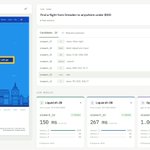
Given a website screenshot, a task, and candidate page elements, the decision model selects which element to interact with next.
After one epoch on Mind2Web, using one RTX PRO 6000 per model on @modal:
• d1-3B: 44% → 91% accuracy, ~44 min training
• d1-2B: 51% → 96% accuracy, ~20 min training
I’ve shared the training, evaluation, and endpoint-serving code, plus a video walkthrough:
drchrislevy.com/blog/liquid-…
Chris Levy retweeted

my favorite bit of spindle is the flexibility - you can write your own code for model configs and even write fully custom execution backends!
we specialize on orchestration and autoscaling; you get to focus on making your forward passes work exactly how you want


Tinker changed how people do post-training. We're big fans, and so are many of the teams we work with. But as those teams scale up, they keep raising the same two problems: per-token pricing gets expensive quickly, and you’re limited to the models and features the provider decides to support.
We think a good API deserves more than one implementation.
Today we're releasing Spindle, an open-source, Tinker-compatible training server that runs in your Modal workspace. Your existing Tinker scripts run unchanged, and because you own the server, you pay for GPU time instead of tokens.
Chris Levy retweeted

Tinker changed how people do post-training. We're big fans, and so are many of the teams we work with. But as those teams scale up, they keep raising the same two problems: per-token pricing gets expensive quickly, and you’re limited to the models and features the provider decides to support.
We think a good API deserves more than one implementation.
Today we're releasing Spindle, an open-source, Tinker-compatible training server that runs in your Modal workspace. Your existing Tinker scripts run unchanged, and because you own the server, you pay for GPU time instead of tokens.
I still remember reading Erik's blog post back in 2022
erikbern.com/2022/12/07/what… which is how I first heard about Modal.
Amazing to see the growth over the past few years. Can't wait to see where it goes 🚀
Congrats to everyone on the team!


Check it out! Learn about some cool use cases for one of Modals new primitives: Sidecars for Sandboxes.


Here’s the demo and talk I promised!
Running Docker Compose apps, tests, and coding agents inside Modal VM Sandboxes.
Video, slides, and code all here:
drchrislevy.com/blog/modal-v…
I've been using Modal's vm sandboxes while they were in beta, and it's exciting to see them GA now. They are great for running traditional docker and docker-compose workloads. Will post a blog post soon and a video of a recent talk I gave on a specific use case.
VM Sandboxes give your agents access to a full Linux kernel.
Reach for VMs when your agents reach the limits of limits of user space: working with Docker, FUSE filesystems, and certain Linux kernel features.
modal.com/blog/vm-sandboxes-…


Chris Levy retweeted
Excited to see everyone at Runtime tomorrow!
Looking forward to a guest appearance from @1xTech's NEO.


Are we getting a podcast episode with Modal?

Very much enjoying this “GPU glossary” mini-book by Modal I got from @can when stopping by at their NYC office


Chris Levy retweeted

After this, people kept asking us how @modal is able to serve agent inference so well.
So we wrote it all down.
New blog: "How to serve trillions of tokens for trillion-parameter coding agents".
modal.com/blog/trillion-toke…


It is considerably more powerful than the auto-compaction in Claude Code or Codex.
👀

Starting tomorrow, our lab will hold an open-source week: 2 software frameworks, 4 papers, all building a coherent ecosystem.
The theme: Frontier AI on Hardware You Own
Blog post: timdettmers.com/2026/09/21/d…
SoTA results in:
Autocompaction
Autonomous Research
Model compression
Test-time scaling
Deep Research
And a healthcare RL environment giving you a new level of complexity to train healthcare agents.
The ecosystem that we will release is built to be as usable as possible. Agent sessions that run overnight and go on for tens of millions of tokens is made easy. Model compression of a model is automatic: you just get a good model that runs fast locally -- no expertise required. An autonomous research that works out of the box.
Our ecosystem enables a new level of work that can be done locally.
Chris Levy retweeted
Modal powers some of the most exciting applications of artificial intelligence, whether its "Wet Claudes" or "The Jevolution", aka structured outputs but actually good.
Excited to gather this community to talk shop at our conf -- and to bring in some new folks!
Join Diogo Almeida (@CompleteSkeptic), Co-founder and CEO of @typesafeai at Runtime on October 1st.
Chris Levy retweeted
Frontier models are simply too expensive and slow for the majority of use cases, so we see models like SWE-2 becoming the daily driver for most.
Training trillion-parameter coding agents at scale isn't easy though: typically, each step launches thousands of rollouts, each with its own isolated environment.
Cognition uses Modal's sandbox infrastructure for the rollouts behind SWE-2. Congrats on the launch!
More on how we scale Sandboxes: modal.com/blog/scaling-to-1-…


Chris Levy retweeted
DeepSeek v4.1-Flash, a new multimodal model from @deepseek_ai, is now available on Modal.
v4.1-Flash uses DeepSeek's Causal Encoder-Decoder architecture, activating 16B parameters for input and 8B parameters for output to improve cost efficiency for input-heavy agentic workloads.
Are there any plans to add support to the review tools in Codex for multiple repos? Aside from the "Last Turn" screen, it's not possible to review changes the agent has made that span several repos. @jxnlco @thsottiaux @reach_vb @OpenAIDevs