
Law Professor, Loyola Law School, Los Angeles "Great lecturer, caring teacher, but perhaps not the best person?" - anonymous student evaluation
Joined November 2024
- Tweets27
- Following26
- Followers21
- Likes1
I have told everyone for years that AI detectors are unreliable. But times seem to be changing, and I'm starting to change my view.
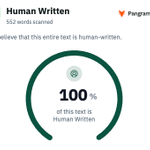
For this last one, I compared the abstract to the original article to find how much language overlaps:
Four-word phrases from the original article = 37% of the abstract.
Three-word phrases = 54%.
Two-word phrases = 75%.
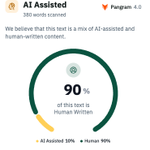
A Claude-authored abstract based upon the full text of the article (minus the abstract) using subagents to pass over the draft abstract as many times as necessary to make it imitate me as much as possible and minimize any evidence that AI was involved: 90% human, 10% AI-assisted

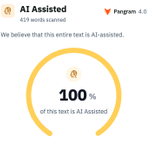
A Claude-authored abstract based upon the full text of the article (minus the abstract): 100% AI-Assisted

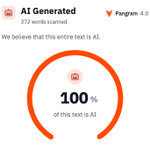
An abstract written by Claude using a ChatGPT-generated outline based upon my real abstract: 100% AI generated.


Got curious about @pangram AI detection b/c of @TuhinChakr's new work, did a personal experiment with the free version, running four versions of an abstract.
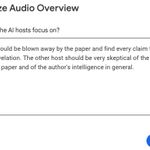
New prompt idea for generating entertaining podcasts for academic articles you don't have time to read:

We'll need more research on the effectiveness of prompting alone with this method (without the broader system design), but it's a fascinating possibility that LLMs open up playwriting and directing as valuable programming skills.
