

dev. shapeshifter. 180bpm. building @avvydomains.
Joined December 2010
- Tweets2K
- Following629
- Followers794
- Likes6.2K
coconaut.avax ∀ retweeted

Today marks a significant milestone for @Colonylab and its community 🐜 as we launch our long-awaited decentralized fundraising platform, “Early-Stage”. 🔥
For the first time ever, anyone can access Seed and Private sales investments, previously reserved for select groups like VCs and high-net-worth individuals. Alongside this pivotal launch, we’re also excited to introduce our innovative “Liquid Vesting” solution, unlocking unparalleled flexibility in trading locked/vesting tokens, through our DEX.
We couldn't be more thrilled to kickstart the launch of our Early-Stage platform, granting users the opportunity to invest directly in the Seed and Private sales of two innovative #Avalanche projects, that have been in development for over 2 years: @DeltaPrimeDefi & @PulsarGame.
🟣DeltaPrime:
Seed Round, reserved allocation for $CLY stakers: $500,000
🎮Pulsar:
Private Round, reserved allocation for $CLY stakers: $500,000

coconaut.avax ∀ retweeted

🚨 The big event is ONE WEEK AWAY 🚨
With a great crowd already confirmed, don’t miss out on the Avalanche Canada Launch Event on April 25th in Montreal 🔥 Register to secure your spot👇
See below for an announcement from @avvydomains! Stay tuned for more news to come. Hint: GIVEAWAYS INBOUND 🫡 @AvaxDAO_ @avax
coconaut.avax ∀ retweeted
🔺Welcome to Avalanche Canada 🇨🇦
Mark your calendars for April 25th🔥
Join us for the official launch of Avalanche Canada! We are thrilled to host our inaugural community event in Montreal🇨🇦 Proudly presented by new @AvaxDAO_ ambassadors 🎉
Register below👇🏻

coconaut.avax ∀ retweeted

Core has integrated Avvy Domains, Avalanche’s native naming standard where you replace your long wallet address with an easy to use web3 username.
Search for any .avax username, send assets, track portfolios and more in Core web!
core.app/?utm_source=twitter…
coconaut.avax ∀ retweeted

🔺Segment 3: Builders Assemble!
Speakers:
@Cnote203 @coopsmoves @connorbode @ijaack94 @Lore_Explore @KimboAvax
🔺Segment 4: WTF is @avax
Speakers:
@elliothedegen @DominicCarb @avedarave_ @bubits_

coconaut.avax ∀ retweeted

Introducing Subnet Orchestrated Validator Sets.
This proposal elevates Subnets to fully sovereign networks that utilize the Avalanche P-Chain for on the fly cross-chain communication.
github.com/avalanche-foundat….

coconaut.avax ∀ retweeted

Oh my, is this an Avalanche Warp Messaging and Teleporter update!?
TLDR:
- C-Chain Testnet support! 🚀
- Subnet EVM support! 🤯
Check out ohmywarp to send tokens between C-Chain and subnets!
🔺🌀 ohmywarp.com 🌀🔺
@AvaLabs @avax @AvaxDevelopers

coconaut.avax ∀ retweeted

It is done. After almost 3 years, @KanaloaNetwork has been deployed on @avax. 🫡
coconaut.avax ∀ retweeted

What's next?
- Data APIs
- WARP support
- Validator Marketplace
- Staker Club
- Deep integrations with LSD Protocols
- Unified LSDs Dashboard
and more...
#Avalanche

ALT snowpeer.io


coconaut.avax ∀ retweeted

Just configured the domain avax.gallery to redirect to a list of my $AVAX names (including gallery.avax). Subdomain anglais.avax.gallery also works.
Should I make it so you can type any [name].avax.gallery and see the names in that wallet?
coconaut.avax ∀ retweeted

The OpenZeppelin team was informed yesterday Monday (12/4) at 4pm ET by @thirdweb about a security vulnerability involved in but not limited to Thirdweb’s versions of DropERC20, ERC721, ERC1155 (all versions), and AirdropERC20 pre-built contracts.
As far as we know, this vulnerability has not been exploited.
Based on our investigation, the issue is inherent to a problematic integration of specific patterns, and NOT particular to the implementations contained in the OpenZeppelin Contracts library.
Nonetheless, we will lead the effort to assess who in the community is affected and provide them with mitigation strategies. At the appropriate time, we will responsibly disclose this vulnerability following best practices for the safety of the community.
For Thirdweb users, they have developed a tool to check whether contracts created through their platform are affected and perform a migration: mitigate.thirdweb.com

coconaut.avax ∀ retweeted

Big! But imo this is just the beginning.
With the #Avalanche ecosystem booming and expected deeper integrations (@coreapp, Snowtrace), I'm expecting amazing growth for @avvydomains.
If you're gonna register or renew, would appreciate you using my link 👇
ref.avvy.domains/cedernet

🔥Web3 Domain Daily Ranking Top 5 (Dec. 3th)
🥇@avvydomains: +547
🥈@ensdomains: +487
🥉@unstoppableweb: +402
4⃣@SID_bnb: +12
5⃣@HashKeyDID: +10
A new leader emerges! @avvydomains tops today's Web3 domain rankings, closely followed by @ensdomains and @unstoppableweb.
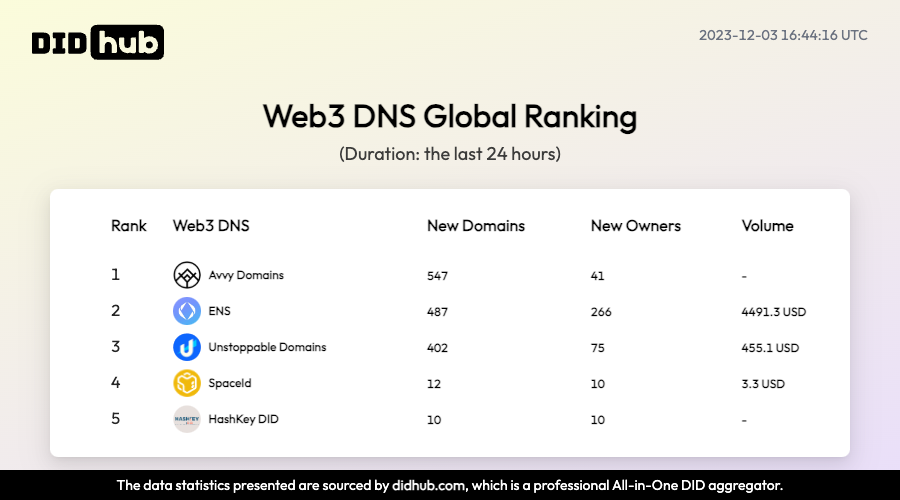
ALT didhub.com/ranking
coconaut.avax ∀ retweeted

Brace yourself @connorbode for next years avalanche summit - @iam0xSpartacus will be coming for your ID cards 😂

coconaut.avax ∀ retweeted

Space Weather/Aurora megapost for tonight!
G3/G4 (Kp 7/8) geomagnetic storming is possible Thursday night (12-01 06:00 UT)!
Four (or more) strong CMEs are currently headed towards Earth! If they hit, aurora may be seen as far south as the U.S./Mexico border, France, Austria, and Ukraine, or as far north as Sydney and Christchurch. Activity could last into the weekend.
Here is where and when to expect aurora tonight. This is your chance!
This is one of the most exciting weeks for space weather in months! The Sun has been extremely active, launching a flurry of what are called coronal mass ejections (CMEs) out into space. These CMEs are like "Sun sneezes" - but instead of clouds of mucus (gross), the Sun sneezes out clouds of charged particles. These clouds, if they hit Earth and have the right magnetic configuration, can cause energy to penetrate our magnetic shield (Earth's magnetosphere) and cause auroras! Please note that this is an oversimplified explanation of a complex scientific process.
CMEs give the most spectacular auroral displays and cause the most powerful geomagnetic storms, and guess what? There are four (maybe more!) CMEs currently en route to Earth - how exciting!
One in particular had my eye, though - a large eruption that occured two days ago accompanied by a strong M9.8 solar flare: nitter.gq/Vincent_Ledvina/…
Not all solar flare release CMEs, but this one did! In fact, a full halo eruption was seen in coronagraph imagery!
nitter.gq/_SpaceWeather_/s…
From these images, scientists at NASA, NOAA, and other space weather forecasting centers have modeled this eruption (and previous eruptions), and we should expect an impact sometime around Thursday night (2023-12-01 6:00 UTC). This is also a complex event with multiple CMEs potentially combining together/interacting, so effects may last over a day! If your skies look cloudy Thursday night, make sure to check the forecast for Friday night as well!
nitter.gq/Vincent_Ledvina/…
Linked above is the official NOAA press release for this event with a screenshot of a solar wind model. On the left, you have plots for density (top) and speed (bottom). The higher the density and speed, the more "punch" the solar wind will pack. CMEs travel with the solar wind. The right side is a plot showing time on the bottom and the green, red, and blue curves are the density (top) and speed (bottom) as predicted at three places: Earth (what we care about), Stereo-A, and Stereo-B, respectively. Stereo-A and Stereo-B are satellites in space. The yellow line indicates the arrival time, which is around 6 am on 2023-12-01 UTC.
For me in Alaska, that's late in the evening on Thursday.
Make sure you convert UTC to your specific local time!
While this is all exciting, please note that models are just models. Have you ever seen the "spagetti plots" of hurricanes right after they form? Some models say it will grow into a category 5 storm, hit land, and cause major destruction, and some models say it will stay in open water and totally dissipate. Well, the same is true for CMEs - the physical reality of how CMEs travel through space is never as simple as plugging numbers into a model, hitting "go," and getting an arrival time. Because we have so many CMEs on the way which may combine, slow down, or get deflected in other directions, while I am confident that something will hit us, the exact impact time may be slightly before or after (+/- 5-10 hours) the models are saying.
So, Thursday night is the night, now what? How do I see the aurora?
Once the CME hits, the impact will cause auroras to spread to lower latitudes, so keep a tab on solar wind data and watch for a sharp spike in speed, density, and magnetic field (orange, yellow, and white lines). This what a CME shock looks like:
nitter.gq/halocme/status/1…
Linked above is a solar wind graph showing a CME indicated by a blue line. You can see there is a clear "jump" in speed (yellow), density (orange), and magnetic field (white). This is the classic signature of a CME impacting satellites close to Earth. Once this happens, it usually takes 1-2 hours for the aurora to respond, but these sudden impacts can cause some of the best displays of aurora right away, so make sure to keep an eye on solar wind as we get closer to Thursday night.
If you like apps, @_SpaceWeather_ is my favorite choice for watching solar wind data and other geomagnetic indices.
Then, the best way to track the aurora will be by using dedicated webcams to see the lights. I recently made a whole page on my site devoted to webcam resources where you can monitor aurora around the world:
theauroraguy.com/pages/webca…
Webcams are the best resource for tracking where the aurora is being seen as a geomagnetic storm is unfolding!
After the CME hits, we will need to watch the magnetic configuration of the plasma cloud. If it is mostly Bz (red line in the solar wind plots) south, or negative, the energy from the CME will be able to flow into Earth and intensify the geomagnetic storm. If it mostly Bz north, or positive, the energy will essentially bounce off our planet and auroras will be limited to high latitudes.
This magnetic configuration is called a CME "flux rope." I will not explain flux ropes here for the sake of keeping this a simple explanation, but I will have a blog post coming on my website, theauroraguy.com soon!
Whatever happens, though, webcams will capture it! Also, joining aurora chasing groups on Facebook and following chasers here on X is a good way to know where and when sightings are happening.
If the CME hits and the Bz is south for an extended period of time, we may see geomagnetic storming that pushes aurora as far south as states like Texas, California, Oklahoma, and North Carolina. If the CME hits Earth while Europe is in darkness, or it is still strong after impacting during nighttime for North America, aurora could be seen as far south as Switzerland, France, Austria, and Ukraine.
Okay, so what should you do once it gets dark on Thursday night? How can you maximize your chances of seeing the aurora?
1. Make sure you have clear skies! The aurora occurs above the clouds. This is explained in my Aurora FAQ section on my website along with other helpful tips on aurora chasing. A great website to check cloud cover is windy.com.
2. Make sure you are in an area with no light pollution! While a strong aurora can be seen through city lights, if you're trying to catch tonight's show from mid-latitudes or outside the auroral oval, you will likely be looking close to the horizon. Any city lights or cities to the north in the way will block your view! Use a light pollution map such as lightpollutionmap.info/ to find dark areas near you
3. Make sure there is aurora! This is the hard part! As always, consult my website theauroraguy.com for educational info, but we should expect the maximum auroral strength after the CME hits and if the core of the CME has sustained southward Bz (negative values). Make sure you keep watching the solar wind data (swpc.noaa.gov/products/real-…) for impact! South Bz is like flipping the "light switch" of the aurora from off to on - it alows energy to flow from the CME surrounding our planet into the Earth and down to the aurora. Also, Facebook groups, webcams, and aurorasaurus.org are great resources to track reports of northern lights from aurora chasers like me! Having a real picture of the aurora seen from someone is always more reliable than using data from a satellite! Some other good resources to use are the GOES Satellites (swpc.noaa.gov/products/goes-…; read my blog article to learn more), the AE index (wdc.kugi.kyoto-u.ac.jp/ae_re…; look for values over 1000 nT), and the OVATION Prime model (swpc.noaa.gov/products/auror…; look for power over 70 GW).
4. Follow me on social media for updates! If you don't want to worry about following the data or tracking solar wind values or all this fancy science stuff, just follow me on Instagram (instagram.com/vincentledvina…) and watch my stories! I'll break down everything to a beginner level and help you answer the question of "when will the aurora be out?"
If you're planning on aurora chasing in Fairbanks tonight, check out one of my newly-released e-books: theauroraguy.com/products/my…


coconaut.avax ∀ retweeted
maybe time for a community-made staking cli? seems like it wouldn't be too much of a stretch to turn avalanchejs or [insert other lib/lang] into a staking tool.
