

Retired Italian-English translator, former narrowboat-dweller, now moved to Shetland to follow my passion for the traditional knitting of the islands.
Shetland Islands
Joined November 2018
- Tweets7.2K
- Following792
- Followers672
- Likes64.1K




Freelance Afloat retweeted

A young humpback whale, fatally injured by a krill trawler, is thrown away like trash.
An eminent marine biologist, Leonid Pshenichnov, a Ukrainian known for his kindness, who devoted his life to the research and protection of krill and marine life in the Antarctic, was illegally jailed for up to 20 years by Putin, because he tried to protect these whales with marine protected areas.
Dr Pshenichnov is 71 and seriously unwell. He will die in prison—and we must understand the implications of unlawfully jailing an innocent scientist whose only desire was to protect a vitally important marine ecosystem.
Trump's pal Putin is ruthless and merciless. Make no mistake:
Putin's crimes and future plans are far-reaching and Trump backing him will enable even worse genocidal, lawless behavior and make this world a more dangerous place for all.
(Sources and petition for Dr Pshenichnov's release in 🧵)

Freelance Afloat retweeted
Conservation conference urged to demand Russia release Ukrainian scientist Leonid Pshenichnov abc.net.au/news/2026-10-19/u…
👉Petition to free Dr Leonid Pshenichnov: secure.avaaz.org/campaign/en…
Analysis of Putin's plans: brookings.edu/articles/how-t…

Freelance Afloat retweeted

Please be the first to like, comment, and repost if you believe the remaining forests of the Amazon and Congo Basin must be protected.
No to deforestation. No to ecocide.

Freelance Afloat retweeted
We don't have a "climate problem". We have a greed problem. The planet isn't dying, it's being killed. And those killing it have names and boardrooms. #ClimateJustice #StopEcocide


Freelance Afloat retweeted

"...Anne Carson revela cómo al día de hoy citamos de manera errónea la frase más popular de la Antigüedad: “Descartes dijo esta famosa frase: Cogito ergo sum . Pienso, luego existo . Por eso, soy. La frase que todos conocen y aprenden en la escuela. Pero si observas bien la frase, en realidad lo que dice Descartes es: Dubito ergo cogito ergo sum . Dudo, luego pienso y por eso existo . ¿No es sorprendente? Se imprimen camisetas por todo el mundo que dicen ‘Pienso, luego existo’. Dubito (dudar) tiene mala prensa. Eso me resulta muy provocativo. Todo comienza con la duda”...
latfem.org/el-nobel-de-anne-…

Freelance Afloat retweeted

C. S. Lewis on why you NEED to read old books. This has never been more vital than it is today

Freelance Afloat retweeted

Protecting the heritage and the future of the British countryside is a hill I will die on.
Not because I hate cities. I have spent 20 years of my 52 years on this planet living in cities. Not because I want the countryside frozen in a postcard. But because this beautiful green and pleasant land is the one thing Britain still has that money cannot easily fake and policy cannot easily replace.
I come from a farming background. I see farming and the countryside for its true value. It is the hedgerow that has been laid for three hundred years. The country lane that still follows a Saxon boundary. The church tower rising over a field of hay. The dry-stone wall that someone stacked by hand decades ago and that still holds firm. The dawn chorus. The smell of wet earth after rain. The harvests that reap what has been sowed. The community spirit of the village pub. The footpath that belongs to everyone and to no one. This is not scenery. It is the country’s memory and heritage made visible.
Blake called it a green and pleasant land. He was not writing a travel brochure. He was naming the thing we were supposed to keep while the mills rose. We kept enough of it that people still know what he meant. That is the inheritance. You do not get another one. Because once the farmland is gone, it’s gone forever. Never to return. We lose our green and pleasant land our own peril.
A country can survive ugly architecture. It can survive bad fashion, bad governments, even bad decades. It cannot survive the slow conversion of its living rural landscape into a corporate development opportunity, a solar panel farm, a data centre or an energy industrial estate.
We need homes. We need power. We need food. Those are not optional. What is optional is the government habit of treating the countryside as leftover space: the place you put the housing target; the place you put the solar farm on a real farm that feeds the nation when a warehouse roof or car park would show more common sense. The place called a “development” when governments have already decided the field is in the way and that somehow, food supply from farmland isn’t deemed to be a “development”.
Once a village is ringed by a data centre, it is not a village. Once the best land is under glass and steel, it is not a farm. Once the view that made a place itself is gone, no planning approval can bring it back.
Farmers are not extras in this picture. They are the reason the green and pleasant land of Britain still exists. A countryside without people who work it becomes either a theme park or a ruin. If we make it impossible to pass on a farm, impossible to grow food at a living return and easy to rent the same acres to a developer or an energy company, we should stop pretending we are “protecting nature.” We are just changing the land owner to a corporate asset stripper.
This is my hill because the alternative is a Britain that still has a flag, a language and a history, but no longer has the thing those things were supposed to belong to. A nation that cannot recognise its own ground, soil, crops and trees has already started to forget who it is.
I am not asking for nostalgia. I am asking for continuity. Build homes. Generate power. Feed people. But do it without flattening the last ordinary miracle we have: a small, crowded island that is still, in places, beautiful enough to break your heart. These places often live in the countryside. They should be protected.
Working farmland is not in the way of the future. It is the reason the future is worth having.


Freelance Afloat retweeted

Hedgehogs Need More Than Public Love — They Need Legal Protection - Sign the Petition! c.org/hNgSjZC7Fq via @UKChange

Freelance Afloat retweeted
It’s absurd that Britain prioritises foreign food over what we can (and do) grow on our own soil.
Britain has some of the best farmland in Europe. We produce excellent wheat, potatoes, dairy, beef, lamb, apples, berries, brassicas and more. Our climate and soil are perfectly suited to a huge range of high-quality produce.
Yet year after year, supermarket shelves and government trade policy tilt toward imports — often at the direct expense of British farmers.
Cheap Spanish tomatoes, Dutch peppers, Polish chicken, New Zealand lamb and out-of-season fruit flown halfway around the world routinely undercut local growers.
Why? Lower production costs abroad, weaker environmental and animal-welfare standards in some cases, and a retail system that chases the lowest unit price above everything else.
The result: British producers face razor-thin margins, rising energy and labour costs, and the constant threat of being replaced by imports that would never meet the same rules if grown here.
This is not free trade in any meaningful sense. It’s a one-way preference for distance over quality, seasonality and national resilience.
Food security is treated as an afterthought until a supply shock hits. Carbon footprints from long-haul transport are waved away while British growers are lectured about sustainability. And rural communities that keep the countryside working are told to compete with subsidized or lower-standard overseas production while absorbing every new regulation.
Supporting what is grown here does not mean autarky or higher prices for everything. It means fair competition: applying the same standards to imports that we demand of our own farmers, prioritising seasonal British produce in public procurement and retail, and recognising that a country that cannot feed itself is strategically weak.
Preferring the imported option simply because it is slightly cheaper on the day is short-sighted policy dressed up as consumer choice.
Freelance Afloat retweeted

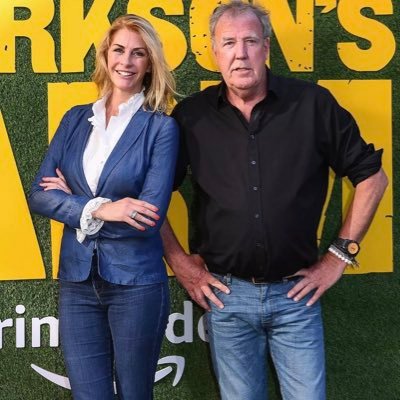
Jeremy Clarkson lets slip a number on Clarkson's Farm that explains almost everything wrong with British food. A sausage from his own pigs costs 74p. The identical sausage made from imported pig meat costs 18p.
Most people hear that and assume the foreign farmer is simply better at it.
Britain outlawed the sow stall in 1999, alone in Europe bar Sweden, because the public here decided a pregnant animal ought to be able to turn around. The national pig herd then fell by roughly half.
British people did not eat half as much bacon.
Work out where the difference went. Twenty-seven years on, the National Pig Association reckons around 95 percent of the countries selling pork into Britain still permit the stall. Most of the EU allows four weeks of every cycle. Much of America allows the full sixteen-week gestation. Brazil allows it outright.
The sow was never spared. She was moved abroad, into a shed with looser rules and no British inspector, and the farm that would have kept her shut its gate.
Now watch the same thing happen to beef and lamb, on a far bigger scale.
British beef is grass. Native cattle standing out in the rain on ground that grows nothing else, doing what they have done on those hills since before the language was written down. What the NFU says we are being asked to compete against is a feedlot finishing up to 50,000 head on one site, which it called unacceptable here on both moral and environmental grounds.
The deals were signed anyway. Australian and New Zealand beef rises to a quota of 110,000 tonnes by 2033, and after that there is no tariff at all. Lamb runs to 60,000 tonnes this year and climbs from there, and we already import between a quarter and a third of what we eat.
Every one of those deals was announced with a firm assurance that food standards would not fall. That assurance is true, and it is beside the point.
The standards enforced at our border cover what is in the meat. Hormones stay banned, and rightly. What crosses untouched is how the animal lived. There is no border check for a feedlot, no tariff on a gestation crate, no form anywhere asking whether the thing we made illegal here was used to make the thing arriving here.
So a minister can say food standards are protected and back British farming in the same breath, and be telling the truth twice, while signing the document that finishes the job.
The pattern runs through the lot. Barren cages banned here in 2012, egg products still arriving from countries that use them. Force-feeding outlawed in 2007, foie gras on sale every Christmas.
And the campaigners who won those bans never once came back to see what happened next, because the victory was legislative and the consequence was six thousand miles away. Nobody counts sows in Iowa. Nobody films a feedlot in Queensland.
Clarkson absorbs that 56p on every plate that leaves his kitchen, on television, which is the only reason anybody can see the number at all. Inside a supermarket price it has been invisible for a quarter of a century.
Fifty-six pence is what this country charges a man for obeying it.
He is not competing with foreign farmers. He is competing with his own ban, on a shelf, standing next to the version of himself he was forbidden from being.

Freelance Afloat retweeted

5 weeks without rain, isn’t normal. Wildfires in the UK, aren’t normal.
This isn’t “just summer”. If you don’t believe in climate change that’s because the con men brainwashing you take millions from fossil fuel donors.
NONE OF THIS IS FUCKING NORMAL.
Freelance Afloat retweeted

🚨 JEREMY CLARKSON BLASTS ANDY BURNHAM FOR APPOINTING ANGELA EAGLE TO RUN THE COUNTRYSIDE.
Jeremy Clarkson has just hit the nail on the head regarding the absolute state of Labour's approach to British farming.
Growing food in Britain is becoming financially impossible.
Clarkson was forced to leave 200 acres of his own farm completely empty this year because planting wheat or barley guarantees a heavy loss!
And how does Andy Burnham respond to struggling British farmers? He appoints Angela Eagle as Environment Secretary! 🤡
A career politician who has never worked on a farm and has never run a business in her entire life.
As Clarkson rightly said, putting Angela Eagle in charge of the countryside is like putting Alan Carr in charge of the British Army!
Our Westminster elite are actively crushing British agriculture with Net Zero red tape, insane energy bills, and family farm taxes. They would rather import cheap foreign produce than protect the hardworking British families who keep this country fed.
How can a politician with zero real world farming or business experience dictate the future of our rural economy?
SHARE this everywhere to stand with British farmers! 🇬🇧🔥


Freelance Afloat retweeted
I had 3-4 weeks off Twitter with autistic burnout recently & my engagement is right down (also due to standing up to a vile group of trolls on here-they reported me lots, restricting my reach). If you see this photo it would be so ace if you could RT it or drop me a quick hello if you have a moment, both of which help an account get back on track. I also hope these little violas ping some floral dopamine in your meat computer & give you a small lift 🌿

Freelance Afloat retweeted
A man who spent thirty years reviewing sports cars has taught this country more about its own food than every minister, union and campaign of the last fifty years combined.
Here is what five series of Clarkson's Farm put in front of the public, and not one line of it is opinion.
- A thousand acres, worked flat out for a year, made a profit of £144. Under forty pence a day.
- By year six the same farm was losing money, weather and prices turning a projected £37,000 into a five grand loss.
- A crop can drown in the field after months of work and take everything with it, and nobody is coming to help.
- The farmer is the only man in the food chain who sells at a price he does not set. The supermarket sets it. He takes it or he takes nothing.
- The council can shut his restaurant, refuse his car park and stop him selling his own food off his own land.
- The subsidy he was told to lean on can be closed overnight, the big estates first through the door, the small farms locked out.
- One outbreak of bovine TB can lock a farm down for months, banned from buying or selling a single cow, through no fault of its own.
- Rear pigs with real care and the butcher's maths can still make them a loss, so the animals go and the loss stays.
- The margins are so thin that a rich man buys farmland not to earn from it but to shelter money that earns elsewhere. The shelter exists precisely because the farming does not.
Now hold that against the story you were sold. Greedy farmers. Subsidised for doing nothing. Wrecking a countryside they are somehow also the custodians of.
There is no profit. That was the reveal. A show that set out to be funny accidentally filmed the slow strangling of the people who feed us, and the country watched it happen and finally understood what its cheap food actually costs.
Clarkson has now admitted the plainest part out loud: it is the television money keeping Diddly Squat alive, and most farms do not have a television show. Britain grows about sixty per cent of its own food and the average farmer is past sixty. That is why both numbers are heading the wrong way.
It took a Lamborghini tractor and a man doing it for a laugh. Fifty years of earnest campaigning could not manage it.

Freelance Afloat retweeted
Fifteen thousand litres of water to make one kilo of beef. It is the number on every poster, and it is real. So ask the one question the poster is praying you will not.
Where did the water come from?
Because 94% of that figure is rain. Green water, the science calls it, rain that fell on a Welsh hillside and would have fallen whether or not a single cow was standing in it. It landed on the grass, the grass grew, the cow ate the grass. Nobody diverted a river. Nobody drained an aquifer. The sky did what the sky does, and a cow stood underneath it.
Strip the rain out and look at what she actually drank. Around 1% of the total. The trough, the tap, the bit a human might reasonably call a cost. One per cent.
Now do an almond. Twelve litres of pumped, irrigated groundwater per single almond, sucked out of a Californian aquifer that is sinking a foot a year and not coming back. Fifty of them in a glass of almond milk. Six hundred litres, and not much of it fell from the sky.
The cow drinks the rain that was going to fall anyway. The almond drinks the river everyone downstream was counting on.
One of those got a poster.

Freelance Afloat retweeted

We can’t survive without bees.
We can’t survive without forests.
We can’t survive without healthy oceans.
We can’t survive without clean rivers.
We can’t survive without fertile soil.
And somehow…
we still act as if humans exist separately from nature.
Freelance Afloat retweeted

Staggering
"Over the past century, #England & Wales have lost 98% of wildflower meadows. We have also destroyed half of Britain’s ancient woodland, half of lowland ponds, 90% of freshwater #wetlands and 62% of all “farmland” wild #birds."
#Biodiversity
theguardian.com/news/2026/ju…
