

Magic Money Wanderer DJ 20+ yrs | Onchain vibe builder-ish Berlin ↔ Tokyo Music, weird internet economies & DIY
BERAlin
Joined January 2018
- Tweets11.1K
- Following2.2K
- Followers952
- Likes2.7K





getsal.🐻⛓️ retweeted
Culture? Fair enough. France is a world-renowned cultural powerhouse. I agree with that indeed.
But according to my research, France passed a law in 2021, yes, 2021, explicitly criminalizing sexual assaults on animals AND even soliciting such acts.
Was having sex with animals really so widespread that you needed legislation specifically addressing it? Even soliciting it? That’s quite something. Uh, yeah... the culture. Hmm. Wild.
自分の観測した日本人の1番多い感想: 相手にしてられん

昨日、フランス側と話していて、ようやく今回の罵倒合戦の「ルール」が判明したので共有する。
単にジョークのスタイルが違うという話ではなかった。
彼らの説明をまとめると、
事実は必要? → 不要。むしろ自由にでっち上げろ。
根拠や統計は? → 持ち出すな。そもそも議論じゃない。
何が面白い? → 極端なステレオタイプを使い、相手をどれだけ馬鹿げた状況に置けるか。
勝利条件は? → より派手で過激な侮辱を披露し、周囲を盛り上げた方が勝ち。
相手が反論したら? → ジョークを理解できない奴として笑えばいい。
相手が怒ったら? → 効いてる証拠。勝ち。
相手が黙ったら? → 言い返せなくなった。勝ち。
誰が勝敗を決める? → 結局、自分たちと仲間の観客。
実際、あるフランス人は「相手より派手に無礼を披露する以外に勝利条件はない」と説明していた。
つまり、最初から議論の勝敗でも、ジョークの面白さを競う勝負でもなかった。
自分でルールを作り、相手の反応まで創作し、自分たちで勝利宣言する。延々と続けられる、負けようのないゲームだったわけだ。
そりゃ日本側と話が噛み合わないはずだわ。
なお、これは今回観察した一部のネット上の罵倒文化の話。
理解した感想?
ルールがわかったので、なおさら参加したくなくなったwww
Wait, French passports come with attitude recognition?
So if I master that famous French arrogance, can I get one too?
We have a legend example in Japan: Carlos Ghosn.
He mastered it so well he ended up with THREE nationalities and FOUR passports.


Good for you! But your little world isn't the whole world, you know?
Come visit Japan sometime. Let's play with us. We're just as friendly as you guys. 😌
Au revoir 👋


Oh, you're already calling the game over? We only just figured out the rules, and you're already keeping score? lol
Come on, you spent 250 years building your reputation, and now you can't even last three days?
No wonder you couldn't make it to the end of the World Cup either. 😌

昨日、フランス側と話していて、ようやく今回の罵倒合戦の「ルール」が判明したので共有する。
単にジョークのスタイルが違うという話ではなかった。
彼らの説明をまとめると、
事実は必要? → 不要。むしろ自由にでっち上げろ。
根拠や統計は? → 持ち出すな。そもそも議論じゃない。
何が面白い? → 極端なステレオタイプを使い、相手をどれだけ馬鹿げた状況に置けるか。
勝利条件は? → より派手で過激な侮辱を披露し、周囲を盛り上げた方が勝ち。
相手が反論したら? → ジョークを理解できない奴として笑えばいい。
相手が怒ったら? → 効いてる証拠。勝ち。
相手が黙ったら? → 言い返せなくなった。勝ち。
誰が勝敗を決める? → 結局、自分たちと仲間の観客。
実際、あるフランス人は「相手より派手に無礼を披露する以外に勝利条件はない」と説明していた。
つまり、最初から議論の勝敗でも、ジョークの面白さを競う勝負でもなかった。
自分でルールを作り、相手の反応まで創作し、自分たちで勝利宣言する。延々と続けられる、負けようのないゲームだったわけだ。
そりゃ日本側と話が噛み合わないはずだわ。
なお、これは今回観察した一部のネット上の罵倒文化の話。
理解した感想?
ルールがわかったので、なおさら参加したくなくなったwww

今回一連の話をずっと見て比較文化論を自分の中で展開するに、やはり日本人の根底は今でも侍なんだなとつくづく思った。
刀を抜いた時はすでに冗談ではなく、生き死にの話になっている

こういうの見ててなんとなく感じるけど、海外で「日本人はいつもにこにこして優しい」と評される時の意味には、実は「日本人は(こっちがどんなことをしても)にこにこして優しい」てニュアンスが乗っかってる場合は少なからずあって、ところが日本人も「(許せないと思う部分を踏み越えられたら)豹変して怒り出す」みたいな所は当然あるわけで、で、その様を目撃して今度は「ああ、あの『日本人はいつもにこにこして優しい』姿はやはりtatemaeだったのか…honneでは外国人をこんなに嫌ってたのだ…。やはり排外的…差別的…」みたいな感想を持たれてることは少なくない気はする。実際にはそれらは単に"鏡"や返報性の原理で「(許せないと思う部分を踏み越えられない限りは)とりあえず優しくにこにこ接してる」てだけの話なんだろうけど>RT
どうやらアメリカでも同じ事をしているらしいフランス(仮)人たち。


ベジータがアルジェリア人?ハァ?
そう思っていた僕は、3日後には彼の兵役歴と家族旅行の写真を発見していた。
わかるわけねえだろ。でも、わかったら、奥が深かったwww
日本語圏で困惑を呼ぶネタを、数々の「証拠」とともに証明します。
では、これをどう説明する?🇩🇿


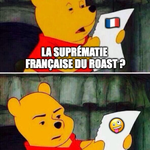
Je suis les différents clashs internationaux et la France est tellement au-dessus des autres nations dans cet art que ça me fait me poser pas mal de questions. Les autres pays ont un humour de merde et leurs attaques sont inoffensives alors que nous avec 3 mots et une image on les éteint tous.
D’où nous vient donc cette suprématie du roast ?
"Piracy, Access, and the Illusion of Privilege"
Someone looks up the price of a manga volume in Japan, compares it with the price in their own country, and suddenly the piracy debate seems obvious.
I get why.
If a book is affordable in Tokyo but costs much more where you live, or isn't legally available at all, being told to "just buy it" is not much of an answer. Money, income, exchange rates, and local availability are real constraints.
But price differences also raise a bigger question: what actually goes into making a Japanese work available in another language, in another country, at another price?
A Japanese-language volume sold through an established domestic distribution network is not the same product, economically, as a licensed translation sold in another market. Translation, editing, lettering, rights agreements, printing scale, shipping, retail margins, and taxes may all affect the result. The exact balance varies by country, publisher, and format.
That doesn't make every price fair. It means there is an actual supply chain between "I want to read it" and "it appears in my language at my local price."
And here's the part I think gets overlooked: Japanese fans have been on the other side of this relationship too.
We didn't grow up with instant, affordable access to every foreign record, film, book, or game we wanted. People imported things, hunted for information, relied on local distributors, learned languages, and built communities around material that wasn't designed for us.
I'm not saying, "We struggled, so you should struggle." That would be a terrible argument.
I'm saying the solution to limited access has historically involved building access, not pretending the infrastructure already exists and accusing the original market of withholding it.
Piracy complicates this further. I understand why unauthorized translations and copies appear when the legal options are absent, delayed, or unaffordable. In some communities, those copies have also introduced people to works they might never have encountered.
But "I understand why this happens" and "therefore every unauthorized copy is justified" are different claims. So are preservation, emulation, fan translation, resale, and distributing copyrighted material without permission. They deserve more than one convenient slogan.
The equally convenient slogan on the other side, "support creators, not publishers," misses something important. Editors, translators, production teams, distributors, and publishers are not imaginary middlemen inserted between an artist and a reader for fun. Some make bad decisions, certainly. But the machinery that makes a creative industry sustainable doesn't run on applause alone.
So yes: demand better licensing, better translations, affordable digital editions, preservation, and faster releases. Criticize specific failures. There is plenty to improve.
But don't confuse a legitimate desire for access with an automatic entitlement to the exact conditions of a different domestic market.
The question isn't whether international fans deserve to enjoy manga. Of course they do.
The question is who builds the system that makes that enjoyment sustainable, and how.
We didn't always have what we have today. Neither did you. Let's talk about building something better, not just arguing over who gets to stand closest to the source
Japanese Pop Culture Lore 101 (Part 2/4)
This is a four-part series exploring the recent debates on X surrounding Japanese pop culture. I’m sharing some historical and cultural context from Japan that I think often gets lost in these discussions, especially outside Japan.
Links to the other parts will be in the replies.


これね、よかったら今回で勉強してね!
これは西成暴動ってやつでね、この西成、あいりん地区はおそらく日本で治安が一番悪い地区なんだ。僕も何度も言ったことあるけど、まぁ日本人でもこの暴動も、地区も「うわっマジかよw」って感じで話題になるくらいな場所なので、革命の本場共和国フランスから見たら実際お遊びです。
そしてここくらいでしかこんな事が起きた話は聞いたことがない。
そんな街も最近は労働者の街ではなくて、福祉の街とか言われるようになり、みんな年取ったんだよね。やすい宿が昔から多くて(日雇い労働者用)、近年は安い宿が多いと外国人の若い旅行者にも人気だよ! そしてよく言われるのは「俺の地元より安全なんだけどw」っていう外国人の声だね。フランス人かどうかは知らないけど、確かにバンリューよりは安全じゃないかなぁ
最近は安全らしいけど、15年くらい前はコンビニのトイレに「ここに注射器の針を流さないでください」とか書いてあって、そんなのヨーロッパでしか見たことなかったから(まぁ普通だよね)それくらいってことだよ。日本でここ以外で見たことがないね。
なのでやはり、改めて思うけど、すいません、僕らチンケな政府に隷属してる奴隷市民なので、やはり革命の本場フランスは格が違うよなぁって、日本人はみんな尊敬の眼差しで見てるんだよね! 👏
This quoted post is unavailable.
日本人のみんな〜! 説明するね
一言で言えばこのシリーズのスタイルは、「〇〇してる時の何々(ターゲット)〜!」シリーズで、「お題」と「ネタ(画像)」の様子(リアクション)をかけ合わせて楽しんでるわけ、だからネタがお題と見た目が一致してなくても成り立つ
それを踏まえた上で、リアクションできないレベルでつまらんし、相手に説明しないとわからないジョークってそもそも一番お笑いでレベル低いし、ジョークには知的レベルが必要だけど、「相手がそのコンテキストを持っているか?」を考えたうえで展開できる知性が必要で、この辺の件で「ウッソこれわかんない日本人社会的知性低くない?」とか言ってるフランス人は、世界が自分たちのネタのセンスだけで構成されててみんな笑ってくれると思ってる、親戚の集まりにでてきた3歳の子みたいな感じだから、生暖かい目で見守ってあげて
漫画もちゃんと解釈できてるか怪しいから、社会的知性の低い僕たちが独占するんじゃなくてもっと積極的に読んでもらわないとね、ちゃんと正規手段で

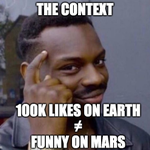
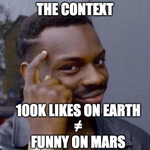
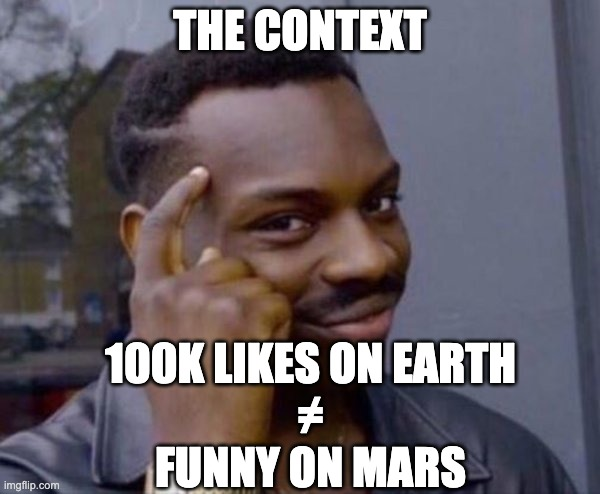
"100K Likes on Earth Doesn't Mean It's Funny on Mars"
Why do Japanese users seem so bad at ragebait compared with the French?
That's a reasonable question about the replies you've seen. Some Japanese posts in this feud have been repetitive, unimaginative, or simply racist. Calling someone an immigrant isn't a clever comeback, and I won't pretend otherwise.
But here's a different question: are we even playing the same game?
In the broader debate, some people have treated French memes' popularity, and Japanese users' failure to respond as expected, as evidence that Japanese people simply don't understand jokes or banter. That's where the argument goes wrong.
A hundred thousand likes on Earth doesn't make a joke funny on Mars. And being good at provoking strangers isn't quite the same as being funny.
A meme is not just a picture with a caption. It carries years of shared references: who the person in the GIF is, what the reaction normally implies, when it's appropriate to post it, what previous jokes it echoes, and how the audience is expected to respond.
Japanese social media has its own enormous collection of reaction images, manga panels, running jokes, and conventions. Many people outside Japanese-language spaces wouldn't recognize them either.
That's not a failure of intelligence. That's what happens when two communities don't share the same references.
“But French memes work in English too!”
Of course they do. Much of the Western internet grew up sharing similar platforms, conventions, and meme references across national and linguistic boundaries.
But Japan’s internet culture developed along a rather different path.
Many influential Western forums centered on registered accounts, persistent usernames, and avatars. Even on platforms with different layouts, such as Reddit, the identity of the account and the structure of replies remain central.
Japan’s hugely influential 2channel took almost the opposite approach: anonymous by default, no user profiles or avatars, minimal formatting, and rapid streams of mostly text-based replies within a thread.
The difference wasn’t simply what people joked about. It was how the platforms encouraged people to communicate.
In a culture where usernames and avatars barely mattered, the words themselves became the characters. ASCII art (AA), recurring phrases, and elaborate text-based jokes became central parts of Japanese internet humor.
Incidentally, 4chan’s name was inspired by 2channel, although its imageboard format also drew heavily from Japan’s Futaba Channel.
So when a French meme gets laughs in English, that doesn’t necessarily mean it has crossed every cultural boundary. It may simply be traveling through communities that already share much of the same internet vocabulary.
Crossing a language barrier isn’t the same as crossing a cultural one.
But here's an even more inconvenient possibility: we might understand your joke perfectly and still not think it's funny.
Take the viral jokes about Japanese people and hanging. The setup, the stereotype, the GIF's changing expression, the intended dark humor: I get it.
My reaction is still: "Okay… and?"
That's not outrage. It's not confusion. I simply don't find the joke particularly clever.
There are at least three different questions here: Do I understand the words? Do I understand why this is supposed to be a joke? And do I actually laugh? You don't get to answer the third one on my behalf.
And the exchange wasn't entirely a failure. One French-speaking participant took the Japanese proverb hotoke no kao mo sando made (roughly, even Buddha's patience has limits) and turned it into a joke about Buddha operating a three-strike ban system. Japanese readers laughed. I laughed too.
Funny how Japanese people suddenly developed a sense of humor when someone made a joke that actually landed.
Maybe the issue isn't nationality. Maybe humor works best when somebody understands enough of both worlds to play with the gap between them.
Now let's take this one step further.
If a five-second meme needs all this cultural context, why are you so confident that translating decades of Japanese storytelling automatically gives you the same experience as its original audience?
Japanese uses speech levels, forms of address, implied subjects, sentence endings, and social cues that don't map neatly onto English or French. A translator sometimes has to make explicit what the original deliberately leaves open. A literal translation can sound harsher, flatter, or stranger than the source. A clever adaptation can make a scene work, but may also change how it feels.
Footnotes can explain references. They can't automatically give you the childhood, the era, or the cultural instincts behind them.
Even perfect comprehension doesn't guarantee the same emotional response. I understood the hanging joke. I still didn't laugh.
That doesn't mean translations are worthless. Far from it. Translators make international fandom possible, and readers everywhere can develop meaningful interpretations. But enjoying a translated work and having direct access to every nuance of its original language are not identical things.
Reading Japanese doesn't make anyone infallible, either. Japanese readers disagree with one another all the time.
So yes, you've probably seen Japanese users fail at French-style ragebait, just as you've seen French jokes travel far beyond France. Neither observation proves that everyone shares the same cultural references, or that one side has a monopoly on humor.
To those who mistake an audience's failure to laugh for an inability to understand, here's a question:
If you're so sure we don't understand your jokes, what makes you so certain you fully understand ours?
And if your answer is "Because I read the translation"… well, that's rather the point.
"Japanese Pop Culture Lore 101 (Part 3/4)"
This is a four-part series exploring recent debates on X surrounding Japanese pop culture. I'm sharing some historical and cultural context from Japan that I think often gets lost in these discussions, especially outside Japan. Links to the other parts will be in the replies.

"We Didn't Always Have What We Have Today"
Have Japanese people ever wanted media from overseas and found there was no legal way to get it?
Actually, we have. And that's exactly the story I want to tell you.
I think your question is a fair one. If a game, manga, film, or album isn't sold where you live, being told to buy an official copy can sound absurd. And Japanese attitudes toward copyright aren't all identical, either.
But the idea that Japanese audiences have never experienced that frustration misses a lot of history.
We didn't always have what we have today.
Japan knows what it means to love culture from far away. For decades, Japanese fans sought foreign records, films, books, and other works through import shops, specialist magazines, translations, and communities. Some were expensive, some were hard to find, and some never received an official Japanese release at all.
That doesn't mean every unavailable local edition was legally unobtainable: importing an original could still be an option. But a legal route existing somewhere in theory is different from ordinary people being able to use it affordably and realistically. People learned languages, shared information, started businesses, and built their own scenes inspired by what they loved.
This isn't a heroic fairy tale about Japan doing everything alone. Trade, foreign influence, institutions, and historical circumstances mattered enormously.
Meanwhile, the domestic manga industry was developing its own infrastructure.
The manga industry wasn't built overnight, and it wasn't originally built as a worldwide, simultaneous-release entertainment service.
For generations, manga was part of ordinary life in Japan. Weekly and monthly magazines carried multiple serialized stories. Readers followed them chapter by chapter, talked about them with friends, and sometimes influenced editorial decisions through surveys and sales. Popular series survived, others ended early. Successful stories were collected into volumes; some became anime, games, merchandise, or something bigger.
What readers abroad often encounter is the result of that process: a finished volume, a hit series, an anime adaptation, or a globally recognizable character. They don't necessarily see the magazine that carried ten other stories, the editorial work, the failed experiments, or the audience that supported the industry before international demand became significant.
Think about the difference between discovering a successful band through a greatest-hits album and growing up in the local music scene where that band first played. You're hearing the same songs, but you aren't encountering the same cultural ecosystem.
The point is simpler: cultural access is infrastructure, and infrastructure has a history.
Today, services such as MANGA Plus can bring new chapters to international readers in ways that would once have seemed extraordinary. That's progress, not proof that every title could always have been available everywhere at the same moment.
We should absolutely discuss how to improve access. Publishers aren't beyond criticism. Readers abroad shouldn't be expected to endure needless delays just because previous generations did.
So when Japanese fans defend creators' rights, that doesn't necessarily mean they've never faced an unavailable foreign release. Nor does knowing that history automatically settle every argument about piracy. The question is how to improve access without ignoring the people and institutions that make the work possible.
You are looking at the result of decades of work, not a feature that was preinstalled when Japan was created.
And that leads to another question: what does it actually take to bring that ecosystem across borders?
"Japanese Pop Culture Lore 101 (Part 1/4)"
This is a four-part series exploring recent debates on X around Japanese pop culture. I'm sharing historical and cultural context from Japan that often gets lost in discussions outside Japan. Links to the other parts will be in the replies.


Yk I've always been curious why the Japanese defends copyright so much in situations where piracy is the only way to experience something not sold overseas.
Is it because Japanese companies treat their customers well so there's a level of brand loyalty? A lack of understanding on piracy as a whole? Or maybe most of them have never experienced wanting media from overseas and having no legal way to experience it?

