

Markets, other networks.
Los Angeles
Joined June 2009
- Tweets13.5K
- Following62
- Followers877
- Likes7.9K
Pinned Tweet
An unspoken message from the Fed Chair's briefing: In a market economy that values action and movement, it's very hard to do nothing while thinking and watching, but that is more often than not the optimal approach.
1
174
It's generally interpreted that the company and its segment are in trouble because the CEO was fired. The interpreted causality though could also be the reverse.
1
1
76
It's possible that the espionage/affairs were more pretext than cause, symptoms of a wider/deeper issue of which the interim CEO selection is the tell... reflecting a return to serious after an extended period of careless. A more critical symptom, perhaps, is the thoughtless dealmaking at enormous scale. The firing (and its timing) may thus be a macro signal also.
1
18
Ten unanswerable questions, critical for the investment valuation of AI. (And, by extension, everything else?) oaktreecapital.com/insights/…

26
It's possible to argue that Anthropic (or any other frontier pure play) more closely resembles the chips than the hosting hyperscalers in its ecosystem. A component part rather than a platform - only the latter associated with long-term sustainability.
Below, via @pkedrosky:

53
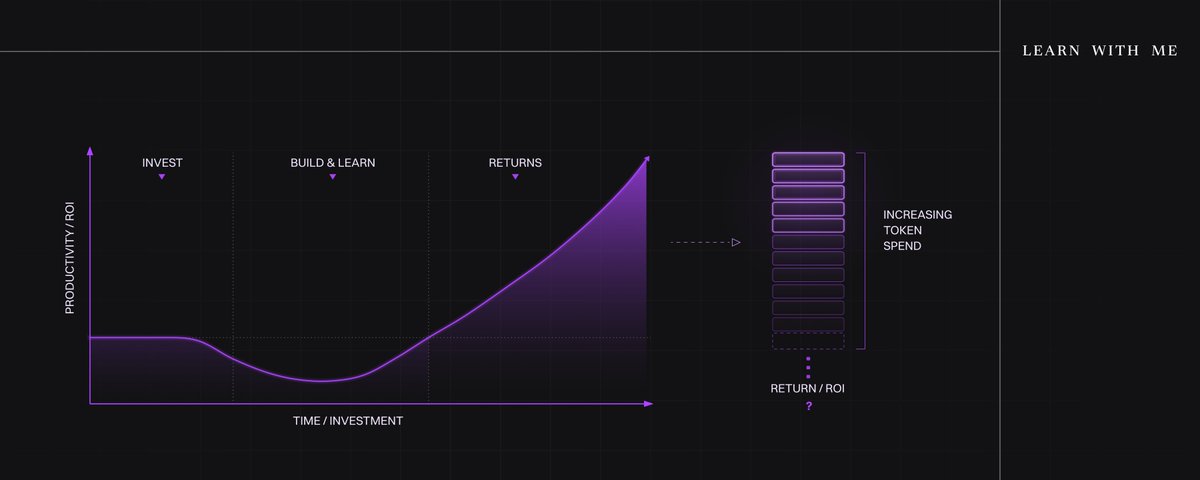
It's conceivable that the productivity enhancements anticipated from AI adoption will, for any multi-layered organization, be capped at the productivity growth of its least productive layer.
This may be disappointing to markets and deflate the AI trade, but the setback won't be long because markets that have willed this tech can also will others, to be fair.
1
1
53
More on this notion in a 2+ year-old post that has held up well and may still prove its worth: wire.insiderfinance.io/senti…

1
40


Economic realities.
"AI ROI debate expects productivity numbers to move at the speed of AI, when they move at the speed of big companies adopting it."
"Automation applied to an efficient operation magnifies efficiency, and applied to an inefficient one magnifies inefficiency."

1
94
Not typically contemplated in debates on rising debt/GDP is the probability that GDP in the past 2-3 decades would have trended far lower than it has with the assistance of fiscal and monetary policy. So it isn't a given that debt/GDP would/can be reduced with debt deceleration.
1
36
Maybe this is a good thing (in context of post-digital economy). Wages are unlikely to climb with competitive pressures from AI and related tech, so the value of 401k's and other investments increasingly matters. Maybe it is correct for stock markets to be a primary policy focus.

This is the biggest problem in American politics.
For 50 years, corporate profits averaged roughly 7% of national income. Today, corporate profits account for more than 14%.
In today’s dollars, that difference is about $2 trillion per year.
There is no single explanation for why this shift occurred, and it certainly isn’t just one thing.
This isn’t all bad either. A larger corporate profit share helps explain why corporate earnings and asset prices have risen so strongly relative to the economy and to history, benefiting many people.
But the distributional effects of this shift are substantial, and they help explain why so many people feel the current system isn’t working for them.
This trend has been developing for nearly 30 years and spans political parties.

2
1
729
Perhaps the goal shouldn’t be to reduce inflation to a 2% target, but to understand the cost of doing so and whether it is worth it. There may be an optimal balance of economic cost and resulting inflation, with a reasonable level for both. What makes 2% the perfect end point?
Because the use case was always speculation, and only that, a popular activity that is likely to grow (and has) as uncertainty grows. Maybe this is what the "Jevons paradox" was always really suggesting.
wsj.com/finance/currencies/f…

1
1
113
Perhaps not unrelated:
wsj.com/world/u-s-used-promi…

1
61
Growth is good, but wide scale popular technology adoptions pass through an inflection or tipping point before the world changes. This may or may not be it, but it's what it would look like in retrospect.


When there are substantive changes in the markets' flows and clusters (AI, supply chains, geopolitics), it isn't only known disruptions but the unknown ones that always happen. It is advisable then to let the markets settle and adapt before applying treatment. First do no harm.
1
57
The point is more general and applies to all fields. A bigger economic risk perhaps than overinvestment.

Goldman Sachs partner warns of 'huge danger' in letting AI replace bankers' reasoning skills cnbc.com/2026/08/24/goldman-…

1
104
Will be an interesting case to follow. Can a tech vendor that is having a moment use profits to buy its way into platform status before the moment ends?

BREAKING: Nvidia, $NVDA, has agreed to provide a more than $100 billion backstop for a massive new OpenAI data center in Ohio, per FT.
Details include:
1. Nvidia will provide credit support for the "land, power and shell" for the facility capped at $105 billion
2. The data center is being developed alongside a SoftBank-led energy companies
3. Nvidia will also invest $1.5 billion into SB Energy, an energy company founded as part of the SoftBank Group in 2019
4. OpenAI plans to lease as much as 8 gigawatts of AI computing power at the data center in Pike County, Ohio, which will take until 2032 to complete
This will mark one of the largest AI infrastructure deals yet.