

Endurance athlete (I bike a lot these days), food lover, DINKWAD. Prof. @USCMarshall, @airbnb housing scholar, ex @amazon. Substack: https://nitter.gq/t.co/SWa1MTA7WP
Los Angeles, CA
Joined January 2014
- Tweets7K
- Following981
- Followers1.6K
- Likes13K






Davide Proserpio retweeted

I joined @GoogleDeepMind to develop a research program on the economics of AGI. Today, together with Andrew Koh (@andrewjkoh) and Shane Legg (@ShaneLegg), we are incredibly excited to release The Economics of Intelligence, the first in a series of projects from our group on how AGI will change the economy.
How do capability improvements transform the economy, and when? In this project, we define thresholds of economic capabilities, e.g., minimal AGI, based on how they transform the economy. We then track how the economy–market structure, employment, and wages–changes during the transition across capability regimes.
We have seen exponential increases in what AI agents can do but the broader economy seems almost remarkably unchanged. Part of the reason is that the solo AI agent is the wrong economic object; economic transformation is an equilibrium outcome where organizations compete. Looking at how intelligence functions within organizations, transformation will depend on when two key capability thresholds are crossed: competence (gains on individual skills, e.g., coding, math) and coordination (gains on ability of agents to cooperate and work together).
We show that what economic transformation looks like depends on whether AI becomes supercompetent, supercooperative, or both—the regime of artificial superintelligence (ASI). Tracking this transition shows why the real visible transformation may come from improvements in coordination—a capability most benchmarks don’t yet track. Past a certain threshold, AI capabilities can break the Coasian ceiling on firm size and lead to an economy that looks drastically different than the one we see today.
Two main takeaways:
1. To understand the path of transformation, we should be tracking agentic coordination more closely.
2. The impact of AI will likely show up in wages before market structure or employment.
We are really excited about this paper. Excited to hear people’s thoughts.
Link: institute.deepmind.com/essay…
Davide Proserpio retweeted

Please send us your papers if you are working on a broad set of topics related to gender in both Economics and Finance!
Also, you should never pass on a chance to be in Rome during Spring-time!

📢 Great call for papers for those working on gender and labor markets in Europe & Central Asia.
From employment and entrepreneurship to the care economy, firm behavior, and AI & the future of work.
📍 Rome, May 13–14, 2027
⏰ Abstracts due Jan 18
Organized by @Unibocconi , @EIEF_Rome & the @WorldBankGroup
Worth checking out and sharing! 👇

Did the SpaceX IPO move the LA housing market?
In June, SpaceX priced the largest IPO on record. Its Hawthorne campus employs roughly 7,600 workers, a few miles from some of the most expensive beach towns in Southern California. Within days, local brokers reported calls from SpaceX employees about $5M+ homes. So naturally, Marco Giacoletti and I decided to see whether there was any truth to it.
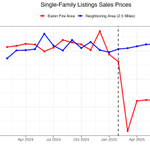
In a new R.E.A.L. post, we ask whether the data back up these anecdotes. We combined Census data on where SpaceX Hawthorne workers live with ZIP-code-level housing data from Redfin and Zillow. We did find suggestive evidence that SpaceX did increase home sales:
1. Home sales in the six expensive ZIP codes where SpaceX workers concentrate rose 24% year over year in June–August while only 2% in 51 comparable expensive ZIP codes.
2. The 22-point gap is the largest in any three-month window since 2017.
3. Prices have barely moved so far, consistent with evidence from past California IPOs.
Full post: realab.blog/p/did-the-spacex…

Davide Proserpio retweeted

I'm hiring a full-time RA jointly with Rodrigo Adao, @BrentNeiman, and @HansbergRossi to work on topics relates to trade and spatial economics!
Please see more details in the link below:
job-boards.greenhouse.io/bfi…
Time given to review a paper should move from months to days.

Glad to see someone documenting what has been clear for almost a year now: AI reviewing beats human reviewing.
The upcoming challenge will be to decide when “enough is enough” because the AI reviewers are never satisfied, and if we cave to all their demands we end up with 150-page “papers” full of robustness checks and no clear message.
I'm pretty sure the review system as we know it is no longer viable or useful. We should start rethinking how to review papers.
Perhaps the reality is that academics attack AI because they think it will take away their own (and often only) identity. If things continue this way, there will be little space left for research as we currently know and do it, and this scares the shit out of every professor.
Davide Proserpio retweeted

Please share this opportunity with your students. Going to start contacting applicants very soon.

I'm hiring an economics predoc at @ColumbiaSIPA, generally on applied micro projects, but with a large focus on the impacts of AI on economic outcomes using large-scale field experiments with many companies.
Please share widely: apply.interfolio.com/194121
Since 2000, U.S. home prices are up 227% and rents are up 146%. The median full-time worker's pay is up 121%. So wages have almost kept up with rents, but buying a house is becoming extremely hard in most of the country. And high interest rates do not help at.
More on this in our upcoming realab.blog/ post. Stay tuned for more!

We wrote about this in 2015: "95% of Airbnb properties boast an average star-rating of either 4.5 or 5 stars" See papers.ssrn.com/sol3/papers.…


You can get a pretty good idea here: levels.fyi/?tab=levels


Davide Proserpio retweeted

I’m starting a Substack to write about data ecology, AI agents, and the data ecosystems we’re building and studying in my research group and at invocate. My first post explains why I think data ecology matters more than ever. Would love to hear reactions.
raulcfernandez.substack.com/…
Davide Proserpio retweeted

I’m on the Econ job market this year!
My job market paper shows that former coworkers help explain both who moves next and where they go. These connections are also associated with higher wages and longer-lasting matches.
Paper: papers.ssrn.com/abstract=671…
#Economics #EconJobMarket
🤖 Made with AI

Davide Proserpio retweeted

𝗟𝗮𝘂𝗻𝗰𝗵𝗶𝗻𝗴 𝘁𝗵𝗲 𝗣𝗲𝗿𝗽𝗹𝗲𝘅𝗶𝘁𝘆 𝗥𝗲𝘀𝗲𝗮𝗿𝗰𝗵 𝗙𝗲𝗹𝗹𝗼𝘄𝘀𝗵𝗶𝗽
If you’re in STEM and exploring a transition into AI research, please consider joining us to push the frontier of intelligence systems!
𝗙𝗲𝗹𝗹𝗼𝘄𝘀𝗵𝗶𝗽: perplexity.ai/hub/research/f…
𝗔𝗽𝗽𝗹𝗶𝗰𝗮𝘁𝗶𝗼𝗻: jobs.ashbyhq.com/Perplexity/…

Davide Proserpio retweeted

I’m once again on the program committee for the Workshop on Platform Analytics (WoPA), taking place April 2–3 at UC San Diego this upcoming year. It’s a great workshop, and I encourage anyone working on platforms to submit a paper! The submission deadline is December 6, 2026.
platformanalytics.org/

PhD was my backup option :)

Students sometimes tell me they’re applying to PhD programs as a backup in case they don’t get a job as a software engineer or whatever. I get that the job market is rough but this is like saying you’ll start a company if you don’t find a job. Like starting a company, a PhD is the far *more* risky path and requires incredible grit over a long period. It isn’t just that you might realize after a couple of years that a PhD isn’t for you. The bigger risk is that you complete a PhD but end up overqualified on a niche topic after having spent 5-7 years on it. The research world, like acting, sports, music, or book publishing, is set up as a tournament, with lots of extremely competent people competing for a small number of highly desirable slots. We can talk about whether that’s fair and whether it’s inherent or can be changed, but as a professor I feel the least I can do is loudly and repeatedly warn people about what they’re getting into.