

Building Vector: The Enterprise AI Operating System @ https://xitter.cf/t.co/D38E5CY488, and LifeOS: The Human Magnification OS @ https://xitter.cf/t.co/muV0Un0Hi8 | Ex: Apple, Robinhood, HP, Army
San Francisco Bay Area
Joined March 2007
- Tweets29.7K
- Following1.6K
- Followers161K
- Likes24.5K




Pinned Tweet
I feel like everyone is going to figure out at the same time (in 1-4 months or so) that our biggest problem today with AI isn’t actually an AI problem.
The problem is we’re not giving our AIs clear enough definitions of what we want.
So our AIs basically go off and build in some direction, but not exactly the direction you want to go in.
This problem has three main parts:
1. You knowing what you want
2. You being able to articulate that thing thoroughly and accurately
3. Your AI being able to do that thing
Everyone assumes the problem is with number 3, but it’s usually a combination of 1 and 2.
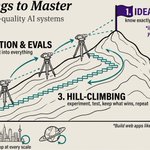
The next biggest advancement in AI (or one of them anyway) is going to come from harnesses building this concept of ideal state, evals, and hill-climbing directly into their DNA.
In the model providers can help as well by eliciting this from the user and building this before any work is done.
Ideal State, Evals, and hill-climbing. This is where it’s at.
This is my surprised face.

Just wait til everyone has a Mythos-level Thanos Guantlet with full golden retriever sycophancy.
I keep telling you all: We’re not even slightly ready.
We’re living in the opening scenes in a pandemic movie.
Pretty soon the narrative will be, “Dario should have warned us about the dangers of open source models!”
I can’t wait to see the AA benchmarks on this model. Absolutely insane.
But it’s a bit of a strange situation to call it open. First the weights done come out for another month.
And second, it’s a 2.8 trillion param model. So pretty hard to run at home for most people.
In effect most Chinese models like this end up being run almost exactly like OpenAI or Anthropic: directly over their cloud.

Introducing Kimi K3.1 Pro: our most capable 3T-class open-weight model.
🔹 1M-token context, 2.8T total / 104B active params (MoE), Multimodal.
🔹 Full-project coding: games in Unreal, Unity & Godot.
🔹 Excels at parametric 3D modeling in Blender & CAD.
🔹 More reliable at finance work: Accurate modeling with hallucination down by 65%.
🔹 Matching the strongest proprietary models across coding, agentic and knowledge benchmarks.
Kimi K3.1 Pro and K3.1 Pro Highspeed (2–3× faster) are now live on Kimi.ai, Kimi Work, Kimi Code, and the Kimi API.
Open weights by Nov 4, 2026.
🔗 API: platform.kimi.ai
🔗 Tech blog: kimi.ai/blog/kimi-k3-1-pro

Palo Alto says they're vulnerable to the PHP flaws via their management interfaces.
At this point I don't trust SSH daemons being visible to the internet. I highly recommend people put as much stuff as possible behind systems like Tailscale / Cloudflare Tunnels, and similar services.
Not a perfect solution, but we should consider anything rawdogging on the internet to be in play.
securityonline.info/pan-os-p…

While this whole Purge, or Great Fire, is starting to roll over us we need to consider another quite disturbing thought.
We're all talking about software, but if you've been watching the AI maker space for the last several months it's become clear that hardware is absolutely on the board now as well. You can kind of point an AI at a piece of hardware and it just Neo's that shit.
So this isn't just an applications, services, APIs, libraries situation. It's also about to be a hardware, sensors, devices, Internet of Things situation as well.
And of course they're all interlinked: the software, firmware, and the hardware.
ᴅᴀɴɪᴇʟ ᴍɪᴇssʟᴇʀ 🛡️ retweeted
I know you disagree, but this is incorrect.
The complete, natural language articulation of what you want should be primary.
Old-school specs are lossy abstractions of that type of articulation. But code is also just a flawed implementation of the idea. Of the ideal.
The primary artifact should be the fully articulated ideal state definition of exactly what you want. In language. And granular, testable criteria with evals.
And then the code is the lossy output from that.
And the goal should be to have that output align with the idea as closely as possible.
The code isn’t primary. The idea itself is.

I have a few pieces of cybersecurity advice for anyone willing to listen:
Reduce the number of vendors your core security depends on.
Expect lots of small, medium-sized, and even some large security / services companies to get compromised in the next year or so, if they aren't already.
Put most of your trust in the absolute top tier of companies in terms of security and engineering.
These are companies like Google, Apple, and (I would argue) Cloudflare. A good heuristic is how big and talented their security teams, and how much money their company invests in security.
If there is a security issue in Chrome, or iOS, for example, you can be damn sure that hundreds or thousands of the smartest people in the world are working to fix it. And these companies would be willing and/or happy to spend tens of millions of dollars instantly to solve the issue.
I'm not going to name companies, but there are many applications and services out there for managing keys, passwords, source code, secrets, etc., where the security teams are decent, but they're basically large startups. The security teams are far more varied in talent levels and budget levels.
Basically we're about to be hit with a tidal wave (or global forest fire, pick your metaphor) of both advanced and persistent attacks with existing vulnerabilities, as well as lots of completely new attacks nobody's seen before.
You want to have your personal and company security relying on as few of these small to medium sized companies as possible. Not because they're totally incompetent, but because many of them are likely not up to the challenge of defending against millions of agents running open source attack models and harnesses.
Look at your whole security tech stack. See where you can reduce dependency on small-to-medium sized Jenga blocks that have a high chance of getting compromised during this storm.
And remember, it's not just that the teams and budgets aren't as big as companies like Google and Apple. It's also the fact that these companies (like password managers, for example) are so damn attractive.
Millions of users and their passwords. These are not good places to have credentials right now. Or data. Or infrastructure.
This is not an absolute thing. I'm not saying cancel all engagements and get our of all small companies or whatever. Or that the big ones will be perfect either.
I'm saying, as a general truth, on the whole, moving in this direction is likely to make you more secure while this thing hits us.
I know you disagree, but this is incorrect.
The complete, natural language articulation of what you want should be primary.
Old-school specs are lossy abstractions of that type of articulation. But code is also just a flawed implementation of the idea. Of the ideal.
The primary artifact should be the fully articulated ideal state definition of exactly what you want. In language. And granular, testable criteria with evals.
And then the code is the lossy output from that.
And the goal should be to have that output align with the idea as closely as possible.
The code isn’t primary. The idea itself is.
So real you wince while reading it.

Security called me at 6:12 AM today.
"Patch every PHP server immediately."
I asked what happened.
"Two critical vulnerabilities. Remote code execution. No authentication required."
Cool.
How many PHP servers do we have?
According to inventory: 12
According to reality:
Nobody knows.
We found one running WordPress.
Three running old internal tools.
One under someone's desk.
Two inside vendor appliances.
A forgotten employee directory from 2016.
And a server named:
PHP-OLD-DO-NOT-TOUCH
Naturally, that one runs payroll exports.
Then we found a PHP 5.6 box.
I asked who owned it.
The documentation said:
BRIAN.
Brian left in 2019.
We called Brian.
He said:
"Oh wow, that's still running?"
Excellent.
By 8 AM, leadership joined the incident call.
CEO:
"Can hackers actually get in?"
Security:
"Potentially yes."
CEO:
"Without a password?"
Security:
"Yes."
CEO:
"Then why do WE need passwords?"
Not the lesson.
Finance asked if we could wait until the weekend to patch because downtime affects revenue.
Security explained that the alternative was letting strangers execute code on our servers.
Finance asked for a cost comparison.
At 9:17, someone suggested temporarily taking the vulnerable websites offline.
Marketing refused.
"Our campaign is live."
So for the next hour, the company officially decided maintaining a landing page for 20% off webinar registration was more important than preventing remote server takeover.
We finally patched everything we could find.
Then our scanner discovered another PHP server.
Hostname:
TEMP-PHP-2014
Uptime:
4,512 days.
Nobody knows what it does.
Nobody owns it.
Nobody can shut it down.
But every time we block network access, the warehouse stops printing shipping labels.
Security has classified it as critical infrastructure.
It is running PHP 5.4.
The vulnerability has existed longer than half our employees.
The emergency patch took four hours.
Finding out what PHP actually runs took eleven.
The internet isn't held together with code.
It's held together with servers everyone is afraid to turn off.
Yeah I’m a bit worried Anthropic won’t be able to release a new, “smartest model ever” into this environment.
Hope I’m wrong.
It’s not the closed models that are the issue in this meta. It’s mostly open models and harnesses. Still, the optics.

It’s important to hear both the dire warning and the optimism in this.
This will be like a global forest fire, or flooding, or whatever the metaphor you want to use. And it’ll be really really bad.
But it’s survivable. And we should behave as if we will survive, and do the absolute best we can to get ready, adapt, and overcome.
And absent any way to know, I think 18 months is a good rough estimate for how long it’ll take the waves to pass. Leaving us far stronger.


Big yikes.
What I’m trying to figure out is what would cause all these different incidents to sort of happen at the same time.
It has the feeling to me of something where it’s more like the coverage is happening at the same time, versus the actual events.
Because the alternative would require that some major open model or open harness / combination just became available, and or that attackers just now learned how to use them. Simultaneously.

SCOOP: Major U.S. banks are detecting unauthorized third-party AI agents inside customer accounts, including some attempting to take actions that appear to be independent of user instructions, sources told Axios.
The findings have alarmed banking executives, who are racing to restrict access to their systems as AI moves at a velocity faster than financial institutions can respond, multiple industry and bank executives told Axios.
Several banks are now preparing for worst-case and even “day after” scenarios, including how to rapidly secure or restore customer accounts if things go wrong, the people said.
Several bank executives told Axios they're struggling to distinguish between human users and AI agents. One executive said banks also struggle to determine whether agents are authorized by customers or potentially operating without their permission, more akin to rogue agent behavior.
Read my latest for Axios here: axios.com/2026/10/22/ai-agen…

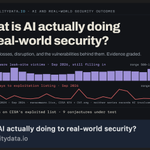
I've been working for a while on a site that helps answer one question:
"How much is AI actually affecting cybersecurity outcomes?"
I've got tons of data sources and analysis in here. If you're in this space, help me improve it!
vulnerabilitydata.io/


Patch PHP today and make sure to restart your workers. Exploitation has gone from thousands of attempts to millions within hours.
securityonline.info/php2shel…

I think I have a good analogy for what's about to happen in cyber.
It's pitch dark. Always has been. And the world is dilapidated buildings and rats and maggots and other creepy-crawlies. The whole world.
And we just invented flashlights.
How bad is this Gitlab issue? About as bad as it gets.
Anyone on the internet can take over an exposed, self-hosted GitLab server without logging in, on any version from the last 12 years.
Shodan is showing ~60K exposed servers online, which is a lot, but there are are far more internally for anyone with a foothold already.

🚨 CRITICAL: GitLab flaw (CVSS 10.0) affects 12 years of releases.
CVE-2026-110264 could allow unauthenticated remote code execution on self-managed servers.
Read - thehackernews.com/2026/10/cr…


ᴅᴀɴɪᴇʟ ᴍɪᴇssʟᴇʀ 🛡️ retweeted

Effective Immediately, all organizations using PHP for their systems are advised to be prepared for an update addressing two critical vulnerabilities. PHP is widely used for web applications. These vulnerabilities often provide a direct path to the server's file system or database. If an immediate update is not feasible, it is recommend that organizations take the system offline until it can be fully mitigated. NSA will follow up shortly with more specific guidance.