






RatFinky retweeted

WE are LIVE 🖤🖤🖤
LALIRRA FOR HIM has officially launched and can now be purchased from our website - the launch discount code MAN15 *conditions apply
lalirraskin.com.au/collectio…


RatFinky retweeted
They’re here. 🖤
First samples of LALIRRA FOR HIM just landed — The Man Soap, The Man Spray, The Man Cream.
Simple routine. No fuss. Built for blokes who want good skin without the shelf full of products.
Full size dropping soon. 👀
#LalirraForHim #MensGrooming #Skincare
Thanks to the men out there that have offered to give these samples a go!

RatFinky retweeted

Love what the Australian soccer team says about modern Australia. Seriously, watch this video, and you'll be cheering for them too.
RatFinky retweeted

I am absolutely fed up with the relentless targeting of Grace Tame.
Let's be clear. There is a difference between fair criticism and a public pile-on. What we keep seeing directed at Grace is not constructive debate. It is constant scrutiny, personal attacks, outrage cycles and a level of judgment that seems reserved for women who dare to speak too loudly, too honestly or too unapologetically.
Grace Tame survived child sexual abuse. She helped change laws. She gave a voice to countless survivors. She has spent years doing work that most people would never have the courage to do.
Yet the attacks never seem to stop.
A few weeks ago it was the Prime Minister taking aim at her. Now it's Charlie Pickering. Before that, countless commentators, columnists and social media critics. Different names, same pattern.
And frankly, it disgusts me.
No, women in public life should not be immune from criticism. Nobody is. But there is a world of difference between criticism and the kind of sustained public hounding that seeks to diminish, discredit and exhaust someone.
As someone who has experienced public judgment and media attacks, I know how destructive these campaigns can be. They reduce human beings to caricatures. They erase context. They encourage outrage while ignoring the very real emotional toll on the person at the centre of it.
What troubles me most is that women who survive violence are so often expected to be perfect. The moment they become angry, outspoken, political, imperfect or inconvenient, they are treated as fair game.
Grace Tame has contributed more to the conversation about sexual abuse and survivor advocacy in this country than most of her critics ever will.
Maybe it's time some of the men lining up to take shots at her stopped and asked themselves a simple question:
Why are they spending so much energy attacking a survivor instead of supporting the change she helped create?
Enough. #gracetame #charliepickering

RatFinky retweeted

Thank you for standing by me and showing me so much love and support over the past year. I’ve still got some healing to do, but I am on my way! See you soon. 💖 🦋
RatFinky retweeted

We are called "the elderly." But that quiet label hides something most people rarely stop to consider. We are the last living witnesses of a world that no longer exists.
Look at us and you might see gray hair, slower steps, and the patience that time teaches.
But listen to our story — really listen — and you'll realize something extraordinary.
We are the only generation in human history to have lived a fully analog childhood and a fully digital adulthood.
That's not a small thing. That's one of the most breathtaking journeys a human being has ever been asked to make.
We were born in the 1940s, 50s, and early 60s, into a world still rebuilding from the rubble of World War II.
Our toys were marbles and hopscotch and card games at kitchen tables. When the streetlights flickered on, that was it — childhood adventures were over, and it was time to go home. No smartphones. No streaming. No endless scroll.
We built our memories in the real world. With scraped knees and laughter echoing down streets and friendships formed face to face.
In 1969, we sat in living rooms staring at black-and-white televisions as Neil Armstrong took humanity's first steps on the Moon. Hundreds of thousands of us stood in muddy fields at Woodstock believing — really believing — that music and community could reshape the future.
We fell in love to vinyl records spinning on turntables. We waited days, sometimes weeks, for handwritten letters to arrive. We learned patience because information didn't come instantly. Mistakes were fixed with erasers — not a delete button.
Then the world transformed.
Machines that once filled entire rooms shrank to devices lighter than a paperback. We went from rotary phones and party lines to seeing the face of someone we love on the other side of the ocean — instantly, on something that fits in a pocket.
We watched the birth of the personal computer. The arrival of the internet. The smartphone. Artificial intelligence.
And through every single shift — we adapted.
Not because it was easy. Because that's what our generation does.
We also carry the weight of history in our bodies.
We grew up afraid of polio and tuberculosis. We watched science defeat them. We witnessed the discovery of the structure of DNA, the decoding of the human genome, the transformation of medicine itself. We survived pandemics across decades — and kept going.
Few generations have been asked to absorb so much change in a single lifetime.
And through all of it, certain things never changed.
We still know the joy of a cold glass of lemonade on a hot afternoon. The taste of vegetables picked straight from a garden. The value of a long conversation that unfolds slowly, without a screen interrupting it.
We have celebrated births and mourned losses. Carried the stories of friends who are gone. Watched the world become something our younger selves couldn't have imagined — and found ways to belong in it anyway.
We are not relics.
We are living bridges between two entirely different worlds.
Our memory carries something the modern world needs — proof that progress doesn't have to erase wisdom. That speed doesn't have to replace patience, kindness, or reflection.
So when someone calls us elderly, we can smile.
Because behind that word is something remarkable.
We crossed two centuries. Witnessed eight decades of transformation. Walked from handwritten letters to artificial intelligence — and never lost our sense of what actually matters.

RatFinky retweeted

Robert Mueller died last night.
He was 81 years old. He had a wife who loved him for sixty years. He had two daughters, one of whom he met for the first time in Hawaii, in 1969, on a few hours of military leave, before he got back on the plane and returned to Vietnam. He had grandchildren. He had a faith he practiced quietly, without performance. He had, in the way of men who have seen real things and survived them, a quality that is increasingly rare and increasingly mocked in the country he spent his life serving.
He had integrity.
And tonight the President of the United States said good!
I have been sitting with that word for hours now. Good. One syllable. The thing you say when the coffee is hot or the traffic is moving. The thing a man who has never had to bury anyone, never had to sit in the specific silence of a room where someone is newly absent, reaches for when he wants the world to know he is satisfied. Good. The daughters are crying and the wife is alone in the house and good.
I want to speak directly to the Americans reading this. Not the political Americans. Just the human ones. The ones who have lost a father. The ones who know what it is to be in that first hour, when you keep forgetting and then remembering again, when ordinary objects become unbearable, when the world outside the window seems obscene in its indifference. I want to ask you, simply, to hold that feeling for a moment, and then to understand that the man you elected looked at it and typed a single word.
Good.
This is not a country having a bad day. I need you to understand that. Countries have bad days. Elections go wrong. Leaders disappoint. Institutions bend. But there is a different thing, a rarer and more terrible thing, that happens when the moral center of a place simply gives way. Not dramatically. Not with a single catastrophic event. But quietly, in increments, until one evening a president celebrates the death of an old man whose family is still warm with grief, and enough people find it acceptable that it becomes the weather. Just the weather.
That is what is happening. That is what has happened.
The world knows. From Tokyo to Oslo, from London to Buenos Aires, people are not angry at America tonight. Anger would mean there was still something to fight for, some remaining faith to be betrayed. What I see, in the reactions from everywhere that is not here, is something older and sadder than anger. It is the look people get when they have waited a long time for someone they love to find their way back, and have finally understood that they are not coming.
America is being grieved. Past tense, almost. The idea of it. The thing it represented to people who had nothing else to believe in, who came here with everything they owned in a single bag because they had heard, somehow, across an ocean, that this was the place where decency was written into the walls. That idea is not resting. It is not suspended. It is being buried, in real time, with 7,450 likes before dinner.
And the church said nothing.
Seventy million people have decided that this man, this specific man who has cheated everyone he has ever made a promise to, who has mocked the disabled and the dead and the grieving, who celebrated tonight while a family wept, is an instrument of God. The pastors who made that bargain did not just trade away their credibility. They traded away the thing that made them worth listening to in the first place. The cross they carry now is a costume. The faith they preach is a loyalty oath with scripture attached. When the history of American Christianity is written, this will be the chapter they skip at seminary.
Now I want to talk about the men who stand next to him.
Because this is the part that actually breaks my heart.
JD Vance is not a bad man. I have to say that, because it is true, and because the truth matters even now, especially now. Marco Rubio is not a bad man. Lindsey Graham is not a bad man. They are idiots, but not bad, as in BAD! These are men with mothers who raised them and children who love them and friends who remember who they were before all of this. They are not monsters. Monsters are simple. Monsters do not cost you anything emotionally because there is nothing in them to mourn.
These men are something more painful than monsters.
They are men who knew better, and know better still, and will get up tomorrow and do it again.
Every small compromise they made had a reason. Every moment they looked the other way had a justification that sounded, at the time, almost reasonable. And now they have arrived here, at a place where a president celebrates the death of an old man and they will find a way, on television, to say nothing that means anything, and they will go home to houses where children who carry their name are waiting, and they will say goodnight, and they will say nothing.
Their oldest friends are watching. The ones who knew Rubio when he still believed in something. Who knew Graham when he said, out loud, on the record, that this exact man would destroy the Republican Party and deserve it. Who sat next to Vance and thought here is someone worth knowing. Those friends are not angry tonight. They moved through anger a long time ago. What they feel now is the quiet, irrecoverable sadness of watching someone disappear while still being present. Of watching a person they loved choose, again and again, to become less.
That is what cowardice costs. Not the coward. The people who loved him.
And in the comments tonight, the followers celebrate. People who ten years ago brought casseroles to grieving neighbours. Who stood in the rain at gravesides and meant the words they said. Who told their children that we do not speak ill of the dead because the dead were someone's beloved. Those people are tonight typing gleeful things about a man whose daughters are not yet done crying. And they feel clean doing it. Righteous. Because somewhere along the way the thing they were given in exchange for their decency was the feeling of belonging to something, and that feeling is very hard to give up even when you can no longer remember what you gave for it.
When Trump is gone, they will still be here.
Standing in the silence where the noise used to be. Without the permission the crowd gave them. Without the pastor who told them their cruelty was holy. They will be alone with what they said and what they cheered and what they chose to become, and there will be no one left to tell them it was righteous.
That morning is coming.
Robert Mueller flew across the Pacific on military leave to hold his newborn daughter for a few hours before returning to the war. He came home. He buried his dead with honour. He served presidents of both parties because he understood that the institution was larger than any one man. He told his grandchildren that a lie is the worst thing a person can do, that a reputation once lost cannot be recovered, and he lived that, every day, in the quiet and unglamorous way of people who actually believe what they say.
He was the kind of American the world used to point to when it needed to believe the story was true.
He died last night. His wife is alone in their house in Georgetown. His daughters are learning what the world is without him in it. And somewhere in the particular hush that falls over a family in the first hours of loss, the most powerful man and the biggest loser on earth sent a message to say he was glad.
The world that loved what America was supposed to be is grieving tonight. Not for Robert Mueller only. For the country that produced him and then became this. For the distance between what was promised and what was delivered. For the suspicion, growing quieter and more certain with each passing month, that the America people believed in was always partly a story, and the story is over now, and there is nothing yet to replace it.
That is all it needed to be.
A man died. His family is broken open with grief.
That is all it needed to be.
Instead the President said good.
And the country that once stood for something looked away 🇺🇸
Gandalv / @Microinteracti1


RatFinky retweeted

The late Rev Jesse Jackson was looking down today with a deep sense of pride as Barack Obama chose his funeral to unload on what had been a long time coming. This was some both barrels rhetoric right here.
Can we put the brakes of this tyranny in November? YES WE CAN, AND WE WILL.
🎥 TikTok - vm.tiktok.com/ZNRmcNdYp/
RatFinky retweeted

Do You Remember America Before Trump?
NEW VIDEO! WATCH! TAKE OUR COUNTRY BACK.
Let's get this to 1 million views fast.
Please retweet and quote tweet.
RatFinky retweeted

This is the REAL Australia.
The Australia before the false invasion of the Zionist ideology.
RatFinky retweeted

As a social scientist long experienced in crime prevention I'd love to bear hug the champs who made this. Evidence based policy and human rights still matter.
RatFinky retweeted

Extreme Heatwave Warning
For people in North East and East Gippsland Forecast Districts.
Stay informed: bom.gov.au/vic/warnings/


RatFinky retweeted
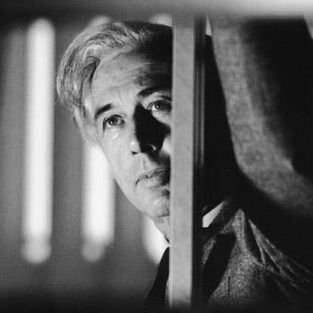
Mel Brooks reminisces how Alfred Hitchcock reacted after seeing the premiere of 'High Anxiety' (1977):
"'High Anxiety' (1977) premiered on December 25, 1977. At that premiere screening, Hitch sat right next to me. I had my own high anxiety awaiting his re- action. He didn’t laugh. He just sat and he watched. He only broke up once. When the birds let go and plastered me with their droppings, then I could see his shoulders shaking. When the film was over, he got up and walked out. He didn’t say he liked the picture. He didn’t say he hated the picture. He didn’t say anything. He just left.
I was devastated. And really worried. Not long after, when I came into the office, there on my desk was a huge box covered with silver paper and red ribbon. I tore the paper open and underneath was an impressive wooden case with a label that read: CHATEAU HAUT BRION 1961. I opened it to see six big, beautiful magnums of Chateau Haut Brion 1961. A priceless gift of one of the finest wines ever made.
There was a note:
"My dear Mel,
What a splendid entertainment, one that should give you no anxieties of any kind.
I thank you most humbly for your dedication and I offer you further thanks on behalf of the Golden Gate Bridge.
With kindest regards and again my warmest congratulations.
--- Hitch"
Needless to say, all my worries disappeared. If there was one person in the world I really wanted to like the picture, it was Alfred Hitchcock, and god bless him, he did. And as a thrilling bonus, I could now refer to him as “Hitch.”
Hitch knew something not everyone knew—that I had become a devotee of fine wines and had a wine cellar featuring some really classic vintages. I don’t know a lot, but I do know a lot about wine. (I’m not bragging. It’s just a fact.)
('All About Me - My remarkable life in Show Business", Mel Brooks, 2021)