

Spaghetti and a meatball 🙂
Simeis 147, also known as the Spaghetti Nebula, is a supernova remnant in between the constellations Auriga and Taurus. It has a low surface brightness and is identified by its distinctive filamentary structure.
Exposure: ~42h
#Astrophotography

Rosette Cone Nebula three panel mosaic
Exposure: ~47 hours
Takahashi FSQ106ED + F/3 0.6 Reducer + ESATTO + Chroma LRGB + QHY600M
@QHYCCD
#Astrophotography

Slight different animation of my NGC1333 stack and I think this came a lot cleaner.
#Astrophotography
My wide field image of NGC1333 was featured in NASA Sky FB and Instagram… m.facebook.com/story.php?sto…


NGC 660 is classified as a "polar ring galaxy", meaning that it has a belt of gas and stars around its centre.
It is about 40 million light years in the constellation of Pisces.
Exposure: 27h
Edge 11HD
QHY268M
Chroma LRGBHa
AP900
@QHYCCD
#Astrophotography

Bubble nebula in Cassiopiea constellation
Total exposure: ~27 hours
S2 - 10h
Ha - 8h 25’
O3 - 9h
Edge 11HD (at 2800mm) + QHY268M + Litecrawler + Chroma 2” SHO filters + AP900 mount.
@QHYCCD
#Astrophotography

At a distance of over 300 million light years, catalogued as ARP273, these two eye-catching galaxies are engaged in close encounters. The distorted appearance is due to the gravitational tides.
Total exposure: 12h
Edge11HD
QHY268M
Chroma LRGB
AP900
@QHYCCD
#Astrophotography

LBN569 and LBN552 in the Cepheus constellation
Total exposure: ~68h
Lum: ~59h
RGB: 3h each
Takahashi FSQ106ED + F/3 0.6 Reducer + ESATTO + Chroma LRGB + QHY600M + AP Mach1
@QHYCCD
#Astrophotography


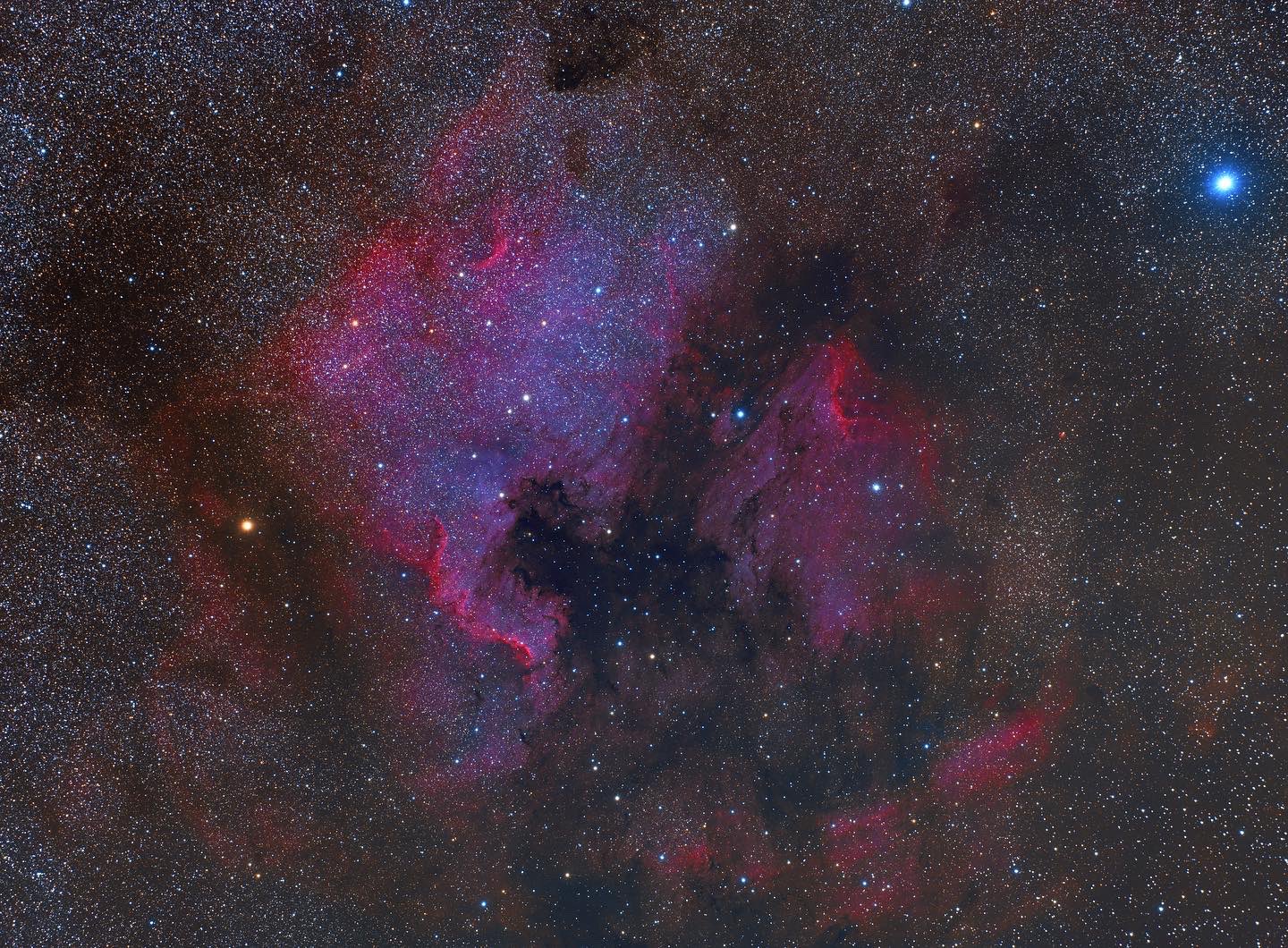
Jewels of Cygnus
1) Crop of Cygnus Wall
2) Crop of Pelican nebula
3) Crop of LDN935
4) North America and Pelican nebulae (actual FOV)
Total exposure - 4h40m
1h10m each in LRGB (10min exp)
FSQ106ED
f/3 red
Chroma LRGB
AP Mach1
@QHYCCD
#Astrophotography


Little Sombrero (NGC7814) in Pegasus
The galaxy is seen edge-on from Earth, both has an extensive halo and central bulge cut by a thin disk with thinner dust lanes in silhouette.
Exposure: 21.5 hours
Edge 11HD
QHY268M
Chroma LRGB
AP900 mount
@QHYCCD
#Astrophotography

NGC7640 - A barred spiral galaxy in the Andromeda constellation
Total integration: ~30 hours
Lum - ~21h
RGB - ~ 3h each
Edge 11HD (at 2800mm)
QHY268M
LiteCrawler
Chroma LRGB filters
AP900 mount
@QHYCCD
#Astrophotography


The Bubble Nebula in Cassiopiea
Total exposure: ~27h
S2 - 10h
Ha - 8h 25’
O3 - 9h 10’
Edge 11HD (at 2800mm)
QHY268M
LiteCrawler
Chroma SHO filters
AP900 mount.
@QHYCCD
@Celestron

Iris Nebula (NGC 7023) is a reflection nebula (in Cepheus constellation), which means its color comes from the scattered light of its central star.
Total exposure: ~48h
Edge 11HD (at 2800mm)
QHY268M
LiteCrawler
Chroma LRGB and Ha filters
AP900 mount.
@QHYCCD
@Celestron
