

Economist. Associate Director, RSM Economic Consulting. Tweets personal, obviously.
Leeds, England
Joined October 2011
- Tweets3.1K
- Following939
- Followers1.3K
- Likes3.8K




Some🚨personal news🚨:
Today - after 6 and a half years - is my last day @jrf_uk.
Its been a fab place to work, with brilliant colleagues, and I'm proud of lots we've achieved in that time.
6
71
In just over a week I'll be joining the social policy team @RSMUK economic consulting.
But first, a week off in the trailer tent!
(First challenge: can we fit 5 people in??)
5
9
Credit is due to Rishi Sunak for listening, recognising he hadn't provided enough support for those hardest hit by the rising cost of living, and coming back with a big, well-targeted package.
See @R_McDonald_'s thread on what that will mean for low income families:

What a relief - Chancellor has funnelled most of the support to low-income families and used benefits to do so - will be hugely positive news for so many families struggling to get by this year.
1
3
I've seen some questions on how the Chancellor can meet the cost of uprating benefits in line with inflation.
But seeing this as a ‘cost’ is the wrong way to think about it. (1/4)
Things the Government didn't worry would spark inflation in the Spring Statement:
- Increasing NICs thresholds
- Cutting fuel duty
- Poorly targeted energy bills rebate
Things the Government do think would spark inflation:
- Uprating benefits in line with inflation
🤔
I was off last week so have just caught up on @StatsPeter's fascinating briefing on uprating decisions, and if you like your briefings to contain analytical nerdiness and important real-world consequences then you probably should too

Our latest analysis revealed that our basic out-of-work benefit experienced its biggest fall in value in 50 years this month. 📉
In this method briefing, @StatsPeter outlines the history of benefit uprating since 1972 👇
jrf.org.uk/report/fifty-year…
5
ICYMI - if you can conduct high quality analysis, learn new techniques and are interested in UK poverty and social policy, here's a great job opportunity:
Applications open until 2nd May
We're recruiting for a Senior Analyst (Tax Benefit Policy Modelling) Maternity Cover.
This role will lead projects that model the impacts of policy changes on people in and at risk of poverty, using the IPPR tax and benefit model.
Read more, here 👇
jrf.org.uk/job-vacancy/senio…

ALT We're hiring! JRF
Excellent public service article from @StatsPeter. The poverty stats out next week come with more uncertainty than usual (because running surveys during a pandemic is hard!) and they won't capture what's happening now, when the threat of poverty is rising

Next week, we have a income statistics bonanza with ONS statistics on living standards out on Monday and DWP statistics out on Thursday. In this blog I set out what they could tell us - and what they can’t: jrf.org.uk/blog/what-latest-…. Two key points:

Me in the @NewStatesman on (you guessed it) the Spring Statement 👇
newstatesman.com/spotlight/e…
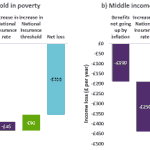
A couple more charts courtesy of @Bex_Holloway , @AnalysisAndrew and @StatsPeter on what the Chancellor's decisions yesterday mean for different households:
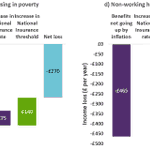
🚨 NEW: 600,000 people will be pulled into poverty due to inaction at the #SpringStatement
We've modelled the impact of the failure to increase benefits in line with inflation, along with the 1.25% ⬆️ in National Insurance and change to the earnings threshold at which it is paid

ALT A chart showing the impact of the Spring Statement on working age households. The chart shows the impact of the increase in the National Insurance rate, of benefits not going up by inflation, the increase in the National Insurance threshold and the net change of all of these measures.

Treasury distributional analysis is presented more confusingly than normal. Does it really make sense to add in benefits from public services in this way? And why only show the combined impact of all policy measures and not the decisions taken at this Spring Statement?

2
4
Rise in NICs thresholds is very expensive for a small gain for low income working families and nothing for those with no-one in work.
The Chancellor has chosen to prioritise a tax break for middle and high income households over preventing a real terms cut to benefits
Time to play is it a big number again.
This time it's very easy. Given the scale of rising cost of living and real terms cuts to benefits, no £500m in a disretionary fund is very very much not a big number
Important reminder given the Chancellor's intro that we would have been facing huge rises in the cost of living without the war in Ukraine, it just makes that rise bigger and longer lasting. He would have had to act in any case
1
Turns out I was the first ever live guest in the new channel 4 news studio in Leeds this evening, which was fun, sort of
3
51
Pretty striking: in the autumn budget, the Chancellor announced the National Living Wage would rise by 6.6%, saying 'For a full-time worker, that’s a pay rise worth over £1,000.'
With inflation now forecast to be over 7% by April, that will actually be a real terms pay cut
Very good thread on macroecon of the cost of living crisis.
I would just add here that because rising energy bills hit low income households harder some redistribution/targeting support would be needed just to make the fall in living standards flat across the distribution

It's worth reiterating the point that - *irrespective of the merits of increasing NICs* - it is a complete distraction from easing the cost of living crisis for low-income households who are hit hardest by it.
I'm interested in reading about how 'social capital' might provide economic security e.g. through risk sharing among networks.
Feels like I've frequently read that it does, but I'm interested in what evidence shows. Any ideas for reading very welcome!
Whole thread is very good but this particularly is a very important point that I haven't seen made enough

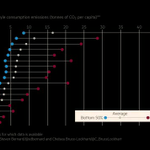
FT economists' survey is interesting as always ft.com/content/001d12df-4420…
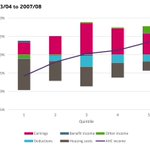
I am not expecting 2022 to be a good year for living standards:
