







welcome back champ!

Over the past week, I’ve been overwhelmed by the love and support of friends, industry colleagues, and people I've never met. Thank you to everyone who has shown kindness to my family and me. It means the world to me.
I came to the United States 53 years ago, and becoming an American citizen is one of the greatest gifts and proudest moments of my life. NVIDIA has been my life’s work. Building it into the company it is today alongside my colleagues has been a privilege and an honor. Nowhere but in America could a company like NVIDIA be possible. I love our country, and I love NVIDIA.
I did not live up to the standards expected of everyone at NVIDIA, and I have made serious mistakes in my personal life. I created problems for the Board that I deeply regret. I own my mistakes completely, and I am committed to cooperating with the Board’s independent investigation.
Since my departure, I’ve seen an outpouring of calls from NVIDIA’s employees, investors, business partners, and customers for me to return as CEO. Many continue to reach out to me directly as the company navigates complex technology, market, competitive, and geopolitical dynamics. NVIDIA is a once-in-a-generation company. If the Board of Directors decides that my return is in the best interest of our shareholders, our employees, the company, and America, I would be honored to answer these calls and return as CEO.
Thank you again to everyone who has shared their good wishes. I am profoundly humbled by your support. To my family: I love you, and I will spend the rest of my life being worthy of yours.
Jensen
133


Don't focus on your mistakes or problems. Instead, focus on what you can do next, how you can be better and where you want to be headed! The future is in your hands, you just have to plan it.
3
100
just survive lads. this is going to be easy mode soon where free incentives will come just like we see airdrops in past or maybe some different one
don’t die before that. survive. survive
88
gold advice for everyone who is suffering from bad mental health

This is what I wish someone told me when I was going through shit
Your perspective is skewed by what glasses you are wearing i.e your thoughts and your mental state, which can all change either through physical / direct injections (drugs), or mental control
with a change in mental state nothing is impossible, i've seen poor people be extremely happy. and what mental states are, are essentially thoughts + emotion = belief; and so rewiring the belief is as simple as looking at the opposite - e.g i have the belief that i'm not good enough -> what if i am good enough ; and then taking action to truly show that
scientifically many studies and religions point to all the same outcomes for mental health and it is very much a solved game - that's the good thing about living in the 21st century. changing your mental state is important, but also, the other thing that works is that your mind really really hates boredom
so when you are in flow state, you are essentially in a one-pointed mind state - your mind is focusing on one thing, and one thing only. depression, anxiety, schizophrenia, paranoia, all have their roots in the opposite of this - too much thought. the alleviation here is to go out and run. sports. anything that activates your parasymphatetic nervous system. in particular, don't work out - instead, you want to do activities like running, gymnastics, and preferably, social - dance, hiit classes, boxing, muay thai, and really - sports is great for this
and once you do that you find that your thoughts and your mind calms down a lot in the day. the essence of this entire answer lies in treating mental health like a problem with a cause and effect
Too much thought -> cause is too little action ; take action
Interaction with thought / feeling bad -> have to change your Default Network Mode to face your emotions, and reorganize your beliefs
Essentially modern living is genuinely bad for *being human* and it is important to spend time in nature and do things that are *human* like running and sports. And then once you are in a better state of mind, you can tackle whatever emotion you are running away from - because frankly, its never about the thing itself. It's always about what the thing makes you feel. When I lost a bunch of money, it was never the money. It was the association that money was safety, and by losing money, I had somehow lost the safety I had. And then I was also angry, and had a bunch of self-regret, and all around I had a lot of negative emotions that I was running away from and didn't confront.
The weird and simple solution is - feel your feelings, and they get better. You are not a rock, and much of modern life focuses on humans trying to be like robots - either working slave like hours, or just generally showing emotion seems to be seen as a form of weakness in this era especially in the corporate world
But feelings are just feelings, and when you feel them, they just go away. It's why you feel better after crying - feelings don't stay there forever when you process them. The only reason they stay there, is because humans rather avoid them instead.
Anyways, I typed this because again - I think while a lot of advice is well-meaning, this is what I wish I had when I was going through shit - practical, real advice from someone who actually knew his shit. Things like time heals, this too shall pass - they're all well and good, but they don't really tell you how to work through it.
Hope this helps. Lots of love,
Kyle
2
116
truly we lack on curiosity side nowadays
most of them needs some sort of incentives to work on it

crypto was built by people who were willing to do the impossible for free.. now we struggle to get people to do anything without paying them..
trying out something which looks impossible to achieve at the beginning, and slowly getting closer to making it possible, gives you more joy than making millions of dollars..
the bitcoin network grew on the same enthusiasm in its early days.. people contributed their computing power to mine bitcoin, not because they knew it would become valuable someday, but because they believed they were participating in something extraordinary.. financial incentives existed from day one, but imagining bitcoin reaching today’s scale was almost an impossible dream.. and that dream was backed by curiosity, experimentation, ideological conviction and altruism before capital entered and changed the whole dynamics..
and bitcoin wasn’t even the beginning of this culture..
study how bittorrent worked.. millions of people shared their bandwidth and computing resources to distribute files across the internet.. there was no native token, no speculative market, no promise of becoming rich.. there were practical incentives like reciprocity, but people also contributed because sharing made the network stronger..
this was an extraordinary example of a voluntary digital society.. strangers coordinating with strangers, sharing resources and collectively building infrastructure without depending on a central authority..
and i think creating such voluntary digital societies remains one of the most beautiful promises of cryptography and decentralized networks..
the sad part is that we barely discuss this anymore.. we attend hundreds of crypto events and conferences talking about liquidity, valuations, token prices and institutional adoption.. but rarely ask how we can inspire millions of people to voluntarily contribute toward something that looks impossible today..
perhaps we need to rediscover the joy of building something together before asking how much money we can make from it.

1
3
121
well explained

OVERTRADING
October 10, 2025
i had what would become the single biggest one-day loss of my career
i lost eight figures in minutes due to systemic failures on the biggest CEXs, and to this day, no one has taken accountability for what happened
my losses made headlines and became one of the biggest stories to come out of that day
but what many people don't know is what happened in the weeks and months that followed
i lost several million more
and i did it by making one of the biggest mistakes traders like me tend to make:
OVERTRADING
in hindsight, i would have been far better off shutting everything down for the next few months or even quarters
i probably would have become a much better trader if i had simply stayed away from the computer for at least six months
but a part of me was desperate for action
a part of me wanted to make it all back
a part of me wanted to prove that i still had what it takes and that i would get back on my feet
i wanted to 'work'
and sitting back, doing nothing, and staying away from the computer for a prolonged period didn't feel like work
except that, for a trader, being AFK can sometimes be the most important work you do
one of the biggest mistakes i made — and that many traders make — is assuming that skill, experience, and process are enough to consistently outperform the market
they aren't
believe it or not, successful trading is often a combination of skill, favorable market conditions, timing, and luck
as a Christian, i attribute the 'luck' component to GOD's blessings and favor rather than sheer luck
but the underlying principle remains the same:
our biggest wins often come from combining a solid process with being in the right place at the right time
sometimes, that means catching a single exceptional trade
other times, it means being positioned during a streak of opportunities that emerge in quick succession because market conditions are overwhelmingly in your favor
for example, you could have been a memecoin god simply by being active in the market during the explosive memecoin era of 2021, which produced $DOGE, $SHIB, $FLOKI, and several other billion-dollar runners
many traders made life-changing money during that period
but the same sophisticated processes that helped some of us make 7, 8, or even 9 figures during the bull market would have failed miserably in the bear market that followed in 2022
the same principle applies to the 2024–early 2025 era, which produced several multibillion-dollar runners like $WIF, $POPCAT, and $FARTCOIN
and then the prolonged dearth of opportunities after $TRUMP leading to 10/10 and the almost one-year period following
the point is simple:
the edge that makes you money in one market environment won't necessarily make you money in another
and one of the most important skills you can develop as a trader is recognizing when your edge is no longer there
sometimes, the best trade is no trade at all
sometimes, the smartest thing you can do is take a bow, step away, and wait for the next opportunity
even if only temporarily
it's almost impossible to consistently beat the market over a sufficiently long timeframe
but as crypto traders, we have one significant advantage:
we don't need to outperform the market every single day, week, or month to generate exceptional returns
historically, crypto's bull phases have tended to occupy a disproportionate share of the cycle, with bear phases accounting for a smaller portion
using one historical framework, the bull phase averages approximately 1,060 days, or 74% of the cycle, while the bear phase averages around 380 days, or 26%
but if your definition of a bull run is narrower — i.e. a period of explosive momentum when $BTC trades above its 200-day moving average and much of the cycle's biggest price action occurs — then the window becomes significantly shorter
under that framework, we're talking about approximately 237 days, or around 16% of the cycle
these figures are estimates based on particular definitions of market phases, not universal constants
but the broader lesson remains:
you don't need to trade every market. you need to recognize the windows when your edge is strongest and capitalize on them
for the rest of the time, there's nothing wrong with stepping away entirely or trading only with a tiny fraction of your portfolio that you can comfortably afford to lose
preserving your capital, your mental clarity, and your ability to recognize the next major opportunity is far more important than forcing trades in unfavorable conditions
because the goal isn't to be active all the time
the goal is to be positioned when it matters most
and to have the discipline to do nothing when it doesn't
to conclude, i only wish i had followed this advice myself
hopefully, i'll do a better job of applying it going forward, GOD WILLING
2
145
this is true
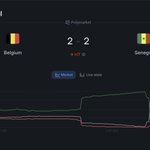
Imagine there is an opportunity in the market where everyone knows that a particular coin might pump by 2x and we have so many coins like this.. hint: projects which are solving identity, reputation. (Proven ones not larps)
Now Everyone has access to the same information.
Will everyone make the same decision?
Of course not.
Some will buy immediately, some will wait, some will procrastinate, some will avoid the risk, and some will simply ignore the opportunity.
Because information is only one part of decision-making.
The other part is human psychology.
Your habits, your past experiences, your willingness to sacrifice, your financial condition, and your ability to act determine what you do with the information.
This is why I don’t think information symmetry should be confused with equality of outcomes.
The objective should be to give people a fair opportunity to access information.
What they do afterward will always be different.
We don’t need everyone to make the same decision. We need people to have the opportunity to make their own decisions without someone deliberately keeping them ignorant.
108
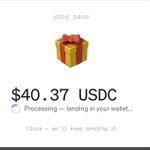
did they airdrop $250 to all american children?

Promise made. Promise kept.
By tomorrow, 25 million American children will have our gift of $250 in their accounts.
$6.25 billion. Invested in kids. Compounding for decades.
If you have a child under 18, claim their account and see how much is in there now.
$250 is only the beginning. 🇺🇸
1
172
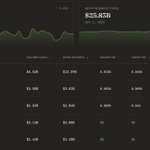
Aster being in the top 3 for the highest open interest in prep dex is surprising
or what crime is going on?
sources: @perpdexlist

2
2
186
such a great inspiring story of THE WHITE WHALE

This is the most requested article I've ever written.
I've never told the full story before because, frankly, I wasn't sure I wanted to be this vulnerable publicly. But after my post about mindset went viral yesterday, I decided it was time.
Maybe someone reading this is in a place right now where they need to hear it.
The White Whale - The Rags to Riches Story
My family was incredibly poor growing up.
There were multiple years where, without government and charitable assistance, we would have struggled to have enough food to eat.
But I've always had the entrepreneurial bug. At 19, I started experimenting with different business ideas, trying to figure out how to build something of my own.
In my early 20s, I also developed a passion for law enforcement and decided to pursue that as a secondary career.
I've always hated bullies and people who take advantage of others. Stemming from my own experiences with abuse in childhood, I found real fulfillment in being a voice for the voiceless and a defender of the defenseless.
I became disillusioned with that career fairly quickly after I began uncovering corruption inside my local agency. Even though I was good at the job, I decided that world wasn't for me.
Being young, naive, and lacking the wisdom that usually only comes with age, I became a very outspoken political activist.
Instead of quietly walking away, I started attacking that corruption directly and publicly. I didn't care that I was making powerful enemies.
At the same time, I had grown my existing business enough to provide me with a six-figure income. For a guy in his 20s, I was doing pretty damn well.
But I poured myself into my activism.
And naturally, backlash followed.
The law enforcement officers I was speaking out against began doing everything they could to silence me, including multiple attempts to manufacture criminal charges against me.
The young, dumber version of myself thought that as long as I hadn't done anything wrong, I had nothing to fear.
Their first few attempts to "get me" failed miserably.
That gave me a dangerous false sense of security.
I still had friends inside the law enforcement community - because no group of people is entirely good or entirely bad - who warned me.
Be careful.
They're coming for you.
Lay low.
Quit causing a scene.
I didn't listen.
Eventually, I was arrested on charges I maintain were completely false.
At first, the arrest itself didn't scare me. I knew what had happened. I knew I was innocent. I believed the facts would eventually win.
Instead, everything escalated.
I expected the case to get tossed out.
It didn't.
About a year into fighting it, I was given a horrible choice: plead guilty and serve two years in prison, or take the case to trial and risk eight years if I lost.
By then, I had seen witnesses in my defense intimidated against testifying for me. I saw how badly the deck was stacked against me. I no longer had any belief in the system, and that the side of right would prevail.
So I made one of the decisions I am least proud of in my life.
I pled guilty.
Not because I believed I was guilty.
Because I did the math.
Two years guaranteed versus the probability of eight.
And with that decision, I lost everything.
My business.
My possessions.
Even people I believed were friends, whom I had trusted to hold assets for me, ended up stealing them instead.
The first nine months of my two-year sentence were spent in solitary confinement for my own protection. During my first week inside, someone I had previously arrested recognized me. Having an affiliation with law enforcement is one of the most dangerous things a prisoner can carry.
If you've never spent a prolonged period of time inside a tiny room with nothing but your own mind for company, let me tell you:
It's a special kind of hell.
Eventually I was transferred to another facility where I could enter general population and get a job.
The pay was a whopping 65 cents an hour.
Living large, by prison standards.
But I was still incarcerated.
For a crime I didn't commit.
I knew that whenever those doors finally opened, I would walk out with nothing but the clothes on my back and whatever money I could save up.
So I became obsessed with one question:
How will I build my life back?
While I was incarcerated, I developed an idea for an e-commerce company in a product category I was passionate about.
I maintain that you'll never be successful if you cannot find a passion for what it is you do.
I would lie on my bunk staring at the ceiling, building the company in my head.
Marketing campaigns.
Branding.
Products.
Growth strategies.
When inspiration hit me, I'd grab my notepad and write it down.
While other inmates went to recreation, I often stayed behind because the dorm was finally quiet enough for me to think.
I wasn't just doing time.
I was planning my future. Planning my escape from what many would simply call destiny.
I saved almost everything I made from my prison job. I ate the terrible cafeteria food instead of blowing the money I earned on snacks and commissary.
When I was finally released, whatever money I had accumulated was loaded onto a prepaid debit card.
The balance was $263.
I had no home to call my own.
A friend offered me a couch to sleep on.
And the very first charge I made on that prepaid card?
GoDaddy.
I registered the domain name for the business I had spent all those months building inside my head.
The second charge was at a thrift store because I needed a couple sets of clothes.
I told my friend about the idea.
I told my parents.
I told anyone willing to listen.
A few people believed in me enough to give me a few hundred dollars extra to help get me started.
I went to work.
Using a borrowed computer, I built my e-commerce website.
I bought the components for my first products and assembled them myself right there at the computer desk.
I had no marketing budget, so I hustled.
Craigslist.
Message boards.
Anywhere I could post for free without immediately getting myself banned.
I learned how to hustle attention because hustling was the only thing I could afford.
Slowly, orders started coming in.
I took the profit from those first customers and bought more inventory.
Then more.
I kept repeating the cycle until the business had a couple thousand dollars in operating capital.
That's when I finally decided to try paid advertising.
My first budget for Google pay-per-click ads was $50.
I still remember how terrified I was to spend that money.
Fifty dollars doesn't sound like much when you have money.
When you don't?
It feels like a life or death gamble.
It was $50 I genuinely could not afford to lose.
But I spent it.
And then I repeated the same process over and over again.
Invest in myself.
Invest in the business.
Reinvest the profits.
Let the snowball grow.
Within one year of being released from prison, that company had reached $1 million in gross sales.
Years later, I remember watching an episode of Shark Tank. An entrepreneur told the Sharks he had gone from zero to $1 million in sales in a year.
They didn't believe him.
I was sitting on my couch thinking:
"I know it can happen. Because I did it."
Eventually the company moved out of the little apartment that wasn't even mine and into a two-car garage, where I hired my first employees.
And let me tell you, you haven't fully experienced entrepreneurship until you've had ten employees working across two shifts in a two-car garage.
Just saying...
That company - the business I designed while sitting inside prison with nothing to my name - ultimately became a large organization.
Over the years, it employed well over 1,000 people.
At its peak, the business was valued in the hundreds of millions of dollars.
And nearly 20 years after the ordeal began, I was eventually able to have my conviction reversed and clear my name.
I no longer have a criminal record.
Although I'll always contend that I was never a criminal in the first place.
So when I talk about the importance of mindset, I'm not repeating something I read in a self-help book.
I'm not telling you circumstances don't matter.
I'm telling you that circumstances don't get the final say in your life.
All I had was an idea, a borrowed computer, a willingness to work, and the absolute refusal to believe that the worst chapter of my life had to become how my story ended.
Let me say that again, a different way:
What I had was an absolute stubbornness and refusal to accept anything but eventual success.
That's the part of mindset people don't seem to get.
It isn't pretending life is easy.
It isn't standing in front of a mirror repeating affirmations.
It's looking at a situation that gives you every rational excuse to quit (or to not even try) and deciding:
I'm going to find a way.
You can't always control the hand you're dealt.
You can't even control where your personal starting line is.
But you can take control of where you finish.
A homeless ex-con with $263 and a borrowed laptop managed to change his stars.
So can you.
🫡 From the depths —
The White Whale 🐋

1
5
311
i just wanna say appreciate every small things which makes your life easier.
sound simple, until you get it
pursuit of happiness
1
4
159

early.derpetual.com/r/do0bie
new project to join, backed by @thielfellowship
Definitely worth keeping on your radar

2
155