

Complex Trait Genetics | Population Genetics | Evolutionary Genetics | @AmsterdamUMC | @UvA_Amsterdam
Amsterdam, The Netherlands
Joined July 2015
- Tweets4K
- Following2.1K
- Followers10K
- Likes15.5K



Pinned Tweet
In every civilization, people end up sorted into levels of socio-economic status (SES). We explore the history, present, and future of scientific research on the complicated relationship between SES and DNA in @NatureHumBehav 💰🧬🎓
Link: rdcu.be/efacK
Thread below 👇🏽

Abdel Abdellaoui retweeted

El análisis de variantes raras permitió identificar 26 genes asociados a condiciones de inteligencia o desarrollo neurológico, ocho de ellos sin evidencias previas
nature.com/articles/s41588-0…

Abdel Abdellaoui retweeted
La genética de la inteligencia ha permitido descubrir nuevos genes implicados en el neurodesarrollo
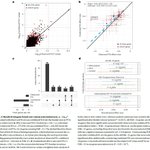
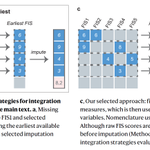
Mediante imputación fenotípica de puntuaciones de inteligencia fluida se incrementó de 390 a 550 el número de asociaciones genéticas y se eliminó el sesgo de participación 1/2

Abdel Abdellaoui retweeted

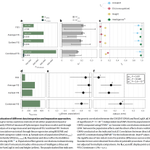
Excited to share our new @NatureHumBehav paper reporting within-family heritability estimates (the gold standard design unconfounded with population stratification, shared environmental effects and assortative mating) from 500,000 siblings pairs of diverse ancestries.
Abdel Abdellaoui retweeted
Thanks to all @23andMe participants and our co-authors: Yanyu Liang, Julie Granka, Xin Wang, Julia Sidorenko, David Evans and Peter Visscher.
Please check it out and share!
Link: nature.com/articles/s41562-0…

Check out the News & Views article in Nature Genetics about how we increased power to discover genes associated with intelligence: nature.com/articles/s41588-0…
By Dan Benjamin.
(our full paper open access in quoted tweet below)


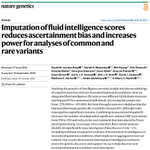
New collaboration between @sangerinstitute & @amsterdamumc in @NatureGenet!
The largest study to date on the association between DNA & intelligence.
We reduce ascertainment bias and boost power by imputing missing intelligence scores in @uk_biobank.
nature.com/articles/s41588-0… 👇🏽


Abdel Abdellaoui retweeted

Special Issue: Twin Registries in the Era of Biobanks and Register-Based Research
cambridge.org/core/journals/…

Abdel Abdellaoui retweeted
If you’ve ever run a GWAS, chances are you've used COJO (Conditional and Joint analysis). Well, we've extended and improved (up to 100× faster 🚀) this essential tool in the GWAS toolkit to enable joint analyses across multiple ancestry groups.
Paper:
nature.com/articles/s41588-0…

Abdel Abdellaoui retweeted

We investigated the possible transformative effects of exogenous education interventions on social interactions in traditional village settings with a randomized trial, examining the connections that individuals keep, drop, or form, as well as the overall structure of village-wide networks that might arise. nature.com/articles/s41586-0… 3/

Abdel Abdellaoui retweeted

So excited to finally share this collaborative work exploring the role of CADM2 recursive splice site deletions led by @Philip_M_Boone. We (@JKhokharLab) were fortunate to characterize the neural and behavioural consequences of CADM2 RS1 deletion cell.com/cell-reports/fullte…


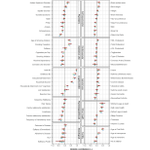
Nice coverage from @nrc of our study: "Rarely napping, watching little TV (but spending lots of time at the computer), rarely going outside in winter, speeding, eating lots of cheese — all unexpected characteristics associated with higher intelligence."
nrc.nl/nieuws/2026/10/12/the…

New collaboration between @sangerinstitute & @amsterdamumc in @NatureGenet!
The largest study to date on the association between DNA & intelligence.
We reduce ascertainment bias and boost power by imputing missing intelligence scores in @uk_biobank.
nature.com/articles/s41588-0… 👇🏽
Abdel Abdellaoui retweeted

I argue that we haven't really learned anything from Clark's model because it simply doesn't work. Before drawing strong conclusions, it is worth checking the math.
Full post:
theinfinitesimal.substack.co…
Symposium:
econjwatch.org/ancillary/boo…
Abdel Abdellaoui retweeted
I wrote about the recent symposium on Greg Clark's forthcoming book on genetics and social mobility. Clark uses large-scale lineage data to argue that social status in England can be entirely explained by genetic transmission. 🧵

Abdel Abdellaoui retweeted

Neuropsychiatric genomics in Africa: where are we now, and what comes next?
Our newly published strategic review maps the rapidly emerging translational genomics landscape and explores how this can further advance progress in the field. Read it here: doi.org/rsh8
Abdel Abdellaoui retweeted

We celebrate this huge achievement, a collaborative effort of @PGC_Africa members to highlight the state of neuropsychiatric genetic research on the African continent 👏🏽👏🏽🎉💐

Neuropsychiatric genomics in Africa: where are we now, and what comes next?
Our newly published strategic review maps the rapidly emerging translational genomics landscape and explores how this can further advance progress in the field. Read it here: doi.org/rsh8
Abdel Abdellaoui retweeted

Thee drinken, kaas eten… veel kleine eigenschappen hangen samen met intelligentie nrc.nl/nieuws/2026/10/12/the…

My present for my PhD student David's first-ever publication 🎉


New collaboration between @sangerinstitute & @amsterdamumc in @NatureGenet!
The largest study to date on the association between DNA & intelligence.
We reduce ascertainment bias and boost power by imputing missing intelligence scores in @uk_biobank.
nature.com/articles/s41588-0… 👇🏽


Abdel Abdellaoui retweeted
Cancer researcher here 👋 . No one is comparing cancer risk polygenic score means across countries/ethnicities like this and if someone submitted such work to a reputable journal it would be summarily rejected.
From our FAQ:


After years of waiting, we finally have a new intelligence GWAS! Its genetic scores outperform the older Pan-UKBB score across 51 populations, with stronger correlations with IQ, GDP and education scores.
substack.davidepiffer.com/p/…
