Prof. Dr. Ahmet Dirican (@dr_dirican) header
Prof. Dr. Ahmet Dirican (@dr_dirican) profile picture

Prof, MD, PhD Medical Oncology and Precision Medicine. Medicana International İzmir Hospital

İzmir
Joined November 2024
Photo by Prof. Dr. Ahmet Dirican (@dr_dirican)Photo by Prof. Dr. Ahmet Dirican (@dr_dirican)Photo by Prof. Dr. Ahmet Dirican (@dr_dirican)Photo by Prof. Dr. Ahmet Dirican (@dr_dirican)Photo by Prof. Dr. Ahmet Dirican (@dr_dirican)Photo by Prof. Dr. Ahmet Dirican (@dr_dirican)Photo by Prof. Dr. Ahmet Dirican (@dr_dirican)Photo by Prof. Dr. Ahmet Dirican (@dr_dirican)Photo by Prof. Dr. Ahmet Dirican (@dr_dirican)Photo by Prof. Dr. Ahmet Dirican (@dr_dirican)
Can MRD Testing Move Beyond Centralized Laboratories? At #AMP2026, Biodesix highlights two complementary approaches: Tumor-informed WGS-guided SNV/SV monitoring using multiplex ddPCR (Bio-Rad). Tumor-naïve, methylation-based MRD detection using Genexus NGS (Thermo Fisher). The goal: scalable MRD testing using existing laboratory platforms. Sensitivity matters. But accessibility, standardization, and clinical validation matter just as much. Early-stage technologies; further clinical validation is essential. #LiquidBiopsy #ctDNA #MRD #PrecisionOncology @OncoDaily @OncBrother @Dr_R_Kurzrock Biodesix to Showcase MRD Strategy at the Association for Molecular Pathology (AMP) 2026 Annual Meeting globenewswire.com/fr/news-re…
86
Prof. Dr. Ahmet Dirican retweeted
Tarlatamab in ES-SCLC Shifts Focus to Implementation and Access - Ahmet Dirican @dr_dirican oncodaily.com/science/ahmet-…
1
159
A New Option in Head and Neck Cancer: Is a 42% Response Rate Enough? On November 5, the FDA granted accelerated approval to subcutaneous amivantamab (EGFR×MET bispecific antibody) based on OrigAMI-4. In previously treated R/M HNSCC (n=102): - ORR: 42% - CR: 15% - Median PFS: 6.8 months - Median OS: 12.5 months An encouraging signal in a difficult-to-treat population. But two important questions remain: 1. Can dual EGFR/MET targeting deliver more meaningful benefit than previous EGFR-directed strategies? 2. Will these responses translate into improved survival in randomized trials? Accelerated approval is an important step, but not proof of an OS benefit. #HNSCC #HeadAndNeckCancer @oncodaily @OncBrothers @tompowles1 @US_FDA #amivantanab
1
117
Tarlatamab in ES-SCLC: The Next Challenge Is Implementation. Important debates in Porto highlighted two key questions: optimal timing and where T-cell engagers should be delivered. DeLLphi-305 demonstrated a remarkable OS benefit with tarlatamab + durvalumab maintenance: 21.1 vs 12.7 months | HR 0.42 CRS occurred in nearly 50% of patients, but severe events were uncommon. The evidence supports maintenance treatment in eligible patients. The next challenge is ensuring safe and equitable access. Should tarlatamab be restricted to specialized centers, or delivered through trained oncology centers with appropriate CRS/ICANS management pathways? #SCLC #LungCancer #Immunotherapy @oncodaily @OncBrothers #tarlatamab @RManochakian @HosseinBorghaei @Latinamd
3
473
Is immunotherapy finally breaking the pMMR/MSS colon cancer barrier? Nature Medicine | Phase II UNICORN trial Neoadjuvant botensilimab + balstilimab: • pMMR: MPR 36% | pCR 29% • dMMR: MPR 100% | pCR 93% (13/14) A promising signal in immunotherapy-resistant pMMR colon cancer. Could Fc-enhanced CTLA-4 blockade change the paradigm? Small sample size; Phase III validation is essential. #ColonCancer #Immunotherapy @OncoDaily @OncBrothers @ilyassahinMD
3
121
Could PD-1/VEGF dual blockade reshape perioperative treatment in NSCLC? Anti-angiogenic therapy in squamous NSCLC? A remarkable signal in a setting where VEGF inhibition has long been challenging! Nature Medicine | Phase II Ivonescimab + chemotherapy: MPR: 70.1% pCR: 50.7% Squamous NSCLC: pCR 61.1% PD-L1 <1%: MPR 69.2% Impressive pathological responses, but Phase III validation is essential. #NSCLC #LungCancer @OncoDaily @OncBrothers @OncodailyLung @RManochakian @HosseinBorghaei @Latinamd @NatureMedicine
117
ENZARAD Phase III: More treatment, but no survival benefit? In high-risk localized prostate cancer, adding enzalutamide to RT + ADT failed to improve 8-year MFS (74% vs 72%; HR 0.88, p=0.34). A key question: Why did abiraterone succeed in STAMPEDE while enzalutamide failed in ENZARAD? @oncodaily @OncBrothers @JCO_ASCO @DrChoueiri doi.org/10.1200/JCO-26-01794
3
4
534
“We are getting better at understanding the molecular profile of tumors. But how well do we understand the patients we treat?” A new article in npj Precision Oncology highlights the importance of patient-reported outcomes (PROs) in Molecular Tumor Boards (MTBs). The authors propose four key domains: 1-Standardized PRO measurement 2-Integration with molecular and clinical data 3-Clinical decision support 4-Ethical and trustworthy data governance The future of precision oncology should be shaped not only by the molecular profile of tumors, but also by patients’ experiences, quality of life, and priorities—placing patients at the center of care. doi.org/10.1038/s41698-026-0… #PrecisionOncology #MolecularTumorBoard #PatientCenteredCare @oncodaily @OncBrothers @Dr_R_Kurzrock @tompowles1 @NatureMedicine
2
2
1
2
1,209
The future of cancer vaccines is becoming increasingly personalized. Exciting developments at #ESMO2026 Thank you, @OncoDailyIO, for highlighting my perspective!
Ahmet Dirican on the Future of Personalized Cancer Vaccines at ESMO 2026 @dr_dirican oncodaily.com/science/ahmet-…
2
119
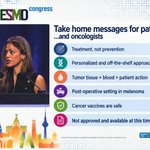
A New Era for Cancer Vaccines? | ESMO 2026 At ESMO 2026 in Madrid, Dr. Sapna Patel highlighted important advances in personalized cancer vaccines. The Phase III INTerpath-001 trial demonstrated promising results with a personalized mRNA cancer vaccine combined with pembrolizumab in patients with resected high-risk melanoma. 24-month recurrence-free survival: Vaccine + pembrolizumab: 82.2% Pembrolizumab alone: 70.0% An important distinction: These vaccines are designed to treat cancer and reduce recurrence, not to prevent cancer from developing. Although the results are encouraging, regulatory approval is still pending, and longer-term survival data and predictive biomarkers are needed. The future of cancer treatment may lie not only in targeting tumors, but in targeting the unique neoantigens of each patient's cancer. #ESMO26 #CancerVaccines #mRNA #Melanoma #PrecisionOncology #Immunotherapy #PersonalizedMedicine @myESMO
94
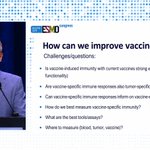
Cancer Vaccines: From Immune Activation to Durable Clinical Benefit At #ESMO26, Prof. Juliane Walz highlighted five key principles shaping the future of therapeutic cancer vaccines: 1. Antigen selection: Immunopeptidomics can help identify clinically relevant tumor targets. 2. Timing matters: The adjuvant/MRD setting may offer the greatest opportunity for vaccine-induced immunity. 3. Better combinations: Novel adjuvants, checkpoint inhibitors, and bispecific antibodies may enhance T-cell responses. 4. Encouraging early data: In CLL, a personalized peptide vaccine induced T-cell responses in 95% of patients, with MRD reduction in 90%. 5. Toward personalization: Fusion-derived antigens and individualized vaccine platforms are opening new therapeutic possibilities. The key question is no longer just whether cancer vaccines induce immunity, but whether that immunity translates into durable clinical benefit. #ESMO26 #CancerVaccines @myESMO #Immunotherapy #PrecisionOncology @oncodaily @OncoAlert
2
5
290
Can We Move From Vaccine-Induced Immune Responses to Predictable, Durable Clinical Benefit? At #ESMO26, Prof. Patrick A. Ott reviewed a decade of progress in personalized neoantigen cancer vaccines and highlighted five key messages: 1. Clinical benefit: INTerpath-001 demonstrated improved recurrence-free survival with intismeran plus pembrolizumab in resected melanoma (HR 0.58). 2. Immune memory: Neoantigen vaccines can induce durable T-cell responses, immune memory, and epitope spreading. 3. Beyond melanoma: Early renal cell carcinoma studies show encouraging results, although randomized validation remains essential. 4. Current limitations: Vaccine-induced T-cell responses still recognize only a fraction of the selected neoantigens. 5. The next generation: Better neoantigen prediction, vaccine platforms, delivery systems, and immune adjuvants may improve clinical efficacy. The next challenge is not simply generating immunity, but translating it into predictable and durable clinical benefit. #ESMO26 #CancerVaccines #Neoantigens #PrecisionOncology #Immunotherapy @myESMO @oncodaily @OncoAlert
2
1
4
276
Prof. Dr. Ahmet Dirican retweeted
Could OptiTROP-Lung06 Change First-Line Treatment in PD-L1-Negative NSCLC - Ahmet Dirican (@dr_dirican)
1
2
1
150
A new second-line standard of care for KRAS G12C-mutant NSCLC? KRASCENDO-1: Divarasib significantly improved PFS, OS and ORR versus sotorasib/adagrasib, with fewer severe treatment-related adverse events. A potentially practice-changing Phase III trial. #ESMO26 #KRASG12C #LungCancer
Presented at #ESMO26: In patients with previously treated advanced non–small-cell lung cancer with a 𝘒𝘙𝘈𝘚 G12C mutation, median progression-free survival was 9.8 months with the KRAS G12C inhibitor divarasib and 5.7 months with sotorasib or adagrasib. Full phase 3 Krascendo 1 trial results: nej.md/4BiCvbk @myESMO
143
Could KRASCENDO-1 change clinical practice in KRAS G12C-mutant NSCLC? Dr. Ferdinandos Skoulidis presented compelling Phase III results at #ESMO26 Divarasib vs sotorasib/adagrasib: PFS: 9.8 vs 5.7 months (HR 0.58) OS: 17.7 vs 12.0 months (HR 0.56) ORR: 58% vs 32% Grade 3–4 TRAEs: 24.6% vs 34.5% Four key takeaways: 1. OS benefit: A 5.7-month survival gain over existing KRAS G12C inhibitors. 2. Better tolerability: Fewer severe treatment-related adverse events despite longer treatment exposure. 3. KEAP1 subgroup: Encouraging efficacy signals, although subgroup OS results remain exploratory. 4. Clinical impact: A strong candidate for a new standard of care, pending regulatory approval. #KRASCENDO1 #KRASG12C #LungCancer @myESMO #ESMO26 @RManochakian @Latinamd @oncodaily @OncoAlert @Roche
142
Prof. Dr. Ahmet Dirican retweeted
Next-Gen Bispecific ADC in HR+/HER2− Metastatic Breast Cancer at ESMO 2026 - Ahmet Dirican (@dr_dirican) oncodaily.com/science/ahmet-…
2
3
205
Could OptiTROP-Lung06 be a practice-changing breakthrough in first-line PD-L1-negative NSCLC? #ESMO26 @myESMO
Presented at #ESMO26: Among patients with PD-L1–negative advanced nonsquamous non–small-cell lung cancer, progression-free survival was longer with sacituzumab tirumotecan plus pembrolizumab than with chemotherapy plus pembrolizumab (15.0 vs. 5.7 months). Full phase 3 OptiTROP-Lung06 trial results: nej.md/4Bo3liu @myESMO
1
3
296
Could DeLLphi-305 redefine first-line maintenance in ES-SCLC? At #ESMO26, Dr. Jacob Sands presented striking Phase III results: Tarlatamab + durvalumab vs durvalumab: OS: 21.1 vs 12.7 months (HR 0.42) PFS: 7.4 vs 1.9 months (HR 0.34) A potential practice-changing result for SCLC. #DeLLphi305 #Tarlatamab #LCSM @OncoDaily @OncoAlert @myESMO #ESMO26
1
185
An 8.5-month OS gain after EGFR-TKI failure! At #ESMO26, Prof. Wenfeng Fang presented final Phase III #OptiTROPLung04 results in EGFR-mutant NSCLC. Sac-TMT vs chemotherapy: OS: 25.9 vs 17.4 months HR 0.69 A potential practice-changing ADC milestone. @OncoDaily @OncoAlert @myesmo #ESMO26
2
2
369