

Structural Biology using X-ray and neutron crystallography. Responsible for LADI-III & DALI @ILLGrenoble, previously @EMBLGrenoble @OfficialUoM
- Tweets204
- Following138
- Followers471
- Likes1.9K





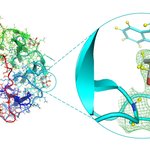


ALT Neutrons and X-rays provided insights on the binding of the COVID-19 virus SARS-CoV-2 protein with a novel inhibitor, BBH-1, formed by combining atomic features of known hepatitis C and SARS-CoV-1 inhibitors (such as Boceprevir and GC-376, upper left). Image courtesy of Oak Ridge National Laboratory


ALT Emerging SARS-CoV-2 variants continue to threaten the effectiveness of COVID-19 vaccines, and small-molecule antivirals can provide an important therapeutic treatment option. The viral main protease (Mpro) is critical for virus replication and thus is considered an attractive drug target. We performed the design and characterization of three covalent hybrid inhibitors BBH-1, BBH-2 and NBH-2 created by splicing components of hepatitis C protease inhibitors boceprevir and narlaprevir, and known SARS-CoV-1 protease inhibitors. A joint X-ray/neutron structure of the Mpro/BBH-1 complex demonstrates that a Cys145 thiolate reaction with the inhibitor’s keto-warhead creates a negatively charged oxyanion. Protonation states of the ionizable residues in the Mpro active site adapt to the inhibitor, which appears to be an intrinsic property of Mpro.


ALT Neutron quasi-Laue diffraction pattern from a crystal of the main protease of SARS-CoV-2 in complex with a covalent hybrid inhibitor.

ALT Neutron quasi-Laue diffraction pattern from a crystal of the main protease of SARS-CoV-2 in complex with a covalent hybrid inhibitor.
ALT Neutron quasi-Laue diffraction pattern from a crystal of the main protease of SARS-CoV-2 in complex with a covalent hybrid inhibitor.