

Crafting artificially intelligent minds • Formerly @ClaryoInc | @RobustAI | @Stanford | @CERN | @EPFL • 🇫🇷|🇺🇸
New York, NY
Joined November 2013
- Tweets2.8K
- Following521
- Followers577
- Likes8.7K

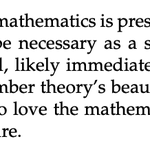


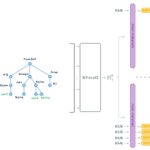


A new scientific process: achieve the outcome, and then trace back how we got there in order to understand and simplify it. Feels like a nice way to re-inject meaning and save from the doom and gloom prospect of a fully automated intelligence factory.
From @__alpoge__'s notes about the Riemann hypothesis result (!!)

1
7
159

Anthropic: "we have probably solved the Riemann hypothesis with our tools"
Reddit user: "Anthropic is the pets.com of our era"
65
Google finally releasing a model everyone is raving about but making their product suite as complicated as humanly possible to prevent people from trying it is the most Google thing ever.
1
46
I've worked on enough ontologies, this is a good take. Psychology has a name for this trap: the need for cognitive closure. A complete taxonomy feels like progress because it ends the argument, not because it finishes any work.

I dislike semantic-layer and ontology obsession because it is fundamentally a fixation on non-terminal outcomes. We have an enormous appetite for building and optimizing the preconditions for useful work, without establishing that those preconditions are actually a binding constraint on achieving useful outcomes or meaningfully contribute to them.
Much of the time I suspect there is actually not much genuine interest in achieving truly useful outcomes in the first place despite whatever vague platitudes are trotted out.
1
62
Statistics had it too. Breiman's "Two Cultures": one side models how the data was generated, the other only asks whether the predictions hold. Ontology-first work is the first culture, applied to a company.
1
18
If your agents share a scratchpad, read what's on it. They tend to over-value a shared state record over their own evidence. That's why you want to prioritize observations over conclusions, which usually go stale anyway. Knowledge can always be re-derived JIT.

4
9
360
Agents get stuck the way teams do, polishing the first idea that half-works. 58% of runs never reached the idea where the best solution was, and a new idea paid about 9× a refining step. Sometimes the best move is to wipe the context and start over. nitter.gq/AlexGDimakis/status/21…

What are idea basins and how do agents explore them?
A few weeks ago, researchers from different labs independently discovered what we now call ‘Idea-basins’: As an autonomous agent iterates to solve a problem, it gets stuck into the methods it has tried before and its trajectories remain in localized regions of the solution space. Techniques like ‘Fork-and-Flush’ and ‘Scaling Discovery requires forgetting’ reduce this idea fixation by periodically deleting the session context.
In this post we study how frontier models explore different idea basins for AutoResearchExam. E.g. for a problem on accelerating transformer decoder graphs on CPUs models can try Numpy+Asm Kernels, Native BLAS, JIT compilers and other idea basins. We find that some models switch ideas more than others while others get to the best idea faster and explore deeper.
We find that most runs stick with one or two ideas, and models that submit more spend the extra submissions refining and overfit more.
We see that models explore most in the first six hours, after which visits to new idea basins drop sharply. This suggests models start refining early leaving potential gains on the table: 58% of runs never reach the basin where the best solution to their task was found. Finally, bold exploration pays off: exploring a new idea gains about nine times as much as a refining step on average.
Read more in our blog:
bespokelabs.ai/blog/how-mode…

1
83


Personal software isn't new. It was the original promise: Engelbart wanted computers to augment human intellect.
Every wave since is a fight over who shapes the tool. AI assistants are the latest round: hand over your inbox, get back their defaults.
Same battle, higher stakes.
1
1
51
Wrote about this here, with some perspectives from Guattari and Baudrillard dtsbourg.me/en/articles/nobo…

1
22
Interesting how quick everyone blamed an AI tool when really we're looking at systemic failures. Sounds familiar 🤔

Sorry for the long-ass post, I did some OSINT shit.
I pulled live public flight feeds, weather radar status, and space weather data to see what's actually going on during today's nationwide FAA grounding.
TL;DR: radar, GPS, and weather sensors are all working fine. What broke is the long-distance communications network that lets the FAA's 22 regional air traffic control centers talk to high-altitude planes and hand them off to each other.
When people think of air traffic control, they picture the glass tower at an airport. Those towers only handle takeoffs, landings, and nearby airspace. Once a plane climbs out, it's handed off to one of 22 regional Air Route Traffic Control Centers (ARTCCs) — giant facilities that manage high-altitude cruising traffic across whole regions of the country.
Normally, those 22 centers are regionally isolated: if one loses power or a local fiber line, neighboring centers absorb or route traffic around it. Having all 22 degrade at once is virtually unheard of because it means a shared national backbone failed, leaving no healthy neighbor to take over.
That's why the FAA's Command Center used such stark, blanket wording ("Due to extraordinary circumstances and for reasons of safety... all airports are ground stopped until further notice"*) — it's standard protocol when a national-level freeze has to happen immediately before engineers even know how long repairs will take ("safety issue" means "oh shit, stop" in aviation circles, unlike with AI companies).
All 22 centers losing comms at once is, indeed, "extraordinary circumstances".
Here's what the live data shows:
1. US airspace is emptying out fast.
Normally on a Friday evening, thousands of planes are in the air over the US. In live tracking data from OpenSky Network, the number of airborne planes over the lower 48 is steadily draining as flights land and no new commercial departures take off:
• 6:36 PM EST: 1,083 airborne
• 6:42 PM EST: 1,035 airborne
• 6:49 PM EST: 990 airborne
There are zero emergency distress codes broadcasting.
2. Major airports are, predictably, stacked.
Looking within 30 miles of major hubs around 6:37 PM EST (`adsb.lol`), almost nothing is moving:
• NYC/JFK area: 8 in the air vs. 67 on the ground
• LAX: 14 in the air vs. 40 on the ground
• Dallas (DFW): 7 vs. 36
• Denver (DEN): 13 vs. 29
• Atlanta (ATL): 5 vs. 25
• Chicago (ORD): 9 vs. 24
• DC (DCA): 8 vs. 22
A lot of the coastal airports had to stop accepting diverts.
3. The few planes still taking off are enlightening.
Across the entire US at 6:36 PM, only aircraft were taking off (that is: below 10,000 feet and climbing). They fell into two clear buckets:
• 3 international widebody jets (`DAL281` out of Seattle, `DAL156` out of NYC, and `AFR71E` out of Newark), matching the FAA's note that international flights are being handled case-by-case.
• Small private planes and a couple of business jets flying under VFR (visual flight rules) — essentially, staying below 18,000 feet, where pilots don't need en-route air traffic control clearances.
Honorable mention to the 1 Coast Guard/military helicopter climbing near Tampa, out of 29 military aircraft tracked nationwide.
4. Weather radar isn't down, and there's no solar storm or GPS jamming.
A lot of people wondered if today's FAA ground stop, rumors of a National Weather Service outage, and Microsoft's 365 outage were all connected. Checking the raw feeds:
• Weather radar: 199 out of 208 US Doppler radar stations are actively sending fresh scans (within the last 15 minutes). The "NWS outage" rumors were website and caching glitches, not offline radar hardware.
• GPS & Space Weather: NOAA space weather is completely quiet (`Kp = 0`), and aircraft GPS accuracy readings across the Midwest and Northeast look totally normal.
• Local airport radar & towers: Local FAA ground-station radar broadcasts and local airport control towers are still up and transmitting.
So, local sensors and local towers are fine.
The failure is specifically in the long-haul telecommunications backbone connecting the FAA's 22 en-route centers to their remote radio sites — which is why en-route controller frequencies went quiet while local towers, weather radars, and low-altitude visual flights kept running.
Federal officials say there's no sign of a cyberattack, so we're waiting on the FAA's technical post-mortem for what tripped the national network.
That doesn't rule out a cyberattack as the root cause of the comms outage; it's a "we don't know".
Shoutout to adsb.lol for their free API.
1
69
Remember when we were mad at @Apple? The rate of sherlocking by ai companies is staggering. Is there really is no moat in building tools anymore?

Introducing Claude Meetings: add Claude to your team’s video call and it builds docs, whiteboards, and other artifacts with you while you’re still talking.
Starting to roll out in beta on Team and Enterprise plans.
1
273
Dylan Bourgeois retweeted

Last week, @rikiyatakehi fixed a looping model by editing its weights. We pointed an AI agent at the same problem. It never ran the model and autonomously found a different fix.
No training run, nor gradients. That's weight-space programming.
We gave the same task to Beaker, @withbeaker, our autonomous agent-improver. It analyzes how an agent behaves and fails, formulates hypotheses on what and how to fix, validates or invalidates them, in a loop, to hill-climb a pre-defined score. The target: Qwen3.5 0.8B, which fails 93% of MATH-500, often by getting stuck in loops until it runs out of thinking tokens.
The model has a tendency to generate "Wait", and Beaker turned it down. From the weights and the scores of its own edits, it figured out what was going wrong and autonomously fixed it by editing 1,024 numbers, a millionth of the model's parameters. MATH-500: 7.4% -> 37.4%.
That's a different fix from the original blogpost. They found a way out of generation loops, and Beaker found a way to not fall into them. Theirs is stronger alone (51.1% in our harness), but the two stacked together compound: 58.7%.
When properly harnessed, less capable models are good weight space programmers. Beaker powered by GPT6.1 Sol found the same neurons as Beaker with GPT6 Astra, at $4-16 per run vs $28-79.
We also pointed Beaker at new goals. We told it to tune the weights such that the agent comes up with shorter answers, and it did, with answers a third to half shorter.
Beaker already tunes prompts, skills, memory, tool implementation, orchestration, etc. to improve agent quality, latency cost and determinism. Weights are the next knob it has access to, coming soon. Sign up at withbeaker.ai
Blog: withbeaker.ai/blog/weight-sp…
Tuned-weights on @huggingface: huggingface.co/collections/r…
Public runs: app.withbeaker.ai/public/run…
We're not training AI anymore. We're teaching It.
I find it fascinating that we are now designing learning curriculum for these systems to become more poweful.
I wrote a quick overview of modern training methods on my blog here dtsbourg.me/en/articles/teac…

1
1
88
How would you teach an AI a skill? How would you grade it? How would you reward it?
We will be building learning playgrounds for these systems to experiment and explore with new skills constantly. Right now, this is a dataset. Eventually, a simulator.
1
1
56
I'm also continuing to update a more technical deep dive here dtsbourg.me/en/articles/post…

1
32