

Former film/automotive journalist & photographer, I now clear houses and find interesting things, which I sometimes sell.
London
Joined May 2012
- Tweets4.4K
- Following1.1K
- Followers616
- Likes56.9K




Dylan Michael retweeted

The Adventurer: a series so cheap it looks like it was edited with a knife and fork. Difficult to work out why it went so wrong, but by the end it does feel like the producers are trying to punish Barry. The last episode, “Somebody Doesn’t Like Me” maybe bears that out.
I found Frank Barrie’s personal copy of The Adventurer and a stack of these cards at a boot sale recently. Apparently A Woman Killed with Kindness starring Anthony Hopkins and Tom Baker opened at the Old Vic in 1971.


3
52


Dylan Michael retweeted

I’ve committed writing again! This time it’s about Peter Wyngarde’s big shot at being a movie star thelionandunicorn.com/2026/1…

Dylan Michael retweeted

Patrick Stewart. Turned up so early and so unobtrusively to be a star in the reasonably priced car, we mistook him for a delivery driver and asked him to go round the back. Took his hat off and said, “But I’m the captain of the Enterprise”. Fucking nice guy.
Great photo, incredible man. Baxley was decorated in WWII, all-American quarterback, one of the best stuntmen in the business, moved into directing and ended up as stunt coordinator on his son Craig R. Baxley’s films. He also doubled for @WilliamShatner on Star Trek.


Dylan Michael retweeted

Had the pleasure of teaching Sir Patrick Stewart how to fling a Caterham round an airfield in preparation for him driving Moss’s Vanwall in an @BBC documentary . Lovely man with no airs and graces. RIP Patrick.
Dylan Michael retweeted

Reine parmis les reines 👑
«Ce qu'il y a d'admirable chez Elke Sommer, c'est sa photogénie (...) Un visage et une plastique parfaite, un moment de la beauté du monde.»
Radio TV JVT, Oct.1965 🇨🇭


Dylan Michael retweeted

Tonight's film is the final entry in Daniel Craig's James Bond reboot cycle. I've long wanted to point out this contrast.
GoldenEye opened with the fall of the other side's gods. Lenin's statue toppled, the hammer and sickle shattered, the whole apparatus of Soviet iconography broken and sunk. The Soviets had been the heavies from the first day of Bond, SMERSH, the Lubyanka, the machinery of fear in Moscow. Bond existed, in part, to rub their noses in the dirt and prove that the West still held. The Soviet Union collapsed, and the GoldenEye titles marked the victory. The British agent and the free world had outlasted the system that wanted him and his way of life dead. The enemy's symbols went down; Britain's stood.
No Time to Die's title sequence?
Britannia falls and breaks. Her shield drops. The British emblem is shown in ruin at the start, and the designer has said why: it is not Britain's finest hour.
I do not see it that way.
Where GoldenEye celebrated the destruction of the adversary's order, this one advertises the dissolution of our own. The villain, Lyutsifer Safin, succeeds where SMERSH failed. He finishes the British hero. The titles place the crumbling of the national symbol of Britannia as the necessary prelude.
Is it revenge for that earlier GoldenEye sequence? In effect, that is what it achieves.
The irony is that both title sequences were made by Daniel Kleinman.
It is a mirror image: Soviet icons destroyed then, British icons destroyed now.
It is foreshadowing the end.
Bond does not walk away; he stands under the missile bombardment at the end. Visually, that is the revenge of the side that lost the Cold War, served up as high art and melancholy.
Fleming wrote Bond to win, not to die after Britannia had been shown falling to pieces in a title sequence. He gave the public a British secret agent who did his duty, enjoyed the pleasures of life, and always came through.
Ruthless, self-indulgent, a wonderful character. Not a hero in the sentimental sense, but a man who gets on with it. Loyalty to the Service, to Queen and country, are his few perceptible virtues.
The novel You Only Live Twice has him look death in the face and survive. That is the point. To have him stand under a missile barrage and simply take it is antithetical to who Bond is.
This is the precise opposite of what Fleming wrote. He did not open his books with the ruin of the symbols under which Bond served. He opened them with the certainty that a British secret agent, however battered or broken, would still climb Everest, still beat the world at its own games, still rub the villain's nose in the dirt. The Soviets understood what Fleming was doing. Izvestia called the books rubbish and pornography. Fleming was delighted. They feared the idea of a free man who wins.
Fleming's books are not for people who need their national icons dismantled before the story starts. James Bond is not a vehicle for self-loathing like Jason Bourne. He is the reminder that the old virtues and values of the West still count. Kill him and show Britannia in pieces, and you have made a film of the opposition's book.
You've made the Soviet book Avakoum Zakhov Versus 007 into film.
The Daniel Craig films are competent, often stylish, and occasionally rather good. They are not Ian Fleming. They are the contemporary preference for institutional self-doubt and the dismantling of one's own icons, rendered with expensive melancholy.
No Time to Die makes one wish we had a fifth Pierce Brosnan film instead.
I do not hate it. The stunts and the action are all good, and Daniel Craig did do a lot of his own stunts, so kudos to him for having guts, but this film is why I do not enjoy his run the same way I enjoy the original twenty films.
The original films one can watch again and again. With Craig's, one needs more time before viewing it once more.
What a fall from Sir Roger Moore parachuting under a Union Jack.
#JamesBond #NoTimeToDie #DanielCraig #IanFleming

I will say this, there has never been a bad M.
Bernard Lee set the archetype; Robert Brown held the line; Judi Dench sharpened it, and Ralph Fiennes inherited the chair with the right dry gravitas. It helps that he was a teenage devotee of the Ian Fleming novels. The part demands a certain temperament, and the casting has respected it.
This is opinion of course, people are free to disagree.
Just like I disagree with the belief that an organisation like SPECTRE could never exist.
The claim that organisations such as SPECTRE are unbelievable ignores real twentieth-century intelligence history. SMERSH was real: established in 1943 under Viktor Abakumov and answerable directly to Stalin. It was the Red Army's dedicated counter-intelligence service, tasked with eliminating spies, saboteurs, and "anti-Soviet elements." Its name Směrť Špionam meant Death to Spies. It operated with the ruthlessness one expects of a wartime Soviet security organisation.
Another parallel to such an organisation is Operation Trust. Between 1921 and 1927, under Felix Dzerzhinsky's Cheka and GPU, the Soviets ran a fake monarchist resistance organisation that deceived White Russian émigrés and Western intelligence for years. It pulled in financial investments from the West, eventually drawing the Ace of Spies Sidney Reilly into the USSR to his death. It was controlled opposition at its most elegant. The apparatus already possessed the networks, the taste for deception, and the personnel.
Operation Trust was unmasked in the spring of 1927, principally through the defection of Eduard Opperput. He disclosed that the Monarchist Union of Central Russia had been under GPU control from the outset. The revelation effectively ended the operation, and the Soviets shut it down.
One need only imagine a shift from state service to private profit, an embezzlement, a few faked deaths, for something SPECTRE-like to appear. Unfounded, yet such a concept is structurally far from impossible.
Ian Fleming's literary Ernst Stavro Blofeld remains the most convincing version of the character. Born in 1908 in Gdynia to a Polish father of German descent and a Greek mother, educated in history, economics, and engineering at Warsaw, he sold intelligence to both sides during the Second World War from Turkey before founding SPECTRE as a private criminal-intelligence syndicate. Its methods, terrorism, blackmail, extortion, and the sale of information, were those of a sophisticated criminal mastermind. No foster-brother gimmick was required. The films often simplified Blofeld and the Craig-era familial twist of a foster-brother unnecessarily strained credibility even further.
The one credible aspect was the organisation's goal.
In today's world, an organisation of SPECTRE's resources would seek to own the instruments of surveillance rather than merely evade them: the better to observe the observers and to corrupt the stream with omission and fabrication. In the film, Max Denbigh, portrayed by Andrew Scott, presses for Britain's entry into the Nine Eyes global surveillance agreement while campaigning to abolish the Double-O section. SPECTRE funds the merged Joint Intelligence Service and stages terrorist attacks to generate demand for the system, securing unrestricted access once it is live.
In a profession defined by the absence of trust, centralisation multiplies the cost of a single penetration. Distributed agencies impose friction and compartmentalisation; a consolidated apparatus creates one high-value target. Operation Trust worked on the same principle, turning the opposition's own channels against it. Once the means of observation and the means of deception sit in the same hands, the distinction between the intelligence service and the criminal enterprise it is meant to combat begins to dissolve. It becomes SPECTRE. 🐙
That's what I liked about this film: that and it's the only Daniel Craig Bond film with a happy ending.
#JamesBond #SPECTRE #DanielCraig #RalphFiennes


Dylan Michael retweeted

Obscure YT of the day: For Tom Skerritt (RIP), he costars with Richard Widmark in the western THE LAST DAY (1975)! Robert Conrad, Loretta Swit, Tim Matheson, Gene Evans, Richard Jaeckel & Barbara Rush costar!
Link in reply:


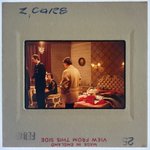
As there’s no Z Cars on @TalkingPicsTV tonight (hopefully it’s coming back!) here are the best of the rest of John Stout’s production photos @David__Brunt


Favourite house clearance find of the week: Hero and the Terror by Michael Blodgett. I wasn’t aware that Blodgett, star of Beyond the Valley of the Dolls, later became a novelist and screenwriter. Saw the film just after Chuck Norris died, not bad.

2
95
Dylan Michael retweeted

WIN NIGHT OF THE DEMON ANNIVERSARY EDITION 666/2000
It has been unavailable for eight years. But now, our legendary Limited Edition Blu-ray release of NIGHT OF THE DEMON has been resurrected!
RT this post for a chance to WIN copy number 666/2000.
powerhousefilms.co.uk/produc…


