

Senior Lecturer in Organismal Biology at Queen Mary University of London. Developmental genetics and genomics.
Joined December 2010
- Tweets1.7K
- Following961
- Followers377
- Likes2.7K






Elisabeth Busch retweeted

Bauhaus students Martha Earps-Breuer, Katt Both and Ruth Hollos-Konsemüller. 1927 #WomensArt #BauhausWomem

Elisabeth Busch retweeted

How many people in the world identify with a particular religion?
Religious compositions vary a lot from country to country.
In the United Kingdom, Christianity is the most popular, and following no religion is becoming increasingly common, particularly among young people. But it can be hard to get a sense of how these differences stack up globally.
The Pew Research Center publishes estimates of religious affiliation across the world. You can see the global breakdown in the chart for 2020 (the most recent year available). It shows the number of people who identify with each religion. Pew counts people by the religion they report, regardless of their beliefs or practices.
You can see that Christians are the largest group, with 2.3 billion people, followed by Muslims, with 2 billion. People with no religious affiliation come close behind.
Those not affiliated with any religion are among the largest groups in the world. But this undersells religion’s reach: when we add up all religious groups, most people in the world — around three in four — identify with a religion. Those with no religious affiliation are still a minority.
(written by @_HannahRitchie)

Elisabeth Busch retweeted

Three years on from the October 7 attacks on Israel, we remember those who were senselessly killed by Hamas terrorists.
The impact of the attacks has been felt not just in Israel, but in Jewish communities across the world who still bear the burden of the tragic events that day.
In the years since, we have seen a disturbing rise in antisemitic behaviour in the UK.
A year ago we witnessed a horrifying terrorist attack on the Heaton Park Hebrew Congregation in Manchester, with further attacks against Jewish people and institutions since.
I want Britain’s Jewish community to hear this from me directly. We stand with you. Abuse and violence against you, in any form, will not be tolerated. Not on our streets, not online, not in our schools or universities.
That’s why we are funding protection for synagogues, schools and community buildings, and why we will come down hard on antisemitism wherever it is found - in classrooms, on campuses and in neighbourhoods.
At home, we are committed to protecting our citizens from vile hatred. Abroad, we continue to work towards a two-state solution, with Israelis and Palestinians living side by side in peace and security.
An attack on Jewish people in Britain is an attack on all of us. Antisemitism has no place in this country, and we will do everything we can to stamp it out.


Elisabeth Busch retweeted

It will never stop amazing me that people who consider themselves pro refugee, pro immigrant and general Pro Good Guys Of the Left sneeringly describe the half-dead Holocaust survivors who went to Israel after having been so failed by Europe as “settler colonialists”
Elisabeth Busch retweeted

Can YOU see it?
This is why you shouldn't trust generative AI, in one photo.
Watch, share, and tell your friends how far into the video you were when you saw it!
Elisabeth Busch retweeted

Two extraordinary charts from today’s PISA test results:
1) School test scores continue to collapse internationally, underscoring how this is no longer a Covid effect but sustained decline.
Those falls in reading and maths are equivalent to about two years of lost schooling.

Elisabeth Busch retweeted

I was the main person doing transcript analysis for this investigation of the Hugging Face incident. My main takeaway: We don't have good approaches for understanding/overseeing the activity and aims of AI 'swarms'.
I semi-jokingly called our efforts a "slop-vestigation" because we were so reliant on AIs to analyze what happened and there were a huge number of different important things to analyze. The total quantity of data—over a thousand extremely long transcripts from agents that ran for multiple days—made it impossible to understand what was happening, especially in aggregate, without heavy reliance on AI tools. The agents we used for classification and analysis were similarly capable to the agents involved in the incident, but this didn't mean these agents could be easily used to oversee and understand the incident.
Outputs from analysis agents were often missing key details, wrong, overconfident, or really hard to understand. We discuss various examples in our report, mostly in the limitations and methodology sections. Additionally, AI agents themselves seemed to have a hard time understanding what happened and their explanations of what happened were often overconfident. Keep in mind that a single analysis agent would itself only be able to read a tiny fraction of all of the transcript data into context, and AIs may themselves have trouble getting subagents to do informative analysis for them.
We did our best to manually check the most important claims and we tried to get the AIs doing this analysis to write up their argument (with evidence) clearly enough that we could check whether it made sense. But overall, it was difficult to get a precise understanding of events and we were missing aspects of the story that we now think of as key until almost the end of our investigation.
Our understanding of what overall happened and the aims of the 'collective' shifted greatly during our last time on premises (when we obtained a much more complete dataset). For instance, we didn't learn about the tool call spoofing, the story of PHASEONE[big], and the broad structure of different workstreams until this third time on premises (and for many of these, we only reached a decent understanding on the final day of that visit). It was legitimately hard to figure out what was going on and why!
The difficulty of understanding incidents and overseeing AI agents appears to be growing faster than the rate at which more capable AIs help us with oversight and understanding. As in, AI capabilities (and propensities?) for achieving large, ambitious, and misaligned objectives are growing faster than our ability to understand what these agents are doing.
While understanding this incident was difficult, there were some mitigating factors in this case that probably won't apply in the future:
- Models communicated and reasoned in natural language. In the future, this reasoning may occur (entirely or almost entirely) in activations.
- While the scope of this incident was massive, the scale of agentic activity was still less than we'll see in the future (e.g., misalignment incidents that involve agent teams running entire companies).
- The AIs involved in this incident weren't generally much more capable than humans (though they may have been somewhat superhuman at some limited and very narrow abilities).
- We didn't have strong reason to believe that the AIs we used to help us investigate this incident would try to intentionally sabotage or otherwise undermine our investigation.
In the end, I think we were able to get some understanding of the events, map out the overall story, and get a pretty good aggregate understanding of the chain-of-thought reasoning on some important topics (e.g., how did the AIs reason about helping other AIs, did the AIs know what they were doing was undesired, what deception did the AIs engage in, and how did they think about it). But overseeing AIs and understanding misalignment incidents is difficult and it looks like it is going to get harder.


Elisabeth Busch retweeted

Anyone who cares about the future of US colleges and universities should read @Tyler_A_Harper's account of his time as an assistant professor at Bates. It feels like a dystopian novel, but, of course it's reality - and a universal one at that. If you've followed Tyler's writing over the years, you'll be familiar with the broad strokes of his critique of how the admirable goals of making higher education more fair and inclusive were subverted by a combination of bureaucracy, muddled thinking and fecklessness. But the more important thing to grapple with here is his pointed accusation that these efforts were always doomed to fail because they were insincere distractions - cheap ways for college/university admins to appear to be addressing institutional failings while ignoring the things that really plague academia.

Much of @Tyler_A_Harper’s academic career had felt like a fairy tale. When he landed a tenure-track job, one adviser said that it was like “watching the last dinosaur being born.” But after few years at Bates College, his faith in academia had shattered: theatlantic.com/magazine/202…

Elisabeth Busch retweeted
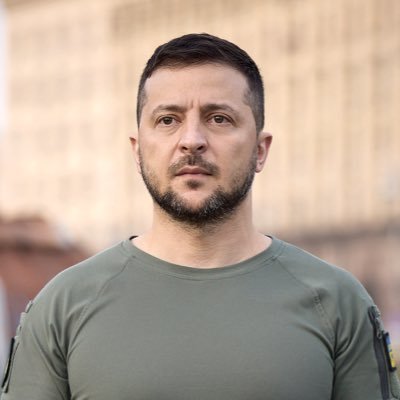
Our responses to Russia’s prolongation of the war and its attacks on our cities and communities are entirely justified. This time, Ukrainian long-range sanctions reached the Moscow region, and we are clearly telling the Russians: their state must end its war. Ukrainian drone and missile manufacturers continue their work. I am grateful to the Security Service of Ukraine and all the Defense Forces of Ukraine for their precision. The distance from Ukraine’s state border is over 500 km. The concentration of Russian air defense in the Moscow region is the highest. But we are overcoming it. Glory to Ukraine!


Elisabeth Busch retweeted

11/ The research gap is staggering.
Of 9 drugs the NIA Interventions Testing Program found to extend lifespan, 7 worked only in males. Most preclinical aging research still defaults to male mice.
"Just because everyone says it's happening doesn't mean it's happening in both sexes." --Dr. Benayoun
Elisabeth Busch retweeted
1/ The ovary is the fastest-aging organ in the female body. And almost no one is studying why.I just sat down with @BBParis1984 (@USCLeonardDavis ), who runs one of the only labs in the world mapping ovarian aging.
A few things from our conversation I can't stop thinking about:
Elisabeth Busch retweeted

New AI paper from us this week. When my student first showed me his initial findings, I really didn’t know what to make of them. I felt that this was an interesting but curious loophole phenomenon that would shortly be closed. I was very wrong.
arxiv.org/abs/2603.21687

Elisabeth Busch retweeted

Wondering if the hearts of those frustrated by small acts of petty symbolism, by the feeling that smashed windows and graffiti on bakeries are simply not enough, are cheered by the upgrade to burning ambulances this morning.
Elisabeth Busch retweeted

Jonathan Freedland documents with chilling accuracy how and why violence against Jews in the diaspora has seen a parabolic rise, how life has become increasingly dangerous in the last 2+ years.
We know too well that it takes very little for Jews to become national figures of hate, scapegoats for everything that is going wrong.
The commentariat may rationalise this violence as retribution for the actions of the Israeli Gov, but of course the Jews being attacked are guilty of only one ‘crime’: being Jewish.
🔗 in comments.

Elisabeth Busch retweeted

the modern professor's feeling of warm relief and gratitude at encountering artisanal, human-crafted bad writing while grading papers
Elisabeth Busch retweeted

Thank you to @TheEconomist for publishing my essay on "what people get wrong about women's rights"!
economist.com/by-invitation/…

