

Founder, Neothread Research. We revive closed-lost pipeline with research-led engagement. First-party data beats cold outreach.
Toronto, ON
Joined March 2024
- Tweets620
- Following178
- Followers79
- Likes435



Cold outbound tools get sharper every quarter. Response rates keep falling anyway.
Every improvement in sequencing and personalization lands on a buyer who already learned to pattern match and ignore the entire channel at once.
1,046 closed-lost deals audited.
About 80% died from "no initiative" or "no priority." Only 4% were lost to a competitor.
Most revenue teams build their win-back playbook around competitive displacement. Meanwhile the real problem is that buyers never started moving at all.
Personalizing an email and researching why a deal stalled look like the same motion.
They're not. Personalization fills a template. Research tells you why the buyer went silent in the first place.
That distinction is where pipeline actually lives.
Most CRM loss reasons get logged in the last 72 hours of quarter.
Reps clearing pipeline under forecast pressure, picking whatever dropdown closes the record fastest.
The field that's supposed to explain your losses is filled at the exact moment nobody has time to be honest.
Roughly half of stalled deals have a re-engagement signal sitting in them untouched.
Nobody finds it because nobody asks. The deal goes cold, the rep moves on, and the contact joins a nurture sequence forever.
More pipeline in your closed-lost than in most outbound campaigns.
Average research interview with a lost buyer runs 8.7 minutes. 75% go past seven.
These people ghosted your sales team. Wouldn't reply to an email, declined every meeting.
Ask what actually happened in the deal, with a neutral third party, and they'll talk for nine minutes.
Cold outbound tools get sharper every quarter.
Response rates keep falling anyway.
Every improvement in sequencing and personalization lands on a buyer who already learned to pattern match and ignore the entire channel at once.
Eddy Okun retweeted

pitched the city of toronto on a free hackathon where builders use public open data to solve real city problems. top AI lab funding the grand prize. zero cost to the city. during the biggest tech week in the country.
their answer: "concerns about branding." so it got killed by "leadership"
the data is public. the builders are ready. the city said no to people volunteering to fix their problems for free.
so we're doing it anyway.
every participant gets API credits. winners get cash prizes, credits, and merch. judging panel includes engineers from the lab itself.
we need two things:
🏢 a venue partner - if your company, university, or org wants 150 of toronto's best AI builders in your space for a day, dm me. (space must have good vibes and be central to the city)
🧩 a nonprofit or community org with a real problem - we'll point the builders at it. housing, transit, food security, whatever. if the city won't bring the problems, someone else will.
the city couldn't figure out the paperwork. maybe you can.
the city doesn't have to show up for the city to benefit.
cc: @oliviachow @EvanLSolomon @fordnation @buildfutureto @cityoftoronto @MarkJCarney

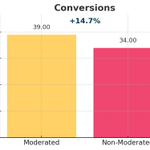
Comment moderation ON vs. OFF ? 🤔
We split-tested it on FB ads for an 8-figure SaaS brand.
Same audience. Same creative. Same budget.
Result after a few days:
• 14.5% ↓ cost per result
• 14.7% ↑ conversions
Your comment section is a performance lever.
Interested in the tool/setup we used to make it happen? 👇


superpower.social
AutoMod is the tool within the platform.
Provide instructions on the kinds of comments you want hidden and it'll take care of the rest.
Your Facebook ad comments are part of the checkout funnel.
We hid the spam & hate for one Shopify store and Cost-per-Result dropped 14 % 🤯
Stop paying for negativity → superpower.social
Posted this ad on facebook and got a TON of super aggressive comments...
That got automatically hidden thankfully


Your $10k ad is live.
First comment: “Is this a scam?”
Next 5: spam links. Every troll steals a sale you already paid for.
Find out what's happening in YOUR comments section with this free audit, just tell us your handle.
Comment or DM me "AUDIT" and I'll send it to you.

Most paid social marketers think comment moderation is someone else’s job.
Worse, they pretend comments don’t matter.
They’re wrong.
The comment section is part of the ad.
And ignoring it is killing your conversions.
Let’s break it down 👇
The truth?
Your comment section is your ad.
And neglecting it is a form of performance leakage.
Media buyers might not own it.
But the brand still pays the price