

posting animals that have gone extinct in the Holocene ~ no AI, all images Public Domain or Creative Commons ~main: @Cat_The_Worm
The 6th Mass Extinction
Joined September 2026
- Tweets112
- Following22
- Followers13.6K
- Likes206





SURVIVOR SUNDAY
The endangered Black Jumping Salamander (Ixalotriton niger) lives in only 10 square km in Chiapas, Mexico. Its an arboreal species that jumps when disturbed and turns brown at night. It was believed extinct until rediscovered in 2000.
📸: Wouter Beukema

Cascade funnel-web spider
(Hadronyche pulvinator)
~ lived in: southeast Tasmania
~ cause of decline: habitat loss
~ last record: 1926
~ status: extinct
~ 📸: tasmanianspiders.info/203.ht…

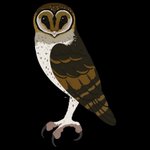
New Caledonian Barn Owl
(?Tyto letocarti)
~ lived in: New Caledonia
~ cause of decline: decline of reptiles, their primary food source, due to invasive rodents
~ last record: Holocene
~ status: extinct
📸: @astrapionte

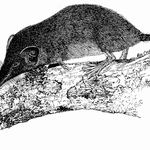
Christmas Island Shrew
(Crocidura trichura)
~ lived in: Christmas Island, Australia
~ cause of decline: disease spread by invasive rats, predation by invasive snakes, habitat loss
~ last record: 1985
~ status: extinct
📸: Max Orchard

Extinct Animal of the Day retweeted

Tomorrow I will continue posting on @extinctoftheday, if I don't y'all are free to hound me in the DMs
Merriam's Elk
(Cervus canadensis canadensis/merriami)*
~ lived in: southwestern United States
~ cause of decline: hunting, agriculture
~ last record: ~1906
~ status: extinct
* once considered a separate subspecies, now a distinct population of elk
📸: Kaibab National Forest

ALT Rocky Mountain Elk from Kaibab National Forest, reintroduced to the former range of Merriam's Elk
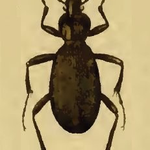
Giant Ground Beetle
(Aplothorax/Calosoma burchelli)
~ lived in: St. Helena
~ cause of decline: habitat loss; invasive predators
~ last record: 1967
~ status: extinct
📸: Alexander Heyne; Otto Taschenberg

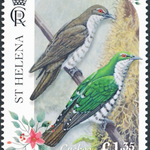
St. Helena Cuckoo
(Nannococcyx psix)
~ lived in: St. Helena
~ cause of decline: possibly deforestation
~ last record: likely extinct in the 18th century
~ status: extinct
📸: Saint Helena Christmas 2023 stamp

Chapala Lamprey
(Tetrapleurodon spadiceus)
~ lives in: Lago de Chapala, Mexico (historically, Lerma-Chapala Basin)
~ cause of decline: dams, habitat degradation, pollution
~ last record: 1987
~ status: critically endangered (possibly extinct)
📸: FAO

Very cool! IUCN's assessment came out just about a year before this was published, so I didn't know about this potential rediscovery.
Worth noting, the authors didn't ID the specimen to a species and only say that it's "probable" it's the extinct Ukrainian migratory lamprey


Ukrainian Migratory Lamprey
(Eudontomyzon sp. nov. 'migratory')
~ lived in: Black Sea Basin of Moldova, Russia, and Ukraine
~ cause of decline: unknown
~ last record: late 19th century
~ status: extinct
📸: Eudontomyzon mariae (close relative), by Zsoldos Márton

SURVIVOR SUNDAY
The Miller Lake lamprey (Entosphenus minimus) is the smallest parasitic lamprey, and native only to the Miller Lake drainage in Oregon. It was presumed extinct in 1958 after fisheries attempted to eradicate it to protect non-native trout populations.
1/2

ALT Brandon Swanson, Oregon Public Broadcasting

St. Croix Racer
(Borikenophis sanctaecrucis)
~ lives in: St. Croix, U.S. Virgin Islands
~ cause of decline: deforestation, invasive mongoose
~ last record: 1898
~ status: critically endangered (possibly extinct)
📸: Puerto Rican Racer (close relative), inaturalist.org/photos/89430…

Franklin's Bumblebee
(Bombus franklini)
~ lives in: 190 miles in Northern CA and southern OR
~ cause of decline: diseases from commercial bumblebees, habitat degradation, pesticides
~ last record: 2006
~ status: critically endangered (possibly extinct)
📸: James P. Strange

Red-Bellied Gracile Opossum
(Cryptonanus ignitus)
~ lived in: Jujuy, Argentina
~ cause of decline: deforestation of only known habitat
~ last record: 1962
~ status: extinct
📸: C. agricolai (close relative), by Thomaz de Carvalho Callado

North African Zebra
(Equus mauritanicus)
~ lived in: North Africa
~ cause of decline: aridification
~ last record: 4000 BC
~ status: extinct
📸: commons.wikimedia.org/wiki/F…

Snail-Eating Coua
(Coua delalandei)
~ lived in: Île Sainte-Marie off the coast of Madagascar
~ cause of decline: complete deforestation of Île Sainte-Marie, over-hunting, decline of snails due to invasive rats
~ last record: 1834
~ status: extinct
📸: Nicolas Huet

SURVIVOR SUNDAY
The Hispaniolan solenodon (Solenodon paradoxus) is a venomous, nocturnal insectivore. It's also one of the last two endemic terrestrial mammals of Hispaniola.
In 1981, it was declared functionally extinct. Now it's Least Concern.
📸: Pedro Genaro Rodriguez
1/3

Solenodons are a unique family of mammals. 73 million years ago, they diverged from shrews, moles, and hedgehogs.
In the last 500 years, two solenodon species went extinct. Now there are just the Hispaniolan and Cuban solenodons.
📸: commons.wikimedia.org/wiki/F…
2/3

1
43
573


