
Building https://nitter.gq/t.co/5tJtX6UbyK, agentic AI for autonomous R&D. Previously https://nitter.gq/t.co/zQdC7zN9Xl (acq. Workday).
Joined December 2008
- Tweets1.9K
- Following410
- Followers949
- Likes1.3K




Filip Dousek retweeted

In our new npj Aging paper, we show that a 30-second voice recording captures a signature of biological aging
Using 7,000 participants from the Human Phenotype Project (humanphenotypeproject.org) we trained voice-based age models to predict chronological age. The resulting Voice Age was among the strongest single-modality aging clocks and added information beyond metabolomics, imaging, physiology and lifestyle
A higher Voice Age gap was associated with adiposity, sleep-disordered breathing, poorer nocturnal oxygenation and liver-related traits, suggesting that voice may provide a simple, scalable biomarker of accelerated biological aging
nature.com/articles/s41514-0…

We set out to predict how to reverse disease.
Today we’re launching Theorema’s causal disease models:
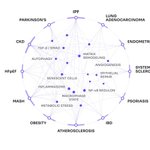
15 diseases
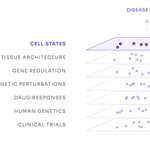
Trained on data from 100M+ human cells
Found the right cancer drug targets 13.7× more often than chance
Here’s what we’ve built 🧵

We built these models to bring the risk in drug discovery way, way forward. Shift left, as we say in engineering.
We’d rather see an idea fail in month one than year ten. Catch more failures early, and give the programs that go ahead a better chance of reaching patients at lower cost.
Really proud of the team behind this. Nearly a year of work, and a lot more to come.
The models and benchmarks: theorema.ai/models
If you have a disease you’d like to put these models to work on, DM me.
Follow us for the long game. @theorema_ai
A few months in, Theorema is running self-driving labs.

We started Theorema a few months ago with one vision: autonomous science. Self-driving labs that design, run, and interpret their own experiments, with the AI doing the science.
Today we share our first preprint.
First, the problem it addresses. Enzyme cascades are how much of modern medicine, advanced materials, and green chemistry is produced. Chain several enzymes together and they perform in a single pot what would otherwise take a chemist many separate steps. The difficulty is tuning them. Enzyme ratios, pH, temperature, and buffer composition all interact at once, and the parameter space grows combinatorially. The conventional approach is a scientist running reactions one at a time for months.
Loschmidt Labs spent years building CascadeMAP, a self-driving microfluidic lab. It generates thousands of nanoliter droplet reactions and uses Bayesian optimization to converge on the best conditions without supervision. Over seven days it ran roughly 220,000 reactions across 7,400 conditions, with no one in the room.
The platform was validated on two very different cascades: (i) glycerol detection pathway (monitored by fluorescence) and (ii) 1,2,3-trichloropropane degradation pathway (monitored by label-free Raman spectroscopy), demonstrating its versatility across detection modalities and application domains.
Then we added Theorema on top of it.
If CascadeMAP is the experimental engine, Theorema is the scientist directing it. The meta layer. Our multi-agent system designed the experiments and the optimization strategy, then analyzed 11 GB of raw results across 23 campaigns, reconstructed what had happened and why, and recommended the next round. CascadeMAP ran the fast loop within each campaign. Theorema closed the slower loop between campaigns: design, interpretation, redesign. That is the work that has always required a principal investigator. And the value of that loop was concrete. Theorema saw that the search had concentrated on high-performing pockets rather than mapping the whole space, identified the variables that actually drove performance, and explained why the landscape held so many local optima. That is exactly the read needed to design a sharper next campaign.
That's what I mean by autonomous science. It is not one AI doing everything, but several roles working together. Theorema can supply all of them, or join your existing models and provide the reasoning layer at a scale, speed, and depth no human team can match.
A few months in, the system we set out to build is running real wet labs.
Authors: Michal Vašina, David Kovář, Martin Kizovsky, David Lacko, Pavel Vaňáček, Maximilian Herich, Eduard Volf, Lukas Drdla, Sona Cabalova, Pavlina Sikorova, @MichaelJirasek, Pavel Solansky, Jan Ježek, Ota Samek, @fdousek, Hynek Walner, Pavel Zemanek, Andrew deMello, Zdenek Pilat, @JiriDamborsky, Stavros Stavrakis, Stanislav Mazurenko, Zbynek Prokop
This work is a joint effort of @MasarykUni Masaryk University, St. Anne's University Hospital Brno, @ETH ETH Zurich, @CzechAcademy the Czech Academy of Sciences, and @theorema_ai Theorema. Many thanks to our partners for a fantastic collaboration.
If you're looking to accelerate your R&D program, talk to us.
(preprint link in comments.)


Filip Dousek retweeted

We need a more nimble regulatory framework for outbreaks like hantavirus.
There is already a compelling therapeutic candidate: a human mAb isolated from a recovered patient, with strong preclinical activity against the Andes variant.
Yet access remains months to years away.
Filip Dousek retweeted

Introducing Code on Canvas in @pendev
AI design tool for Claude and Codex.
Design ❤️ Code are officially in a relationship, opening new ways to create on canvas.
Ask agent to generate custom design tools inside Pencil on the fly, create interactive components, generative art and more, but still keep the full manual design control.
This is just the beginning. Let us know what you think. And let's take it to the next level together.
Download the new Pencil update today.


Nothing to see here, keep walking

MIT Technology Review:
- California researchers trained an AI model on genomes of ~2 million bacteriophage viruses and asked it to propose new genetic codes for viruses.
- It worked! Several AI-designed viruses replicated and killed bacteria. 16 out of 302 total designs worked.
"That led to a profound 'AI is here' moment when, one night, the scientists saw plaques of dead bacteria in their petri dishes. They later took microscope pictures of the tiny viral particles, which look like fuzzy dots."
Creating these genetic codes for viruses can be thought of as "just a faster version of trial-and-error experiments", as humans have accomplished this in the past via a long hit-or-miss process of testing out different genes. A very cool result nonetheless!


Filip Dousek retweeted

This is a perfect example of @ScottAdamsSays' two movies on one screen metaphor.
Some of us see a totally disrespectful Zelensky walking away from a verbal agreement and trying to litigate and negotiate in front of a live TV audience.
Others see an eval mafia boss meticulously orchestrating a public smack-down of a heroic leader of a poor victimized nation under attack.
Two movies one screen.

my last few years 👇

Dear TPOT interested in bio-electric hacking, consciousness, psychedelics, physics, neuroscience, and body energies / woo:
I learned to heal myself of scoliosis, kyphosis, and a lifelong neurodegenerative condition by discovering to how to reprogram my body.
For somatic programming, I humbly offer an ontology and a description of the interface from my own first person experience. 🧵

