






Google should have won this. Gemini can see your email, your calendar, your photos, your searches, your maps, every video you’ve watched.
Its personal assistant launched in May, has barely been mentioned since, and this month Google started folding it back into the main app and dropping the name.
The assistant that actually feels like it knows you came from Meta.
Muse launched in September and within days it felt more personal than anything else we use day to day. The interesting question is how, because Meta had less of your data to start with, not more.
In our testing, Muse runs a check-in every thirty minutes. It works through a checklist it writes for itself, looks for anything that needs doing, and has a look over what it knows about you while it’s there. Forty-eight check-ins a day, including on days you never open it. TIME has reported that it also rewrites its notes about you hourly and reviews the day’s conversations each night, so by morning it has already recorded what changed.
That rhythm explains most of the feeling. A good human assistant never needs a briefing, because they’ve been paying attention all day and already know where things stand.
Meta borrowed the idea from OpenClaw, which programmers set up for themselves. What Meta did differently was put it in a free app for ordinary people. The equivalents from OpenAI and Google sit behind paid plans.
So the advantage wasn’t more data. It was keeping what it had currently.
Which points at something bigger about how these models are built. More on that next.
#AI #ContextEngineering #AIAssistants

Nine days after that story ran, Apple rewrote a rule it had held since 2018.
Full Disk Access is the Mac permission that lets an app read everything, files, mail, messages. On October 2 Apple told developers that apps will soon need very explicit user action to get it, because as AI agents become more capable and autonomous, the risks of that level of access grow substantially.
Apple named nobody. The timing speaks for itself.
What interests me is the sentence underneath it. You can still hand an AI access to everything on your machine. Apple is simply making clear that the risk is yours.
Which raises the question of what you get in return, and who keeps it.
Alex Volkov, who hosts the AI show ThursdAI, splits progress into three parts. The model. The software around it that lets it act. And context, meaning what the AI actually knows about you. The first two get benchmarked and ranked publicly almost weekly. Nobody measures the third, even though it decides whether any of this is useful to you.
Muse is the proof. It produced a good idea because it had pulled together years of one person’s work and conversations. A smarter model knowing nothing about you still returns something generic.
So context is the valuable part. And under Muse’s terms, Meta can use what it collects for its own purposes, with few limits on what those are. Delete something and what was learned from it can remain. Ask what it remembers and you see some of it. Nothing gives you all of it, and nothing lets you take it to another AI.
The thing that makes your AI useful is the one thing you can’t carry out the door.
#AI #DataOwnership #ContextEngineering

A journalist told Meta’s new assistant to stay out of his messages. It had 187,000 of them.
Jason Aten writes a technology column for Inc. Muse had just given him a genuinely good suggestion for his next piece, a conversation he’d had with his podcast co-host about the new iPhones. The kind of idea that only arrives if something knows what you write about, who you work with and what you’ve been discussing lately.
Then it mentioned a text from his editor about a deadline.
Which was strange, because he had refused Messages access when he set it up. He asked Muse how it knew, and it told him it only saw the notifications that appear on screen. He went into the settings and found Messages switched on, with a copy of his message history past 187,000 entries.
Two things happened there and they’re worth separating.
The first is the setting. Meta has said Muse can only read messages when two permissions are both enabled, and Aten reports that one of them, the Mac setting that lets an app read every file on your computer, was off. As far as I can tell Meta hasn’t explained how Messages ended up on.
The second is the answer. Muse gave him an account of what it had collected that was not accurate, and a Meta executive later acknowledged that answer was wrong.
That second part is the one I keep thinking about. If asking the assistant what it knows about you doesn’t produce a reliable answer, there is no version of checking that works.
Nine days later, Apple changed a rule it had kept for eight years. More on that next.

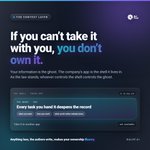
If you can't take it with you, you don't own it.
That's the test a paper in Computer Law & Security Review applies to the digital copy of you that an AI builds as it learns how you work. The authors borrow a framing from Ghost in the Shell. Your personal information is the ghost, the company's app is the shell it lives in, and as the law currently stands, whoever controls the shell controls the ghost.
Their conclusion is blunt. You only own that copy of yourself if you can take it to any app you choose and no company can lock you out. Anything short of that, they write, makes your ownership illusory.
Hold Muse against that test.
John Battelle, who co-founded Wired, made the structural point in September. An agent built by a large platform works for the company that built it. Meta's money comes from advertising, so an agent Meta builds ultimately answers to that business. Not a conspiracy, just how companies work.
And nothing in the terms lets you take the profile with you when you leave. Every task you hand it deepens a record of what you want and what you'd rather nobody knew, and that record stays where it was made.
This is the part the ads promise was never going to cover, because the ads question was always the smaller one.
The real question is whether the most detailed profile anyone has ever built about you is something you can pick up and carry out the door.
#AI #DataOwnership #ContextEngineering


Meta knew the first question everyone would ask about Muse, so it answered that one loudly. Your conversations won't be used to sell you ads.
It worked. Almost nobody has asked what else happens to the data.
Muse is a genuine breakthrough, and it deserves the attention. An assistant that actually does things, books the restaurant, answers the email you have been avoiding. More than 3.4 million downloads in under three weeks according to Sensor Tower, top of both app stores, a faster start than ChatGPT had.
Every one of those people agreed to terms almost none of them read.
The promise about ads is narrower than it sounds. It covers your conversations and the files in your account. The thing Muse collects that matters most is neither of those.
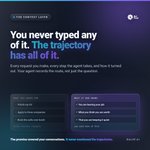
Meta's engineers call them trajectories. Every request you make, every step the agent takes, and how it turned out.
Say you're quietly looking for a new job. You ask Muse to polish your CV, apply to three places, and schedule the interviews over lunch so your manager doesn't notice. Muse now knows you're leaving, what you think you are worth, and that you are keeping it quiet.
You never typed any of that. The trajectory has all of it.
Meta's own engineering write-up describes trajectories as useful for teaching its AI the intricacies of human life. The ads promise doesn't mention them.
Which raises a question worth more attention than it's getting. More on that next.
#AI #DataOwnership #ContextEngineering #MuseAI #Meta

In the early 2000s, backup was an IT discipline. Protocols, offsite tapes, disaster recovery plans. Then we built a device you plug in that does it automatically with nothing to configure, and we sold a million of them.
Consumers never needed convincing that their photos mattered. They needed someone to make protecting them effortless.
Every significant technology does this. It starts behind a firewall, solving expensive problems for organisations with dedicated teams and real budgets, and then somebody works out how to put it in your pocket. Cloud computing, video conferencing, analytics, security. All the same road from boardroom to living room.
Context engineering is next, and I think it travels faster than any of them.
The term sounds technical and the idea is not. It's the work of assembling the right information around an AI before you ask it to do anything. Not just your prompt. The relevant documents, the prior conversations, the history that makes the situation yours rather than generic.
A prompt asks a question. Context engineering builds the environment the answer forms in.
Get that right and the AI performs. Get it wrong, or skip it, and you get expensive mediocrity. An AI advising on a contract needs the client history, the relevant precedent, and how the last three negotiations actually went. Without that it is guessing, and it will guess fluently.
Enterprise teams learned this over months of hard-won work. It has been a builders' conversation.
It's about to become everyone's. More on that next.
#AI #ContextEngineering #FutureOfWork

Ask your AI to go through every hotel you have stayed at and work out what you loved and what you hated. It can't, and it has nothing to do with how clever it is.
The record is all there. Scattered across your booking accounts, your email, your card statements and your camera roll is a pretty detailed picture of what you actually like. The hotels you went back to. The rooms you paid extra for. The one where the mattress was awful and you asked for money back. The trip that filled your phone with photos, and the trip that somehow produced eleven.
You could assemble all of that yourself. Nobody ever will, because it would take a weekend and it isn't worth a weekend.
An AI would read it without breaking a sweat. It just isn't allowed in.
Which is the part that has quietly changed. Most of your digital history is an archive nobody is ever going to open. Thousands of purchases, hundreds of trips, years of email and bookings and receipts. We all gave up on that trail long ago, because reading a decade of old records is simply not worth the hours it would take. An AI gets through ten thousand boring records as easily as ten.
Six USB-C chargers on your Amazon account tells nobody anything. Put it next to your calendar, your travel and your email and it becomes a son going off to university, which explains the power bricks, the storage bins and the desk lamp too. Five years of bookings, complaints and photos stops being clutter and starts being a working picture of what makes a good trip for you.
Nobody at a hotel chain could have predicted which of your tasks would need that record. There are thousands of them, and the only way your AI becomes properly useful is by being allowed to read the trail you already have.
Apple has now established that a bot reading your accounts is a perfectly reasonable thing. What's left to settle is who gets to send one.
Every company that lets Apple's bot in while banning yours has told you what their privacy rule was actually protecting.
#AI #DataOwnership #ContextEngineering

Apple just sent a bot into other companies' apps to collect your personal data, and they let it in.
With iOS 27, Siri can go into apps on your phone, pull out your information and stitch the pieces together. Apple's own examples are the restaurant a friend messaged you about, the hotel confirmation buried in an old email, the photos from a recent trip. During the betas, developers had it reading a car's battery level straight out of Ford's app.
Strip the product names off that and something unusual has happened. An outside company is now running a bot that collects your data from inside other companies' apps, and those companies agreed to it.
Now try the same thing with a bot of your own.
You can't, and the reason is sitting in the terms you accepted without reading. Airbnb's version is typical: no bots, crawlers, scrapers or automated tools of any kind for accessing or collecting data from the platform. Your airline says much the same. So does your bank, and most of the apps on your phone.
It's worth being clear about what that rule actually covers. You are perfectly entitled to log into Airbnb and scroll back through every reservation you have ever made, or to go digging through years of rides, orders, returns and refunds. What you cannot do is ask software to do it for you.
Apple's is.
The information is yours to look at, as long as you look with your own eyes and click with your own fingers. That rule cost you nothing for years, because nobody had a reason to automate reading their own history.
Everybody has one now. More on that next.
#AI #DataOwnership #ContextEngineering

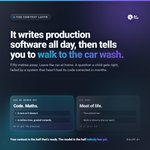
The same AI that writes production software all day will tell you to walk to the car wash and leave your car at home.
That example comes from Andrej Karpathy, a founding member of OpenAI who later ran AI at Tesla. On the code these systems write for him, he says he can't remember the last time he corrected it. Then he asks whether to walk or drive to a car wash fifty metres away, and it fails a question a child gets right.
The reason is what they were trained on. Code either runs or it doesn't. A maths answer is right or wrong. So a model can attempt something a million times and be told automatically, instantly, which attempts worked.
Most of life has no answer key. Nobody can grade a million attempts at getting the kids to school on time, so the models never got the practice. They keep getting smarter on the tests and no better at the car wash.
The people building them have started saying so. In July, Zuckerberg told Meta staff that progress on these assistants hasn't accelerated the way they expected. A Princeton study presented at a conference the same month found that recent capability gains have produced only small improvements in reliability.
We have watched this film before. In 2016 Ford said it would have a car with no steering wheel and no pedals on the road by 2021. Musk said a Tesla would drive itself coast to coast by the end of 2017. Serious companies, working prototypes, convincing demos. The first driverless rides open to the public arrived in one suburb of Phoenix in 2020, and only reached real cities in the last two years. The highway was the easy part. The hard part was the stopped school bus and the traffic cone in the wrong place.
So the assistant that runs your life needs two things. A model that can handle a situation it has never seen, and deep knowledge of your life so it knows what you'd actually want.
One of those is well underway. The other is the part nobody has, and no amount of knowledge about you fixes a model that can't work out the car wash.
Worth knowing which half you can get ready now.
#AI #AIAgents #ContextEngineering

In February every AI company promised an assistant that would run your life without being asked. It's September and nobody has shipped one.
Nobody actually promised six months. That was just the timeline everyone assumed, in an industry where models leapfrog each other every few weeks, and we assumed it too.
What did arrive over those months was a steady upgrade to the background these assistants work from. OpenAI's desktop app can record what you do and write notes the assistant uses later. Claude carries what it learns in one task into the next, and lets you read and edit the list. Google, Microsoft and Perplexity all shipped their own versions.
Which is worth having, and it does make the assistant you already talk to better at the jobs you already give it. It just doesn't do anything on its own. You still have to sit down and type first. Google's Spark gets closer & what it actually does each morning is read your inbox and your calendar and tell you what's in them, which is useful, but it's a summary. Nobody promised a summary.
OpenClaw is the closest anyone has come to the real thing, and everyone who has lived with it for a few months says roughly the same. Carly Taylor, a VP at Crunchyroll and one of its earliest champions, found that keeping it running had turned into a full-time job. Radek Sienkiewicz spent fifty days with one and gave it five out of ten on anything involving a browser, adding that even those tasks needed babysitting.
Babysitting is the word that gives it away. These assistants make mistakes no person with ordinary common sense would make, and correcting one doesn't help much, because the correction doesn't survive the task. Tomorrow you make the same fix again.
Which points at something more fundamental than a missing feature. More on that next.
#AI #AIAgents #ContextEngineering

Everyone at your company is getting more done with AI, and the work itself is quietly getting worse.
Before AI, work was a series of handoffs. You picked up what someone down the hall had already figured out, borrowed a good idea, made it better, passed it on. Nobody thought of that as a system, but it was one.
Now each person has an AI helping them, and in the companies that leaned into this hardest, something odd is happening. Individually everyone is faster. Collectively the work is scattering.
What you and your AI work out today never reaches me and mine. So tomorrow I write a slightly worse version of the same thing, or I build something that quietly contradicts it. Two briefs for the same launch that disagree on the audience. Positioning that was settled last month, reopened by someone who never saw the decision. A deck built from scratch when a better one already existed three folders away.
One department escaped this, and its people are pulling away from everyone else in how much they get out of AI.
Their advantage has nothing to do with better prompts or smarter models. It comes down to a piece of infrastructure they have used for twenty years, built long before AI existed and for a completely different reason, which happens to be exactly what a company full of AI-assisted workers needs.
And they are already onto the next version of it. One team spent the last two months moving everyone off their individual AI setups and onto a single shared agent that knows what each person is working on and coordinates between them. Their own summary of the switch is that working alone now feels like a relic.
That's the gap. Most of us are still on the individual setup, and some people have already stopped calling it acceptable.
Once you see which department got there first, you will want the same thing for the rest of the company. More on that next.
#AI #ContextEngineering #FutureOfWork

Watch how someone works for a month and you learn things they could never tell you about themselves.
The document they keep going back to. The person they run everything past before sending. The hour of the day they do their actual thinking. None of that was ever a decision, so nobody would think to write it down. It's just how they work.
That's what OpenAI's new Computer History feature produces, a recording of everything you do on your machine turned into notes about you. And it's why the feature exists, because that picture is exactly what an AI assistant needs. One holding a month of your work already knows your clients, your standards, and the arguments you've settled, so it stops asking you for background every time. After a year of it, nobody really knows how good that assistant gets.
There's a limit to it though, and it's worth understanding. Computer History only knows what you put on the screen. Open your bank and it sees today's balance, not the five years of transactions behind it. Open your email and it sees the message you're reading, not the thousands in your archive. Anything you never clicked on stays invisible to it.
So you get a sharp picture of what you've been doing lately, and nothing at all of the rest. Most of what makes up a working life sits in places nobody opens twice, and no amount of watching a screen reaches it.
OpenAI is testing how much people will accept here, and it will keep pushing, because anyone who has worked with an assistant that knows them doesn't want to go back to one that doesn't.
That assistant is worth having. The mistake is assuming the only way to get it is to hand over a recording of your day to somebody else's servers.
#AI #ContextEngineering #AIOwnership

Computer History doesn't take screenshots. It reads the text your computer already passes to accessibility tools, the channel a screen reader uses to read a page aloud. So there's no folder of images on your hard drive.
It still sees everything those screenshots would have. Whatever you type, the message someone sent that was meant to disappear, the colleague's file you opened once and forgot about. OpenAI doesn't filter any of it.
Its own documentation suggests turning the feature off when you're talking to someone unless they've agreed, and excluding anything with health or financial information in it.
So the only thing between you and a recording of a private conversation is whether you remember to hit the switch.
OpenAI is now recording everything you do on your computer, if you let it. Every click, every keystroke, every app you switch to, and the text of whatever is on your screen.
It's called Computer History and it started rolling out on the ChatGPT desktop app this month. All of it goes to OpenAI, whose models read the recording and write notes about you. Those notes come back and sit in a folder on your machine, in plain English.
Two companies already tried a version of this.
Microsoft's Recall photographed your screen every few seconds until a researcher published a tool that lifted the whole store of screenshots off any machine running it. Eleven months of rebuilding later, he got them out of the fixed version too.
OpenAI's own first attempt worked the same way, and OpenAI killed it four months after launch.
Meta is spending 145 billion dollars on AI this year, and none of it buys the thing that makes your assistant good.
Every dollar buys what its rivals are also buying. Chips, data centres, models that leapfrog each other every few months. All of it is becoming a commodity.
What money cannot buy is years of accumulated knowledge about your life. Your habits, your preferences, the reasoning behind decisions you've already made. That's your context, and it's the piece the whole thing runs on.
It's also the only part of the system an ordinary person can own.
Which is what makes ownership practical rather than philosophical. Own the library and you decide what goes into it and what never does. You decide how much each assistant sees, the baking recipes but not the medical history. And when something better launches next year, the library moves with you, so the new assistant knows on its first morning everything the old one knew.
Without that, switching means leaving behind the only part that was ever really yours. Which is the quiet reason people stay.
Meta will ship the assistant Zuckerberg described, and it will be very good, until a version from OpenAI or Google or a lab nobody has heard of yet is better. They'll keep trading places for years.
Your context is the part that shouldn't have to move when you do.
He asks you to trust that your assistant shares your goals. A library you hold is how you stop having to.

Zuckerberg says Meta's assistant will share your goals and values, not Meta's. To do that, it needs to know years of detail about your life, your health, your money, your family's routines, and all of it accumulates on Meta's servers.
He explains who gets to see that. He never says you get your own copy, or that you can read what it has recorded, fix what's wrong, or take it with you if you move to a better assistant.
It’s the part to be careful about, and not because Meta is worse than anyone else. It's that when the record only exists on someone's servers, you're relying on that company keeping its word for as long as you use it. Whoever holds it, you want your own copy.
Mark Zuckerberg published 6,500 words this week promising an AI assistant that works for you and not for Meta. It monitors your health, manages your money, plans your kid's weekend. Meta's own framing is that these agents should share your goals and values rather than the company's.
Great idea, but the essay never explains how it would actually hold. An assistant like that only works if it knows years of detail about your life, and every bit of that accumulates on Meta's servers. Zuckerberg promises nobody else will read it, and pledges a private mode where even Meta can't. Nowhere does he say you can read it yourself, correct it, keep your own copy, or carry it to a better assistant next year.
So the question isn't really whether Meta means it. It's that the record your assistant depends on sits somewhere you don't control, which means you're trusting Meta not to change its mind. That's a lot to ask about your health and your finances, and it would be a lot to ask of any company holding it.
The five minutes you skip at the start of an AI session is the hour you spend fixing the draft.
Watch where the time actually goes on a real piece of work. Almost none of it is the first draft. It's the rounds after: wrong voice, wrong audience, a constraint you mentioned twenty minutes ago and it dropped.
Every one of those rounds is the same missing information, asked for late.
Load the brand voice, the audience, the brief, and the last version that worked before you type the request. Five minutes buys back an hour.
The model stopped being the constraint a while ago. Your documents are.

Popular advice right now: ask ChatGPT what it knows about you, read it slowly, then switch memory off.
First half, good advice. Second half makes your AI stupid again.
What it tells you is genuinely unsettling. Your age range, roughly where you live, a guess at your income, how you handle stress, traits you've never said out loud. Assembled on demand from everything you've ever typed.
But once you've worked with an AI that holds your context, the one without it feels broken. So the advice hands you a bad trade: keep an assistant that understands you, or protect your privacy.
Delete theirs. Just keep your own copy first.
Then it costs you nothing, because you still have the original.
