

PhD candidate @SYNMIKRO | Part of https://nitter.gq/t.co/dXDi5O7Jo3 | Formerly @ibt_unam, @IPN_MX & @uga_langebio
Joined September 2017
- Tweets166
- Following317
- Followers142
- Likes6.3K



Pinned Tweet
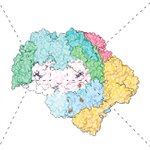
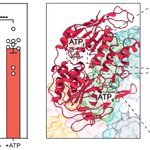
I'm truly excited to announce our new publication in @Nature unraveling a central picture of the Methyl-coenzyme M reductase (MCR) activation machinery and it's strong ATP dependency - kudos to @AnujR2d2 for the fantastic illustration!
LINK: nature.com/articles/s41586-0…

Fidel Ramírez retweeted

Our latest work on the nitrogenase-like methylthio-alkane reductase is now out
@NatureCatalysis
doi.org/10.1038/s41929-025-0… We biochemically and structurally characterized the methylthio-alkane reductase, a metalloenzyme that can produce ethylene from organic sulfur compounds.

Congratulations to all authors involved! Go take a look at this great work 👇🏼👇🏼

It is out now 🥳🥂
I am very happy to be part of this nice collaboration in which we were able to characterize different bacterial chemoreceptors and their ligand specificities. Amazing teamwork with Wenhao Xu, @sourjik, @BangeBalcony, et. al 🤩
👇👇👇
pnas.org/doi/10.1073/pnas.25…

3
113
Fidel Ramírez retweeted

I'm excited to share our new publication in @Nature! We showed that under Ni-limited conditions, similar to those in nature, #methanogens shift electron flow from [NiFe]- to [Fe]-hydrogenase Hmd with the help of a newly discovered protein complex, Elp.
nature.com/articles/s41586-0…

Fidel Ramírez retweeted

You may ask: “why study ancient enzymes? Who cares what life looked like 3 billion years ago?”
Because evolution may hold answers to problems we still struggle with, and it can guide our efforts.
New paper from our lab! 🧵

ALT Two panels from Fig. 4 of the paper, showing a growth curve on the left (with the strain expressing the simplified nitrogenase growing better than the negative control), and a nanoSIMS image of 15N incorporation into bacterial cells on the right.
Fidel Ramírez retweeted

Our second paper was published online within the same week 😊! Thanks everyone for their hard work!
@ScienceAdvances, @HuRibbe, @UCIBioSci, @UCIChemistry
Heterologous synthesis of a simplified nitrogenase analog in Escherichia coli | Science Advances science.org/doi/10.1126/scia…

Amazingly, our phylogenetic reconstructions traced the origin of these clusters and their protein scaffolds in methanogens before being repurposed for nitrogen fixation.
1
6
416
This project was only possible thanks to the great team formed with my shared co-first authors @sophia_pa_ and @AnujR2d2 and the supervision of @SchullerJm plus awesome contributions, specially from @stripp_lab @KaHochberg and Silvan Scheller.
9
433
Take a moment to check the most recent publication by @AnujR2d2 et al., about the structure & mechanism of a major respiratory complex in anaerobes 👇🏼

Excited to share our latest work on the structure and mechanism of the ancient sodium-pumping Rnf complex, now out in @NatureComms nature.com/articles/s41467-0…
Fidel Ramírez retweeted

Thrilled to share my first first-author paper! 🥂 We show that (p)ppGpp binds to the chloroplast SRP and its receptor, inhibiting their association. Grateful to my co-authors and special thanks to Dr. Patricia Bedrunka & @BangeBalcony for their support!
febs.onlinelibrary.wiley.com…

Fidel Ramírez retweeted

Great to see our manuscript detailing the ping-pong mechanism of human Ceramide Synthase 6 out now in @NatureSMB!
An excellent collaboration between @DavidBSauer's lab @CmdOxford, Liz Carpenter, @Boehringer and @UZH_en
link: doi.org/10.1038/s41594-024-0…
PDF: rdcu.be/dZOJP

Fidel Ramírez retweeted

Enhanced biosynthesis of poly(3-hydroxybutyrate) in #engineered strains of #Pseudomonas putida via increased malonyl-CoA availability—led by @FavoinoGiusi @LabNikel @DTUBiosustain in a collaboration w/@NickWierckx' lab @MicrobialBiote1
enviromicro-journals.onlinel…

Fidel Ramírez retweeted
Our years of work on nitrogenase assembly paid off! So proud of this paper, which demonstrates the heterologous expression of an active nitrogenase. Thanks to everybody involved for a great team effort!
@NatureCatalysis, @HuRibbe, @UCIBioSci, @UCIChemistry
doi.org/10.1038/s41929-024-0…

Fidel Ramírez retweeted

Our last paper is out! We created a "synthetic lichen" for CO2-driven bioproduction. We used an engineered synthetic microbial community between a fungus and a marine cyanobacterium. Together they made β-caryophyllene from CO2 and light.
sciencedirect.com/science/ar…