

Philadelphia, PA
Joined July 2010
- Tweets19.9K
- Following357
- Followers968
- Likes239K










John Forstmeier retweeted

We're past the point where bad narratives surrounding data centers can be explained away with a few rational arguments.
The tech sector has repeatedly made the mistake of assuming that technological progress is an inherent good in itself, and that this goodness will always win out in the end.
This is demonstrably false.
For the past several years, various coalitions and interest groups have hijacked "data centers" as a cause du jour. These structures have become a vessel into which anyone can thrust their generalized anxieties and sacrifice in the name of some platitude like "collective prosperity" or "human dignity". If you want to take control of the narrative, you need to create a new one.
It's not useful to prepare a list of statements detailing why data centers are important. Nor is it impactful to point out the fact that our digital infrastructure has relied on data centers for decades. None of this information changes how a person feels about the topic.
This feeling, of course, is not about what the data center is; it's about what it represents: it's an abstract threat to a person's identity and their ability to exert control over their life and their circumstances.
In order to counteract these narratives, you can do one of two things: you contextualize the threat in terms that assuage the underlying feelings associated with the thing. Or, you build an entirely new association.


John Forstmeier retweeted

I truly believe that the optimal way forward is embracing a Dark Age Mindset. This means:
- Embracing Decline as Opportunity.
When the foundations of familiar institutions are shaken, it's a signal to us to stop investing so much effort and dependence on those things, and create new alternatives that actually serve us as people and communities.
-Cultivating Resilient Character and Faith.
The folks who did this before were not weak, fragile, or wishy-washy. Get hard.
-Preserve and Transmit Knowledge.
If institutions that have historically been responsible for this (looking at you, media and schools) are failing, then it's another opportunity for us to step into decentralized roles as stewards of cultural patrimony, preserving literacy, classical texts, and traditions and educating our own children with this heritage to ensure continuity in a potentially post-literate or tech-degraded world.
-Pursuing Self-Sufficiency and Simplicity.
"Ora et labora" was the motto that drove that age forward and upward. But they showed us that simplicity needn't be minimalist or ugly; some of the most durable and beautiful things ever made came from these times.
-Reject Dooming and Be Proactive.
No despair. Instead, simplify your processes, improve your skills, and meet your challenges vigorously.
-Foster Creativity in Adversity.
Necessity is the mother of invention.
But the human person is not merely mechanical; we need beauty, music, good stories, living rituals, significance... Cultivate these things especially in the face of monopolized artificiality.
-Focus on Local and Subsidiarist Action.
Subsidiarity is handling matters at the smallest, most local level possible; create "schools for service" (as Benedict did) that prioritize family, home culture, nature, and education over distant, failing institutions. The more responsibility you take up over all the spheres of your living experience, the more you step into sovereignty.

This is why I harp on the "Dark Ages" so much. We already have a template of how these kinds of civilizational declines/collapses go. This is a main theme of St. Augustine's "City of God". The times may indeed seem dark, but what our ancestors showed us is that they can be times of incredible creativity, valor, and building the foundations for a whole new order to rise out of the ashes.
The "Dark Ages" were the ones that gave us so many heroes, saints, and stories. This was the age of King Arthur, Charlemagne, Charles Martel, the Book of Kells, Beowulf, Theoderic the Great, St. Benedict, Alfred the Great, Mont St. Michel, Aachen, Rheims cathedral, Saumur castle, Montecassino Abbey, etc. The list goes on and on. The cities of the empire had decayed; Rome was a wasteland and Constantinople was a hive of corruption hemorrhaging influence and stability faster than they could hire mercenaries. It was the Irish in the rural monasteries who preserved classical texts, the Franks and Saxons in their hilltop castles and burgs that crafted laws and refashioned social orders, it was Visigothic knights who carved out footholds while Flemish and Baltic craftsmen created works of art. The collapse of a bloated, bureaucratic imperial structure is not the end of all things; it is an opportunity for people of faith, resilient character, and creative boldness to apply themselves to build something better.
Where we are now is not yet full-on civilizational collapse, but that's not such a far-off and improbable condition for us to imagine. So prepare accordingly. This can be a great time to be alive if you meet the challenges we face and will face in the future the way these people did. Dooming is not an option; figure out how to do what you need to do simpler and better. Educate your children so they're intimate with the tremendous patrimony that was built for them with such great effort and sacrifice. Just like the Irish scholars had to virtually preserve literacy in Greek and Latin in the West, we may find ourselves tasked with preserving literacy in English in a post-smartphone and post-AI world!


John Forstmeier retweeted

liz warren: we’re gonna stop the mayonnaise company from buying a hot sauce company
elon musk:

John Forstmeier retweeted

“Don't think for a second that because you are an alarmist that you are doing a social good.”
This sentence is just devastating for so many intellectuals who need everybody to presume that they’re “the good people”
Thank goodness we have Jensen!


John Forstmeier retweeted

When you get tired of playing the victim and complaining about lab behavior let me know, there’s money to be made


John Forstmeier retweeted

On the morning of September 11, 2001, Howard Lutnick was supposed to be at his desk on the 105th floor of One World Trade Center, running Cantor Fitzgerald.
Instead, he was taking his five-year-old son, Kyle, to his very first day of kindergarten.
That tender fatherly milestone saved his life, but it came at a staggering cost. At 8:46 AM, American Airlines Flight 11 struck the North Tower right beneath Cantor Fitzgerald’s headquarters. In an instant, 658 of his employees, 67% of the company's workforce, including his brother Gary, were trapped above the impact zone. Every single one of them died.
Lutnick rushed to the scene just as the towers collapsed. Surrounded by dust and devastation, he found himself facing a horrific double reality: he had survived, but he was now CEO of a ghost company. His friends, colleagues, and entire executive team were gone.
In the emotional days that followed, the media aggressively questioned whether Cantor Fitzgerald would simply file for bankruptcy. To make matters worse, Lutnick faced intense backlash when he froze payroll days after the attack. However, he quickly clarified the brutal reality: the firm was bleeding cash, and if it went under, there would be no money left to help the families of the fallen.
Driven by a profound sense of duty, Lutnick made a quiet promise: Cantor Fitzgerald would survive, and its success would belong to the families left behind.
Over the next five years, the surviving staff worked around the clock under extreme emotional pressure. Lutnick pledged 25% of the firm's profits directly to the families of the victims and guaranteed their healthcare for a decade. Through this initiative, Cantor Fitzgerald distributed $180 million to those affected.
But he didn't stop at financial restitution. Lutnick made a legendary promise to every single child who lost a parent in the attacks: when you grow up, you have a job waiting for you at Cantor Fitzgerald.
Years turned into decades. True to his word, as those children reached adulthood, the doors of the firm opened for them. To date, 57 children of the victims have walked through those doors, joining the very company where their parents once worked.
Every year on September 11, Cantor Fitzgerald holds its annual Charity Day, donating 100% of its global revenues to various charities worldwide, turning one of the darkest days in human history into an enduring beacon of hope, resilience, and loyalty.
Before rebuilding Cantor Fitzgerald, Howard Lutnick experienced profound personal tragedy early in life: his mother died of lymphoma while he was in high school, and his father passed away during his freshman year at Haverford College. Facing sudden hardship, the college president and dean granted Lutnick a full scholarship to complete his degree, a act of institutional generosity that Lutnick credits as the foundation for his later philanthropic pledge to support the families of his fallen 9/11 team.
#archaeohistories


John Forstmeier retweeted
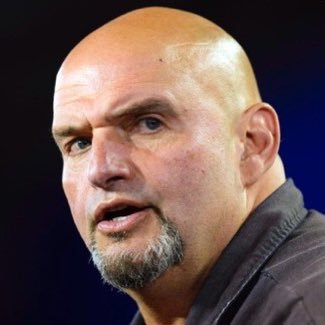
The Democratic Party is becoming the party of socialism.
58% view socialism positively.
50% view capitalism negatively.
I’m a proud free market capitalist.
This is lunacy.

John Forstmeier retweeted

For my first post, I’m sharing a letter @NVIDIA signed on why open models matter.
AI will transform every industry, power every company, and be built by every country.
Open models strengthen safety and cybersecurity, accelerate innovation and diffusion, and enable sovereignty.
The world needs both frontier closed models and frontier open models.
images.nvidia.com/pdf/Open-W…


