

🥑 Developer Advocate @GoogleCloud 🧠 Focusing on GenAI 🤖 ⭐️ @ApacheGroovy co-founder 🏆 @java_champions 📣 @lescastcodeurs podcast 🦋 @glaforge.dev
Paris, France
Joined April 2008
- Tweets48.8K
- Following2.3K
- Followers16.2K
- Likes18.6K





Pinned Tweet
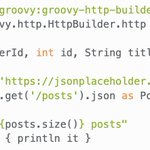
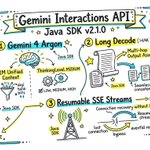
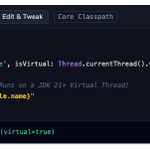
Before heading on vacation, I built an unofficial @Java SDK for #Google @antigravity 🚀
If you want to embed AI agents directly into enterprise Java applications, #GitHub Actions, or custom #CLI tools, here is how it works and what you can do with it 🧵 👇

Guillaume Laforge retweeted

Let's look at building an @ApacheGroovy 6 web app with @grailsframework v9, a GroovyFX desktop app, & an Android app for splitting a bill. They share a formally proven common core. No cents rounded away to an off-shore account here!
@TheASF #groovylang
groovy.apache.org/blog/groov…

ALT code showing a contract plus screenshots for the three apps
Guillaume Laforge retweeted

Can you use EmbeddingGemma 2 for Speech-to-Text?
This experiment uses EmbeddingGemma 2’s unified audio-text vector space to match speech against text via vector similarity.
The result? Transcribing an hour of audio in about 13 seconds, locally!
Guillaume Laforge retweeted

This is how EACH task gets its own computer for Gemini Agent.
MicroVMs built for AI Agents that can rapidly go from 0 to millions of isolated computers.
Be REALLY AMBITIOUS with your Gemini Agent.


Gemini Agent is built for high-ceiling work where EACH task gets its own computer.
You can choose Gemini 4 Argon or Claude Opus 5.5.
10 things that make it a universal work Agent (read till the end to see what a REAL work agent looks like):
1. One Agent, one API
Chat, autonomous objectives, and code generation from a single interface. Assign it work, schedule it, or have it respond to events.
2. Coworker agents with their own identities
It creates job-specific sub-agents, each with its own identity, and computer running in parallel for hours or days.
Each Coworker agent gets its own Workspace account: an agent email, calendar, Drive, and presence in your company directory. You mention it in Chat. It acts under its own identity, not yours, and sees only what you share.
3. Everywhere, including headless
Web, iOS, Android, Windows, Mac, command line, Workspace, Microsoft 365, Slack. It also runs as a headless agent with no dedicated interface.
4. Work 24/7 in the cloud
It keeps one set of memories, context, and personalization graph across every device and channel. Work that takes hours or days keeps running after you close your laptop. You never have to re-brief it.
5. Layers of memory that improve over time
- Session: the task in front of it, even when it runs for days.
- Semantic: a structured knowledge base it builds as it reads documents, talks to people, and works with other agents.
- Procedural: how a job gets done, including skills it writes for itself.
- Episodic: everything it has done before.
6. Proactive by design
It does not wait to be prompted. An email asking you for a deck gets flagged as delegatable, one click to hand off. Your inbox ranks by what matters, not by what just arrived, and tells you why.
7. Tools and skills, with company registries
Salesforce, ServiceNow, Jira, Git, Confluence, Microsoft 365, Slack, BigQuery, Databricks, Postgres, Snowflake, your desktop files, and any MCP server inside or outside your network. Teams publish their own tools and skills to a shared company registry.
8. Model Choice so you are not locked in
It runs each job on the model that fits best, running across the Gemini and Claude models from Anthropic today, with other private and open models to come.
9. Governed like an employee
Every agent gets a cryptographically attested identity with least-privilege permissions, and an audit trail attributed to the agent rather than a person. Agents run in a sandbox behind Agent Gateway, an AI network firewall. Write the policy once and it applies to every agent.
10. Costs you can actually cap
Smart Routing puts each workload on the model with the best performance at the lowest cost. Set a hard spend limit in Cloud Billing and that project's agent pauses until you resume it in one click.
Thank you for reading so far. Stay tuned for updates.
We are 100% committed to make it the best Agent for work.

Guillaume Laforge retweeted

Introducing the Gemini API CLI, now live in preview! 🚀
The easiest way for your agents to generate images, videos, music, text-to-speech or use managed agents.
A fast and efficient way to get access to all the goodness of the Gemini API.
🧵👇
Guillaume Laforge retweeted

I’m happy that we have an official Gemini API CLI (not to be confused with the old Gemini CLI which has been superseded by Antigravity).
Thanks to this new CLI I can get rid of all the ad hoc scripts I was using to call nano banana, lyria and others in my skills.
The updated versions of my media generation skills are live on skills.danicat.dev


Guillaume Laforge retweeted

"@googlecloud should offer micro-VMs."
Ok.
Agent Compute Engine is a new service that gives agents their own hardware-isolated micro-VM. We're using it ourselves to power key services.
Coming soon ... cloud.google.com/blog/topics…

Guillaume Laforge retweeted

You don't just have to use Gemini models in BigQuery SQL! 💡
With a few lines of SQL, you can prompt open models like Gemma, Llama, gpt-oss, and Hugging Face models across massive tables with zero data movement.
Read the walkthrough ➡️ medium.com/@presactlyalicia/…

Guillaume Laforge retweeted

A friendly reminder that #Java #HelloWorld looks like this since Java 24:
void main() {
println("Hello World");
}
No, it is not "public static void main..." anymore. 🫶

Guillaume Laforge retweeted

Today, we're bringing OpenAI models to Google Cloud's model garden.
We're now the only hyperscale cloud provider offering access to all three leading closed source LLMs—alongside 200+ other models—on a unified enterprise platform → goo.gle/4zJ0VZQ

Fellow #java developers you are likely affected by the #eMudhras CA compromise.
Let's fix your @java and @graalvm installations and apps:
glaforge.dev/posts/2026/10/2…

Guillaume Laforge retweeted

This is my new favorite thing I've built with Argon: an iced coffee simulator, *completely* from scratch. No physics engine, fluid libraries or pre-baked animations, only three.js, WebGL2 math and custom 3D models - all running in Chrome 🤯
Approach, prompt & thoughts below! 🧵
Guillaume Laforge retweeted

🤿 I did my first deep-dive at a conference.
🎙️ Speaking for 3 hours is a challenging exercise, especially when doing almost everything live.
🙏 Thanks @Devoxx for the amazing organization.
🧵

Guillaume Laforge retweeted

The easiest way to try Gemini 4 Argon in an agentic environment is Gemini Managed Agents. A single API call gets you
- Python, Node.js, Git, and Bash.
- Full network access and control.
- Dedicate Credentials API.
- Filesystem to persist work.
- Background Support.
aistudio.google.com/docs/ant…

Guillaume Laforge retweeted
Not enough people know about Managed Agents 😀
In a single API call you get the Antigravity harness running in a cloud sandbox where it can write code, search the web, connect to MCP servers etc.
Build them into your products or teach an agent to do your repetitive daily tasks.
Guillaume Laforge retweeted
Google's Ambient quality agent runs 24/7 in LOOP to monitor and fix AI agents in production.
It reads live traces.
Catches silent failures.
Points to the exact line of code to fix.
And it's 100% open-source.
GitHub: github.com/google/adk-recipe…

Guillaume Laforge retweeted
Last week I deleted a custom SQLite RAG pipeline and replaced it with three Markdown files.
In the first Python version of AIDA (my OS diagnostic agent), I used a local SQLite RAG database to look up osquery table schemas. The data was small and static, so each chunk held a full table, but the setup was cumbersome and Gemini 2.5 Flash often made suboptimal RAG queries, pulling the wrong tables or missing related ones completely.
When I rebuilt AIDA in Go with Genkit, I replaced the RAG stack with Agent Skills middleware (`darwin`, `linux`, `windows`). Now the agent loads the OS schema catalog on demand without relying on vector search queries.
I also timed single-agent vs. multi-agent delegation on the exact same prompt ("what is my battery status?") with Gemini 3.8 Flash:
• Single-agent: 9.56s (3 LLM calls)
• Multi-agent (Coordinator + Inspector + Researcher): 17.02s (5 LLM calls)
Per-call latency stayed flat (~3.3s). The extra 7.5s is pure coordination overhead.
Full write-up and code:
danicat.dev/posts/building-a…

ALT Why I Rebuilt My Python RAG Agent in Go with Genkit