

Pushing open-weights models to the frontier!
Redwood City
Joined December 2025
- Tweets42
- Following10
- Followers203
- Likes30






Patient-balanced NMF on 277k osteosarcoma cells from 31 specimens resolves 7 malignant programs.
One ECM/perivascular program recurred across cohorts, while a chondro-hypoxia program was concentrated in just 4 patients.
link.springer.com/article/10…

1
147

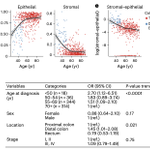
Younger colorectal cancer patients appear to have more stromal-rich tumors.
An snRNA-seq atlas of 850k nuclei from 189 tumors, independently supported by imaging of 712 tumors.
nature.com/articles/s41591-0…

1
110
Copy-number changes in tumor clones alter cell-cell signaling networks, with amplified ligands/receptors showing stronger inferred interactions.
443k cells from 62 tumors, including spatial transcriptomics on 11 tumors.

3
4
559
New Chinese antibody drug conjugate reduces risk of disease progression by 67% in relapsed osteosarcoma. Incredible milestone.

No standing ovation but this is a very good-looking Kaplan-Meier.
An antibody-drug conjugate targeting the cancer antigen, B7-H3 (called risvutatug rezetecan: Riz-Rez) vs. topotecan in second-line small cell lung cancer: improved overall survival from 10.3 to 18.5 months.
This was discovered and developed by the Chinese pharma, Hansoh, and was licenced to GSK for the rest of the world.
The trial uses a now slightly out-of-date control arm (topotecan rather than the DLL3×CD3 T-cell engager, tarlatamab). GSK are replicating this trial ex-China, and they're also running the Ris-Rez + tarlatamab combo in phase 1.
Notable safety: hematalogical toxicity and interstitial lung disease (though overall fewer grade ≥3 than chemotherapy).
This is the first phase 3 trial to show an overall survival benefit for a B7-H3 ADC in any cancer.

1
1
84
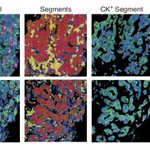
New chinese spatial tech released yesterday reports 3.5x more UMIs than Visium HD in mouse brain. 14k UMIs per 10 µm bin in testicle cross sections.
nature.com/articles/s41467-0…

Glass.bio retweeted

Congratulations on this exciting collaboration! We can’t wait to see the powerful insights you uncover and the impact this will have on drug discovery.

8 million brain cells. 32 minutes. A new frontier in medicine.
In less than a year, PerturbAI built a proprietary AI-native drug discovery engine, created 6 genomic maps, revealing how genes influence health and disease in living systems.
Now, together with @OpenAI and @ScrippsResearch, we've uncovered 11,000 biological insights and ~100 promising leads using frontier AI in just 32 minutes.
We're expanding our partnership into drug-target discovery, bringing us closer to understanding disease and developing new medicines.
Better biology. Better targets. Better medicines.
Learn more: perturb.ai/news/perturbai-la…
Read the full blog here: openai.com/index/scaling-ai-…
Peak calling is now 40-60x faster thanks to LLM-guided optimization work

MACS 3.1.0 is released with a jaw-dropping 40-60x improvement in speed, thanks to @jmschreiber91's auto-optimize work! AI achieved in one weekend what I've been hoping for years! Now peak calling that once took minutes can be completed in seconds! github.com/macs3-project/MAC… 1/2

1
3
83
Looks like T cell exclusion in esophageal cancer may have quite a bit to do with tumor metabolism.
Interesting new paper using GeoMx spatial transcriptomics (from the now-bankrupt NanoString).
T cell-poor tumors still express potentially immunogenic cancer antigens, but appear less capable of presenting them to T cells. At the same time, they exhibit a distinct metabolic program that may contribute to an immunosuppressive environment.

1
7
201


2/3 Both FFPE and fresh-frozen tissues are supported, with whole-transcriptome or targeted panels of 1,000+ genes.
10x claims throughput of up to 2,500 mm² of tissue per week, or ~800 whole-transcriptome 1 cm² samples per year.
That throughput could make spatial transcriptomics practical for much larger patient cohorts.


Glass.bio retweeted

The pace of scientific discovery is about to explode with how good tooling is getting.
This kind of analysis used to require a lab, a bioinformatics team, and all kinds of other resources.
I love tech that empowers users.

Single-cell platform and global catalog available on glass.bio
1
3
146
We used @sytses osteosarcoma data as a case study, which is freely available at osteosarc.com/

4
85
Astral, and its index, are accessible through GUI and CLI.
Find out how we built Astral on our blog: glass.bio/blog/astral/
1
3
124
Glass Bio is a team of two: a mathematician and a bioinformatician.
We're exceptionally good at organizing large volumes of data and making them easily accessible to agents. If this sounds like a familiar problem, get in touch!
[email protected]
2
104