

CFA who has heard ''Great quarter guys!'' on many conference calls. Just opinions. GreatQuarter @ Twitter, Substack & SeekingAlpha. DMs open.
Joined July 2015
- Tweets5.9K
- Following616
- Followers6.1K
- Likes15.4K






"Productivity is output per paid hour. If an employee finishes in 6 hours what used to take 8 and takes the other 2 as slack, paid hours don't fall and output doesn't rise. Measured productivity stays flat. The gain is real, but the worker captures it, not the firm."

My Sunday night musing about AI:
The majority of companies aren't seeing productivity gains from AI because the predominant use case of AI is to speed up existing human tasks, not to redesign how work gets done.
Using AI isn't going to magically increase large-organization revenues by 10%. The gate on that isn't "my employees aren't doing enough." Revenue gains come from a combination of ideas, implementation and iteration. Much of that takes time, because the humans on the other side (the consumers) have to react and change their decisions. The revenue will come, but it lags.
No, the vast majority of near-term productivity gains come from making your employees more efficient at their existing jobs. At least initially, those gains go to the employees, who spend less time working because AI is making their job easier.
That's why it doesn't show up in the data. Productivity is output per paid hour. If an employee finishes in 6 hours what used to take 8 and takes the other 2 as slack, paid hours don't fall and output doesn't rise. Measured productivity stays flat. The gain is real, but the worker captures it, not the firm.
It also doesn't add up neatly. Saving 60 minutes a day for six people doesn't free up a seventh person.
Over time, companies will reduce headcount and get the same amount of work done by fewer people. That process takes time because AI is currently pretty good at tasks but not great at entire jobs or workflows. (That’s what the next $500b of training is supposed to solve!)
Laying people off due to AI efficiency is also not a good signal right now. So unless you're Microsoft, the likely mechanism is to stop or slow backfilling attrition. Typical white-collar attrition runs 10-15% a year. Leave a quarter of those seats empty and headcount falls a few percent a year with no layoffs.
This may only be the first wave. In his 1990 paper "The Dynamo and the Computer," economist Paul David showed that the first electrified factories simply swapped the steam engine for an electric one and kept everything else the same, and productivity barely moved. The big gains came only when factories were redesigned around electricity, with a motor on each machine. That took decades, because it meant rebuilding factories and power grids. AI won't take that long, since it runs on infrastructure that already exists. But the order will be the same: the efficiency gains come first, and the workflow redesign gains come later and are bigger.
Concluding "AI doesn't increase productivity" from "the data doesn't show productivity gains" is being overly reliant on trailing, imperfect indicators instead of looking at what's fundamentally happening at the worker level.
It's also early. Most companies have only been using AI in earnest for the last 6-12 months, and what they spend on AI models is still a rounding error next to what they spend on people. A tool that costs a fraction of a percent of your overhead, adopted a year ago, isn't going to show up in the national productivity numbers yet.
If I'm right, here's what to watch over the next 2-3 years:
1) Revenue per employee rising at companies with flat or shrinking headcount.
2) Entry-level hiring slowing in the roles most exposed to AI.
It’s crazy because the entire industry is moving so fast, but it’s worth remembering there’s still “real-world bottlenecks” (people, organizations, customers) that don’t behave as nicely as scaling laws.

"Between the November of a midterm election year and the following April, small-capitalization stocks have had an almost unbelievable average total return of 42% annualized over the past century, according to data from Leuthold Group." @WSJ @Spencerjakab $IWM

I shorted $PURR but have covered at a profit due to lots of credible parties -- Citrini, Novogratz, Duncan --thinking its real. Being real would surprise me, but I have been surprised before! "Excited" seems surprising.
Elice Inc. 0158S0:KS "the $750 million data center and AI developer became a surprise poster child for the loss of faith in so-called neoclouds when it tanked 32% on its debut in Seoul."
bloomberg.com/news/articles/… [unlocked]

$CRWV ’s pain raises questions about how AI companies will fund themselves bloomberg.com/news/articles/…

$TSLA $SPCX
first 5 minutes is just music
next 25 minutes is a memorable product unveil
livestream.tesla.com/

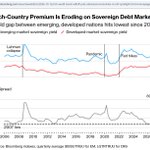
"The IMF is no stranger to debt distress, but typically with a focus on the emerging world...
A government bond selloff has sent yields in the US, Europe and Japan to longtime highs — adding to already acute budget strains, and threatening to spill into emerging economies."


$ASTS filing a Senior Management Change of Control Severance Policy (filed with the SEC after the close yesterday) could be a material development?
sec.gov/Archives/edgar/data/…
Wonderfully incisive piece by @felixsalmon
"as a general rule, “The next gen don’t want it,” Hoffman says. “They want something different.”"
Yikes. Like pianos, brown furniture, etc.
bloomberg.com/news/features/… [unlocked for 7 days]

$LESL "expanded as homeowners aggressively upgraded their properties, including pools, as a result of [the COVID] quarantine, pushing the chain past 1,000 stores in 2023."
Was management willing to bet LESL that the COVID boom would not materially fade?
wsj.com/pro/bankruptcy/lesli…


Point72:
“More companies in Japan are likely to reevaluate their capital allocation and redirect funds toward growth investments” following corporate governance reforms, Shinji Ogawa, the US hedge fund’s Japan head, said... “There are very attractive investment opportunities.”
Point72's "Ogawa said the battle for talent is “extremely fierce” and the firm is strengthening its employee development efforts. The Tokyo office has hired an internal trainer and a recruiter for its graduate training program, he said."
bloomberg.com/news/articles/…

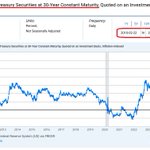
" Stanley Druckenmiller , a close ally of Federal Reserve chair Kevin Warsh, told a private Wall Street audience [today] that US borrowing costs remained a “little low” and central bankers who thought monetary policy was restrictive were “ridiculous”."
"sell-off in Treasuries... sparked by:
1) the jolt of inflation caused by President Donald Trump’s Iran war,
2) the US’s spiralling public debt and
3) huge issuance of bonds by AI companies."
Druckenmiller “I don’t find it alarming at all.”
[formatting added]