

AI Engineer | Medical Doctor in a Year's time | Future Nobel Prize Winner
Nigeria
Joined April 2023
- Tweets2.2K
- Following1.1K
- Followers515
- Likes16.9K








Pinned Tweet
So I had a technical interview with a foreign company today—that would be my 3rd interview this month. For this one, I can’t even remember when I applied, but apparently they had my resume and reached out (for the others, they found me via my works, which was quite impressive).
The live assessment wasn’t the usual LeetCode routine. It was centered entirely around agentic workflows and how you actually build with AI.
Instead of just prompting blindly or writing code on pure vibes, I shared my screen and drilled down into my actual engineering setup:
- Linear for planning, tracking out issues, and milestones synced directly to the agent harness so there’s strict project context
- Custom skills and design tokens (design.md) so the agent understands the exact blueprint before generating anything
- Architecture rules and custom linters (like server-first Next.js patterns) that let AI build correctly in one pass without messing up structure
- GitHub CI pipelines and review agents (like CodeRabbit) where any flagged bug or CVE gets looped back and fixed by the agent before merging to main
And guess what prompt I got to test this entire enterprise-grade agentic pipeline? A to-do app... lols. 😂
The interviewer was honestly blown away by the workflow and tooling. Not entirely sure if this is something I'd want to do long-term, but it was really fun showing how structured engineering keeps autonomous agents on rails. Let us see how it goes.

A full year for ₦48,000. ₦4,000 a month, paid once.
Pay for twelve months and you're covered for the whole year, about ₦132 a day. No renewing every month and no gap mid-posting, so your daily practice keeps going.
Pick the year plan this afternoon and start today.


Agent observability is what matters the most right now.
How do we present what an agent is doing to us, in the most intuitive manner that anyone, even the dumbest person looking at it will understand?
That is the right question right now.
Short answer question? Write points, not paragraphs.
Short answers are marked point by point. One clear point per line, then move on. A paragraph hiding three points scores the same as three clean lines, only slower.
Try it on 10 of your school's past SAQs this morning.


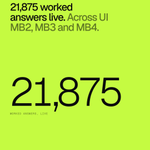
21,875 worked answers live. Across UI MB2, MB3 and MB4.
Each one is a real UI past question from the papers, posting tests and recalls, answered properly, so when you get one wrong you see why straight away.
You don't have to get through all of them. Open it this morning and do 10.

This motivated me to make pancakes for myself this night.
So good to be back. My timing has gotten better.


Some of the things I am cooking into MBPrep
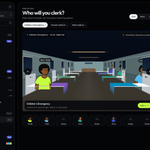
Clerk like you are on the ward. Register at mbprep.app
Preparing for medical board exams is about to change.

Moving from MB2 to MB3? Your account moves with you.
When your class moves on, switch your MB on your profile and carry on with the same account. The habit you build now should not reset when you move up.
Start it tonight with 10 of your school's past questions.

Single best answer? Cross out the wrong ones first.
When the answer does not jump out, strike the options you know are wrong. Two left is a better bet than five, and the stem usually holds the clue that decides between them.
Try it on 10 of your school's past questions today. By exam day it will be a habit.

Close Telegram mid-exam? The clock keeps running, like the real thing.
Timed exams on @MBPrepBot keep their own clock, so closing the chat does not stop the timer. The score you get is one you can trust.
Sit one timed mock today and see where you really stand.

True or false? Read each option with the stem, one at a time.
Treat each option as a full sentence with the stem and decide it before you look at the next. Watch the small words: always, never, except, all.
Practise that one habit today on your own school's past questions.


