






In 1968, teenage Red Guards were beating their professors to death with clubs in Beijing courtyards.
Meanwhile, Jean-Paul Sartre sat in Paris calling Mao's Cultural Revolution a model of revolutionary democracy. The most celebrated intellectual in France looked at a country burning its own libraries and saw liberation. He sold the Maoist newspaper La Cause du Peuple on French street corners himself, holding it aloft like a sacrament.
Between 1966 and 1976, the Cultural Revolution killed between 500,000 and two million people. Schools shut down across the entire country. Students dragged teachers onto stages, hung placards around their necks, forced them to kneel on broken glass, then murdered them. The historian Bian Zhongyun, vice-principal of a girls' school in Beijing, died on August 5, 1966, beaten by her own students with nail-studded clubs.
Sartre swooned at this, calling it the people governing themselves. Why did a man this intelligent get it this wrong? Sartre believed knowledge served power, that truth was whatever the revolution required, that the individual existed to be dissolved into the collective will.
So when Mao abolished the distinction between teacher and student, between expert and mob, Sartre cheered. He had spent decades arguing that bourgeois reason was a class weapon. Here was a regime taking him at his word and clubbing the reasoners to death. This is what economic illiteracy gets you.
Mises had already explained the calculation problem in 1920. Hayek explained dispersed knowledge in 1945. Sartre had access to both and chose the dunce cap of the collective instead, then handed out its propaganda on the Rue de Rennes.
He died in 1980, mourned by 50,000 followers, never having retracted a word about Mao. The professors of Beijing got no such funeral, only a philosopher in Paris explaining that their murder was freedom.

The Weimar hyperinflation of 1923 wasn't just an economic crisis; it was the systematic destruction of Germany's middle class and the social order that held society together. When the government chose to finance its deficits by printing money rather than raising taxes or cutting spending, it unleashed a monetary catastrophe that would reshape German society forever.
By November 1923, it took 4.2 trillion marks to buy a single US dollar. Teachers, engineers, and civil servants who had saved their entire lives watched their nest eggs become worthless overnight. A lifetime of prudent saving couldn't buy a loaf of bread, while speculators and debtors who had borrowed heavily found their debts evaporated by inflation.
The psychological trauma went far deeper than the economic devastation. The German middle class had built their identity around thrift, hard work, and delayed gratification. Values that hyperinflation made not just useless but actively harmful. Those who had played by the rules were punished, while those who abandoned fiscal responsibility were rewarded.
This wasn't merely monetary policy gone wrong, it was the foundation for the political extremism that would follow. When money loses meaning, society loses its anchor, and people become desperate enough to embrace radical solutions. The lesson remains: sound money isn't just about economics, it's about preserving the social fabric itself.

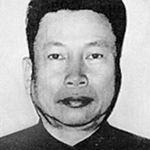
Pol Pot. This piece of shit killed an estimated 1.7 million Cambodians between 1975 and 1979, somewhere between 25 and 33 percent of the entire population. He did this by applying an ideology to its logical conclusion. Ideology always has a conclusion; socialism's conclusion is death.
The Khmer Rouge abolished money in 1975. Completely. Banks closed. Markets dissolved. Currency became contraband. They then abolished private property, forcibly relocated urban populations to collective farms, and set central planners the task of organizing rice production for the entire nation. The result was predictable: mass starvation beside the rice fields. Planners cannot coordinate production without prices. Prices require private property and voluntary exchange.
Pol Pot studied in Paris during the 1950s, absorbing French Communist Party doctrine and Maoist agrarianism. Western universities provided the intellectual scaffolding for the killing fields. Coercion requires enforcers, tribunals, and eventually mass graves; Cambodia's are at Choeung Ek.
Every collectivist experiment reaches this same point, because central planners cannot solve what free exchange solves automatically every second of every day.

Income tax is theft.
The Sixteenth Amendment passed in 1913 as a wartime revenue measure, sold to Americans as a modest levy on the very wealthy. The top rate sat at 7 percent. Wilson's government promised restraint.
That restraint didn't even last a decade.
By 1944, the top marginal rate hit 94 percent. Today the federal income tax alone reaches 37 percent at the top bracket, and that figure ignores payroll taxes, state income taxes, and the inflation tax the Federal Reserve quietly runs in parallel. You hand over, depending on your state, somewhere between 40 and 55 cents of every marginal dollar earned.
The mechanism is simple: governments never surrender revenue streams voluntarily. What legislators frame as temporary always calcifies into permanent infrastructure, complete with its own bureaucracy (the IRS now employs 90,000 people) and its own enforcement apparatus.
Your labor is property. Compulsory extraction of that property at gunpoint is confiscation. Who receives the payment does not change the nature of the transaction.

The Derg: How Ethiopians systematically destroyed the economic conditions that make survival possible.
Mengistu Haile Mariam seized power in 1974 and immediately nationalized land, banks, and industry. Peasants who had farmed the same plots for generations suddenly farmed for the state. Incentive died instantly. Output collapsed. When you strip a farmer of his title, you strip him of his reason to plant next season's crop.
The Red Terror in 1977 and 1978 killed somewhere between 30,000 and 500,000 people (the range itself tells you how thoroughly the regime controlled information). Families paid to retrieve corpses.
Then came the collectivization drives and the 1984 famine. The state controlled grain distribution, relocated populations as military strategy, and blocked international aid from reaching rebel-held Tigray. Government grain policy killed more Ethiopians than the droughts.
Coercion and scarcity are inseparable. Destroy property rights, and you destroy the incentive to produce.

And yet they let millions of undocumented people from the Third World just come in at will. Make it make sense.

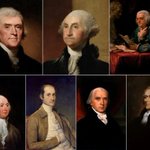
James Madison built a government that distrusts itself. He arrived at the 1787 Convention with a plan, he wanted a republic that checks factions and divides power so no single group can run it.
After the Constitution passed, he went back to Congress and drafted the Bill of Rights.
In February 1791, Madison stood in the House and argued that Hamilton's national bank was unconstitutional, because the Convention had declined to give Congress the power to charter corporations. In his last official act as president, he vetoed the Bonus Bill, which would have funded roads and canals, because Congress had no power to build them. The bill was popular, he vetoed it anyway.
Hamilton read the same document and found a loophole big enough for a central bank. His bank copied European central banks and was capitalized at $10 million, a sum larger than all the hard money in the country. He proposed the first federal tax on a domestic product, a whiskey excise, and when frontier farmers resisted, he urged Washington to send force.
Roughly 13,000 militia marched into western Pennsylvania, more troops than Washington commanded in the Revolution, with Hamilton riding at the head of the army. Two men were convicted of treason, and Washington pardoned them.
At the 1787 Convention, Hamilton floated an executive who held office for life.
Madison envisioned a government that obeyed its limits, but Hamilton wanted one that outgrew them.
Today, Little Jimmy never gets the credit he is due.

Handre retweeted
“The key to investing is not assessing how much an industry is going to affect society, or how much it will grow, but rather determining the competitive advantage of any given company and, above all, the durability of that advantage.”
-Warren Buffett, Fortune, 1999.
Samuel Insull bet on electricity, and he was entirely correct. Electricity use in Chicago more than doubled between 1915 and 1925, and his Commonwealth Edison served the whole city. But his investors still lost an estimated $750 million, most of it small savers' money, when his holding companies collapsed in 1932.
The business was sound. The financing was not. Insull stacked holding companies on top of holding companies, so a small stake controlled a huge system, and he sold their shares to the public until the number of Illinois stock and bondholders jumped from about 50,000 to nearly 500,000 in two years. His holding companies paid peak 1929 prices for utility shares, $384 each for Commonwealth Edison. When the debt came due in April 1932, the pyramid fell.
The operating utilities survived, but the people who bought the pyramid at the top lost their money.
The AI spending boom raises a similar question about financing. In July, Goldman Sachs forecast $750 billion in capital spending by the five leading hyperscalers in 2026 and more than $1 trillion in 2027.
Growth does not guarantee profit. Profit depends on the price paid for the assets, the debt used to buy them, and whether revenue arrives before the interest bill does. Railroads and fiber optics both had real demand and ruined the investors who paid too much. Insull's customers never stopped buying electricity, but his investors still lost.
Demand for AI will keep growing. But whoever buys at the peak with borrowed money will learn what Insull's investors learned.


You don't even have to go into history. Just look at the current examples.
North and South Korea. Hong Kong. Below.

One island, two countries, and a gap in per capita GDP so wide you could lose a civilization in it. The Dominican Republic sits at roughly $10,000 USD per capita. Haiti hovers around $1,700. Same geography. Same hurricanes. Radically different institutions.
Property rights explain most of this story. The Dominican Republic, for all its imperfections, built a functional legal system around private land ownership. Haitian governments, by contrast, spent two centuries treating property as something the state grants and revokes at pleasure. When you cannot secure title to your land, you cannot borrow against it, improve it, or sell it credibly. Hernando de Soto estimated in the early 2000s that Haitians held roughly $5.2 billion in informal, legally unrecognized assets. That capital sits frozen, unable to do what capital does.
The state is always a coercive institution. The question is whether its coercion remains constrained enough to let people produce and trade. Haiti never solved that question. Since independence in 1804, it cycled through dictators, foreign occupations, and kleptocratic governments that treated the treasury as personal income. François Duvalier murdered his opposition and taxed the productive class into emigration. His son Jean-Claude burned through foreign aid while infrastructure collapsed. The pattern repeated because the incentives for rulers never changed.
The Dominican Republic had brutal governments too, Rafael Trujillo chief among them. Trujillo, monstrous as he was, kept basic commercial infrastructure functioning because he wanted an economy to loot. Sometimes predators preserve their prey. Haiti's governments skipped even that minimal calculation.
Geography handed both nations identical starting conditions, and institutions determined everything after that.

“The key to investing is not assessing how much an industry is going to affect society, or how much it will grow, but rather determining the competitive advantage of any given company and, above all, the durability of that advantage.”
-Warren Buffett, Fortune, 1999.
Samuel Insull bet on electricity, and he was entirely correct. Electricity use in Chicago more than doubled between 1915 and 1925, and his Commonwealth Edison served the whole city. But his investors still lost an estimated $750 million, most of it small savers' money, when his holding companies collapsed in 1932.
The business was sound. The financing was not. Insull stacked holding companies on top of holding companies, so a small stake controlled a huge system, and he sold their shares to the public until the number of Illinois stock and bondholders jumped from about 50,000 to nearly 500,000 in two years. His holding companies paid peak 1929 prices for utility shares, $384 each for Commonwealth Edison. When the debt came due in April 1932, the pyramid fell.
The operating utilities survived, but the people who bought the pyramid at the top lost their money.
The AI spending boom raises a similar question about financing. In July, Goldman Sachs forecast $750 billion in capital spending by the five leading hyperscalers in 2026 and more than $1 trillion in 2027.
Growth does not guarantee profit. Profit depends on the price paid for the assets, the debt used to buy them, and whether revenue arrives before the interest bill does. Railroads and fiber optics both had real demand and ruined the investors who paid too much. Insull's customers never stopped buying electricity, but his investors still lost.
Demand for AI will keep growing. But whoever buys at the peak with borrowed money will learn what Insull's investors learned.
The men who wrote the Constitution owned guns, distrusted bankers, and believed taxation without consent was worth dying over. They would not recognize the country operating under their name today.
Federal spending crossed $7 trillion per year. The income tax, which the founders explicitly rejected, now reaches into every paycheck you earn before you touch a dollar of it. The Federal Reserve, a central bank of the exact type Jefferson warned would strip citizens of property through inflation, has spent the last two decades aggressively expanding the money supply and handing you the bill through rising prices.
The founders drew the federal government's powers in a short, specific list. Congress could coin money, raise an army, and regulate interstate trade. What it could not do is not in that list, because the founders assumed the limits were obvious. They were wrong to assume that.
Today the federal government licenses your profession, subsidizes your competitor, dictates your health plan, and surveils your financial transactions above $600. The administrative state, staffed by unelected bureaucrats at the FDA, SEC, EPA, and an estimated 430 other agencies, writes rules carrying the force of law without a single congressional vote. Madison called this precise arrangement tyranny in The Federalist Papers(No. 47).
The founders risked hanging to escape a government that taxed tea at 3%. You hand over 30 percent of your income and are supposed to thank the state for the privilege of keeping the rest.

A guy goes into a bar in New York where the bartender is a robot.
The guy sits down at the bar, and the robot asks: "What will you have?
The guy replies, "Whiskey."
The robot brings back his drink and asks, "What's your IQ?"
The guy says, "168."
The robot talks about physics, space exploration, and medical technology.
After the guy leaves, he pauses at the street corner and thinks about what he just encountered, and the more he thinks about it, the more curious he gets, so he decides to go back.
The robot asks, "What's your drink?"
The guy answers, "Whiskey."
The robot returns with his drink and asks, "What's your IQ?"
This time, the man replies "100."
The robot talks about NASCAR, Budweiser, Awbarn, and professional wrestling.
The man finishes his drink and leaves, but he is so interested in this "experiment" that he decides he'll try again.
He enters the bar and, as usual, the robot asks him what he wants to drink.
The man replies, "Whiskey."
The robot brings the drink and asks, "What's your IQ?"
This time, the man answers "50."
The robot leans in real close and s-l-o-w-l-y says, "How awesome is Mamdani’s rent freeze? It surely will help the housing problem.”
Grok knows.

No. Without market prices formed by private ownership and voluntary exchange, central planners lack the information needed to rationally allocate capital. Mises showed this mathematically in the 1920s: you cannot solve the equations for optimal resource use when the data (relative scarcities, preferences, opportunity costs) only emerge from real market processes. Lange-style models assume the knowledge they need. Incentives and discovery remain unsolved.

Every tariff and embargo teaches the same lesson. Politicians draw a line on a map, and traders get paid to cross it.
A commodity trader lives on gaps. Oil costs less in one port than another, less today than next quarter, and less in Tehran than in Texas. The trader buys where it is cheap, sells where it is dear, and carries the cost of shipping and storage in between. Marc Rich built a billion-dollar fortune on that gap.
In 1973, ahead of the Arab embargo, he bought oil on the spot market, outside the long-term contracts the big oil companies relied on. When the price tripled, he sold to American companies.
Every prohibition made him richer. When Washington banned Iranian oil during the 1979 hostage crisis, Rich kept buying through front and shell companies. He supplied apartheid South Africa while the world embargoed it. He later told his biographer, Daniel Ammann, that his "most important and most profitable" trades came from breaking embargoes. A ban does not stop the oil. It drives out the scrupulous sellers, widens the gap, and rewards the man willing to close it.
Washington indicted him in 1983 on 65 counts, including tax evasion and trading with Iran. He fled to Switzerland, and Bill Clinton pardoned him on his last day in office in 2001.
Every embargo creates a black market, and every black market has its king.

A functional society cannot exist under socialism; it is a mathematical impossibility.
Stop with the bullshhit gaslighting about societal structures, needs, rights of the poor, and equal outcomes.
It cannot happen; it was proven impossible in 1919. No one has refuted this since. Stop trying to destroy society because of your own prejudice and unwillingness to accept that you are wrong.
Every state keeps two ledgers: one for its subjects, and one for itself.
On April 3, 2016, a whistleblower's leak of 11.5 million documents from Mossack Fonseca, a Panamanian law firm, reached the German newspaper Süddeutsche Zeitung.
The files covered 214,000 offshore companies. Journalists found 12 current or former heads of state in them, 140 politicians and public officials in all, and Putin associates tied to $2 billion in transactions.
Consider who writes the tax code. Those same governments audit your accounts, mulct you for late filings, and prosecute small business owners over unpaid tax. The leak tied 140 of the people who write those laws to offshore companies in jurisdictions built for secrecy.
The exposure came from outside the state. Journalists and a whistleblower did the work. No tax authority did. Iceland's prime minister, Sigmundur Davíð Gunnlaugsson, resigned a month later. Pakistan's Supreme Court later removed Prime Minister Nawaz Sharif. Mossack Fonseca closed its doors.
The government response was true to form. ICIJ counts more than $1.36 billion in back taxes and penalties recovered worldwide, and the ten-year tally nears $2 billion. The treasuries pocketed their windfall and moved on. Nobody reformed anything.
Many offshore structures are perfectly legal, and that is the whole point. The lawyers, shell companies, and secrecy havens that shelter the politically connected stay out of reach of the shopkeeper who owes the same tax. It is the oldest arrangement of the state: the ruling class writes one set of rules for the plundered and keeps another for itself.
