

Product Management Coach & Consultant who helps teams to connect the dots of Strategy, Goals, and Discovery. Subscribe to my weekly newsletter for deep dive.
Europe
Joined January 2011
- Tweets29.4K
- Following669
- Followers3.9K
- Likes22.5K








Pinned Tweet
Give me 5 minutes of your time every Friday, and your Strategy, OKRs, and Discovery will become free of framework fluff.
My free weekly Product Practice newsletter helps you turn product theory 📖 into pragmatic and practical application. 🛠️
herbig.blog/nl

Tim Herbig retweeted

"A lot of Product Discovery inputs are simply information. But Product Teams need more than information. They need evidence." via @herbigt in herbig.co/product-discovery-…

Tim Herbig retweeted

Announcing June 4.0
– a new kind of tool that gets you closer to your customers
producthunt.com/posts/june-4…
help us & spread the word
Tim Herbig retweeted

Check out the Product Thoughts newsletter by @herbigt. Every week, he breaks down complex topics of product management into easy-to-understand chunks with relatable examples and hand-curated content worth your time: herbig.blog/nl
Tim Herbig retweeted

We are really happy that @herbigt will be one of our keynote speakers on September 13th!
Many of you have attended his sold-out pre-conference workshops in the past years and this time we feel it's time that Tim shares his learnings on the big stage.
🎤 productatheart.com/speakers

Is there a checkout tool that integrates with @ConvertKit so that upsells/checkout paths are displayed based on subscriber attributes in CK? When they have purchased this course, offer them this upsell, but not that one, etc.
Tim Herbig retweeted

PRODUCTHEAD: How product teams can measure discovery
This week’s #ProductManagement newsletter lovingly curated by Jock Busuttil (@jockbu) features @jboogie @ttorres and @herbigt
#prodmgmt #discovery #metrics
imanageproducts.com/producth…

Tim Herbig retweeted

Ever heard from Management: "This takes too long, just build it!"
Well, you are not alone! @herbigt wrote about this topic and how to deal with it.
Read his Thread below and you are good to go 👇


Tim Herbig retweeted
And that's a wrap! 🎞️ Our #mtpcon #London workshops have finished for 2023 - what a day! 🎉 Just one more sleep til #mtpcon - check out what's happening tomorrow 👀 mindtheproduct.com/mtpcon/lo… #ProductManagement #London


Tim Herbig retweeted
That's a wrap!
If you enjoyed this thread:
1. Follow me @KiwiDenny for more of these
2. RT the tweet below to share this thread with your audience

Tim Herbig retweeted
𝐖𝐡𝐚𝐭 𝐢𝐬 𝐏𝐫𝐨𝐝𝐮𝐜𝐭 𝐃𝐢𝐬𝐜𝐨𝐯𝐞𝐫𝐲 𝐚𝐧𝐝 𝐰𝐡𝐲 𝐢𝐬 𝐢𝐭 𝐢𝐦𝐩𝐨𝐫𝐭𝐚𝐧𝐭?
I checked out various definitions and got together the best ones.
(Yes @herbigt and @ttorres play a part here!)
Furthermore, you will get 5 reasons why it is important!
Let's start 🧵


Tim Herbig retweeted
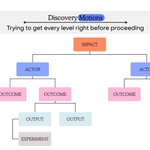
“OK, let’s meet back tomorrow to complete the remaining Actor branches of the Impact Map before we talk about Outcomes.”
What sounds like a usual way to wrap up a meeting among Discovery collaborators represents a misguided prioritization of Discovery Motions over Discovery Decisions.
@JamesClear's comparison of Motions vs. Actions inspired me here:
“When you’re in motion, you’re planning and strategizing and learning. Those are all good things, but they don’t produce a result. Action, on the other hand, is the type of behavior that will deliver an outcome.”
Here’s how this translates to a structural Discovery tool like Impact Mapping:
Motions: Mapping out all horizontal levels before “allowing” yourself to go to the next one.
Decisions: Prioritizing actions to execute techniques to reduce uncertainties in identified aspects of Discovery.
Watch out for these Discovery Motions that keep you moving but prevent you from progressing.
Perfecting that JTBD statement one more time before developing and assumption-testing ideas.
Expanding persona details further before starting to recruit.
Getting an AI-based insights repository set up before reviewing the post-its from five interviews.
Selecting a new testing tool before rolling out the split test.
Completing every possible level of the User Story Map before prioritizing the first user stories in your next sprint.
Discovery Motions keep you on a horizontal completion and business path. Discovery Decisions help you get into action to reduce uncertainty.
How to put this Theory into Practice:
Check your current Discovery activities for “Motions.” Where are you simply trying to complete something (framework or blueprint) before getting into action?
Don’t abort helpful work to frame the bigger picture, but focus on preparing and starting activities in areas of uncertainty you have already identified.
What decisions (start with…, stop with…, inform…, etc.) can you make NOW in present areas of uncertainty to reduce the lead time to insights?
If you liked this content, you will love my Product Practice Newsletter. Working with me requires a financial commitment, but the newsletter is free, and anyone can subscribe: herbig.blog/productpractice

"Health Checks" or "Assessments" of your product practices are really just ways to meet someone else’s success criteria. Instead, test for everyday usefulness: "Does this help me/the team do <what's intended>?"
“OK, let’s meet back tomorrow to complete the remaining Actor branches of the Impact Map before we talk about Outcomes.”
What sounds like a usual way to wrap up a meeting among Discovery collaborators represents a misguided prioritization of Discovery Motions over Discovery Decisions.
@JamesClear's comparison of Motions vs. Actions inspired me here:
“When you’re in motion, you’re planning and strategizing and learning. Those are all good things, but they don’t produce a result. Action, on the other hand, is the type of behavior that will deliver an outcome.”
Here’s how this translates to a structural Discovery tool like Impact Mapping:
Motions: Mapping out all horizontal levels before “allowing” yourself to go to the next one.
Decisions: Prioritizing actions to execute techniques to reduce uncertainties in identified aspects of Discovery.
Watch out for these Discovery Motions that keep you moving but prevent you from progressing.
Perfecting that JTBD statement one more time before developing and assumption-testing ideas.
Expanding persona details further before starting to recruit.
Getting an AI-based insights repository set up before reviewing the post-its from five interviews.
Selecting a new testing tool before rolling out the split test.
Completing every possible level of the User Story Map before prioritizing the first user stories in your next sprint.
Discovery Motions keep you on a horizontal completion and business path. Discovery Decisions help you get into action to reduce uncertainty.
How to put this Theory into Practice:
Check your current Discovery activities for “Motions.” Where are you simply trying to complete something (framework or blueprint) before getting into action?
Don’t abort helpful work to frame the bigger picture, but focus on preparing and starting activities in areas of uncertainty you have already identified.
What decisions (start with…, stop with…, inform…, etc.) can you make NOW in present areas of uncertainty to reduce the lead time to insights?
If you liked this content, you will love my Product Practice Newsletter. Working with me requires a financial commitment, but the newsletter is free, and anyone can subscribe: herbig.blog/productpractice
Do some of these sound familiar to you when debating whether Discovery is an actual helpful practice?
HiPPo-driven decision-making leads to 12-month feature roadmaps.
“We know best what users need“-attitude when thinking about options to build something or uncovering customer insights.
Ship-and-forget handling of projects.
No measuring of product success against user or business goals.
Teams may deliver some of the outcomes of Product Discovery –– like making a somewhat informed decision on what to prioritize building –– without doing all 𝘁𝗵𝗲 𝗻𝗲𝗰𝗲𝘀𝘀𝗮𝗿𝘆 𝘄𝗼𝗿𝗸 𝘁𝗵𝗮𝘁 𝗱𝗿𝗶𝘃𝗲𝘀 𝗴𝗼𝗼𝗱 𝗶𝗻𝘀𝗶𝗴𝗵𝘁𝘀. So, teams don’t make strategic decisions or move the needle for critical metrics.
And, look, I'll be honest. I can't fix your entire organization by having you attend 𝗺𝘆 𝟭-𝗱𝗮𝘆 𝗗𝗶𝘀𝗰𝗼𝘃𝗲𝗿𝘆 𝘄𝗼𝗿𝗸𝘀𝗵𝗼𝗽 𝗼𝗻 𝗢𝗰𝘁𝗼𝗯𝗲𝗿 𝟭𝟵 as part of @MindtheProduct London. 🇬🇧
𝗕𝘂𝘁 𝘄𝗵𝗮𝘁 𝗜 𝗰𝗮𝗻 𝗰𝗿𝗲𝗮𝘁𝗲 𝗶𝘀 𝘆𝗼𝘂𝗿 𝗮𝗯𝗶𝗹𝗶𝘁𝘆 𝘁𝗼 𝘀𝘁𝗮𝗿𝘁 𝗶𝗺𝗽𝗿𝗼𝘃𝗶𝗻𝗴 𝗗𝗶𝘀𝗰𝗼𝘃𝗲𝗿𝘆 𝗽𝗿𝗮𝗰𝘁𝗶𝗰𝗲𝘀 𝗶𝗺𝗺𝗲𝗱𝗶𝗮𝘁𝗲𝗹𝘆 𝘄𝗶𝘁𝗵𝗼𝘂𝘁 𝘄𝗮𝗶𝘁𝗶𝗻𝗴 𝗳𝗼𝗿 𝘁𝗵𝗲 𝗽𝗲𝗿𝗳𝗲𝗰𝘁 𝗰𝗼𝗻𝗱𝗶𝘁𝗶𝗼𝗻𝘀.
It’s easy to feel like you need to wait until there’s enough buy-in, a perfect product strategy, better OKRs, etc. 𝗕𝘂𝘁 𝗮𝘀 𝗣𝗿𝗼𝗱𝘂𝗰𝘁 𝗠𝗮𝗻𝗮𝗴𝗲𝗿𝘀, 𝘆𝗼𝘂 𝗵𝗮𝘃𝗲 𝘁𝗵𝗲 𝗿𝗲𝘀𝗽𝗼𝗻𝘀𝗶𝗯𝗶𝗹𝗶𝘁𝘆 𝘁𝗼 𝗼𝘄𝗻 𝘁𝗵𝗲 𝗽𝗿𝗼𝗰𝗲𝘀𝘀 𝗼𝗳 𝗰𝗿𝗲𝗮𝘁𝗶𝗻𝗴 𝗯𝗲𝘁𝘁𝗲𝗿 𝗰𝗼𝗻𝗱𝗶𝘁𝗶𝗼𝗻𝘀 𝗳𝗼𝗿 𝗣𝗿𝗼𝗱𝘂𝗰𝘁 𝗗𝗶𝘀𝗰𝗼𝘃𝗲𝗿𝘆. 𝗔𝗻𝗱 𝘆𝗼𝘂 𝗰𝗮𝗻 𝗱𝗼 𝘁𝗵𝗶𝘀 𝗲𝗮𝘀𝗶𝗹𝘆 𝘄𝗵𝗲𝗻 𝘆𝗼𝘂 𝗵𝗮𝘃𝗲 𝘁𝗵𝗲 𝗿𝗶𝗴𝗵𝘁 𝘁𝗼𝗼𝗹𝘀 𝗮𝘁 𝘆𝗼𝘂𝗿 𝗱𝗶𝘀𝗽𝗼𝘀𝗮𝗹.
A more adaptable and pragmatic Product Discovery approach supports you in taking the first steps toward making Product Discovery an integral part of your work. 𝗡𝗼 𝗺𝗮𝘁𝘁𝗲𝗿 𝘄𝗵𝗲𝗿𝗲 𝘆𝗼𝘂 𝘄𝗼𝗿𝗸.
The best thing? You can now save 10% on the last few tickets. 𝗚𝗿𝗮𝗯 𝗼𝗻𝗲 𝗼𝗳 𝘁𝗵𝗲 𝗿𝗲𝗺𝗮𝗶𝗻𝗶𝗻𝗴 𝘁𝗶𝗰𝗸𝗲𝘁𝘀 𝘁𝗼 𝗴𝗲𝘁 𝘀𝘁𝗮𝗿𝘁𝗲𝗱:
web.cvent.com/event/df420afe…

Many product teams perceive the focus on User Outcomes as arbitrary goal-setting and the opposite of serving users. And it‘s easy to understand why.
Many widely shared examples of User Outcomes out there read like this:
„Users buy more tickets“
„Customers use more integrations. “
„Returning shoppers add more items to their basket. “
A product leader recently approached me after a conference talk, sharing his team‘s concerns that Outcomes would just be repackaged business goals. Looking at the above examples, his team would be right. These read like how the company or business wants their customers to behave.
To make Outcomes (aka changes in human behavior) useful, you have to remember that they should describe changes in behavior that are useful to the audience you intend to serve, which requires a proven problem.
It‘s not enough if Outcomes describe „technically correct“ changes in behavior. Instead, there should be a clear connection between business-informed research intent and insights generated by qualitative and quantitative techniques.
Another way to look at Outcomes as flipped user problems:
The simple question teams need to try and answer here is, „How would users whose problems got solved behave?“ This will then be the foundation for finding appropriate measures to set your OKRs.
How to put this Theory into Practice:
Do your prioritized Outcomes read like something the company wants? If yes, dig for a problem worth solving based on first-hand evidence.
Ask team members how you‘d know you solved this problem for users to go from problem to Outcome.
Don‘t focus on User Outcomes for the sake of it. Make sure you prioritize Outcomes that serve mid-term business goals through Impact Mapping.
If you liked this content, you will love my Product Practice Newsletter. Working with me requires a financial commitment, but the newsletter is free, and anyone can subscribe: herbig.blog/productpractice

ALT How flipping User Problems leads to Useful User Outcomes.
Tim Herbig retweeted
Meet our amazing #mtpcon workshop trainers - happening 19th Oct at @etcvenues 🙌
Our in-person, workshops are a must-attend event for any product manager looking to take their skills to the next level 📈mindtheproduct.com/mtpcon/lo… #ProdMgmt

ALT mtpcon london workshop trainers
Does the complaint “this Discovery takes too long” sound familiar? I’ve heard it throughout my career and from teams I’m coaching. And, you know what, most Discoveries do take too long.
If you liked this content, you will love my Product Practice Newsletter. Working with me requires a financial commitment, but the newsletter is free, and anyone can subscribe: herbig.blog/productpractice