

Education hub. All About Nations you didn’t know exist. Research. History. Facts.
USA
Joined July 2024
- Tweets1.1K
- Following1K
- Followers672
- Likes2.5K





Pinned Tweet
Who Owns Russia’s Oil?
Beneath the tundra and taiga of Siberia lie billions of barrels of oil. Above them live Indigenous peoples who have called this land home for thousands of years.
Yet they receive nothing from the immense wealth extracted from beneath their feet.
Khanty & Mansi (Yugra) → produce 60% of all Russian oil. They were once the majority. Today they are less than 3.5% of the population.
Nenets (Yamal) → region supplies 90% of Russia’s natural gas and 14% of its oil. In just 60 years the population exploded from 60,000 to 530,000 — but not because of the Nenets. They are now less than 6%.
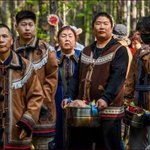
Evenki (39,000 total) → watched the 4,000-km Eastern Siberia–Pacific Ocean pipeline cut straight through their reindeer-herding lands. Most never even got a real say in the “public hearings”.
Russia calls this wealth “ours”.
But the riches lie beneath someone else’s ancestral land — and someone is still fighting for survival there.Your attention matters.
Like | Comment | Share to amplify these voices.
#HiddenNations #IndigenousPeoples
DERVIZA: THE CRIMEAN TATAR HARVEST FESTIVAL
For centuries, Crimean Tatars cultivated orchards, vineyards, and fields across Crimea’s mountains and foothills. Derviza marked the end of fieldwork, celebrating the harvest with songs, dances, and shared meals.
After Stalin’s 1944 deportation, the tradition was suppressed. It began to revive when Crimean Tatars returned to their homeland in the 1990s.
Today, under renewed Russian occupation, Derviza carries a deeper meaning: a people’s roots cannot be torn out.
Happy Derviza to the proud and resilient Crimean Tatar people! 🌾
Nenets reindeer pastures are being opened up for oil development.
In Russia’s Nenets Autonomous Okrug, lawmakers have approved the reclassification of 22 agricultural plots for oil-related projects involving Bashneft-Polyus and Lukoil-Perm.
Four reindeer-herding cooperatives formally agreed to end their land leases. But public reports provide no clear breakdown of the total area involved or compensation terms, and do not establish whether broader Indigenous communities gave free, prior and informed consent.
When industrial expansion reshapes Indigenous lands, whose consent counts — and who safeguards the future of reindeer herding?
Exile means losing your homeland, but not your identity or your connection to others. These stories deserve to be heard and shared. Keeping them visible matters.

Even in exile, Tibetans have never forgotten the importance of standing with others in their time of need. Following the deadly floods in Nepal, Tibetan monks, refugee communities and organizations have stepped forward to provide financial assistance and emergency supplies to affected families.
Nepal holds a special place in the lives of Tibetan refugees, offering shelter, community and a shared spiritual and cultural connection. At a time when so many Nepalis are facing loss and hardship, this support is a powerful reminder that compassion knows no borders.
Tibetans may have lost their homeland, but they have never lost their humanity.
#Tibet #Nepal #TibetanRefugees #TibetanMonks #StandWithNepal #NepalFloods #FloodRelief #Humanity #Compassion #Solidarity #BuddhistValues #RefugeeSolidarity #TibetansInExile #SouthAsia #CommunitySupport
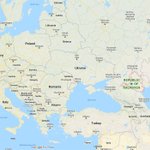
Tatarstan produced 33.8 million tonnes of oil in 2024. Yet in 2026, the oil-rich republic has felt Russia’s fuel crisis firsthand: attacks on refineries disrupted supplies, and Tatneft restricted fuel purchases at its stations.
The republic generates enormous energy wealth, but its fiscal autonomy remains constrained by Moscow’s federal system. Meanwhile, calls challenging Russia’s territorial integrity can carry criminal penalties.
Tatarstan’s oil fuels the Russian economy. But how much control do its people have over their own resources and political future?

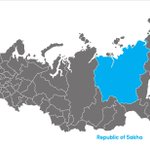
Did you know? 100% of Russia’s antimony production comes from the Sakha Republic (Yakutia). The region is also rich in gold, diamonds, coal, oil, gas, and other critical minerals.
Yet despite its vast natural wealth, Yakutia remains economically dependent on Moscow.
Who really benefits from the riches extracted from Indigenous lands?

Two Evenki Indigenous communities are suing Russian oil giant Transneft-Vostok for nearly 74 million rubles over alleged damage to their traditional lands.
The Kuyumba–Taishet pipeline has operated since 2017, affecting territories used for reindeer herding, hunting and fishing. An expert estimate put losses across more than 1,800 hectares at about 28 million rubles, while the communities are seeking 73.84 million.
The legal battle is ongoing, raising a critical question: how can Indigenous communities secure fair compensation when regional rules for calculating environmental damage expired in 2018?
For the Evenki, this land is more than a resource. It is their livelihood, culture and future.

Our new series shares short but meaningful facts about their lives, customs, and losses.
Follow, share, and help keep these stories alive. Know a fact worth sharing? Tell us in the comments. Your story could inspire our next post.
Nenets Indigenous former librarian Konstantin Ledkov is facing a new criminal case for “public justification of terrorism” while serving a 5.5-year sentence.
Russian investigators allege he voiced support for terrorism in conversations with fellow inmates. The case was linked to Ledkov by human rights monitors. He has since been transferred from a penal colony to a pre-trial detention center.
His case was documented in a report on repression of Indigenous peoples presented at the UN Permanent Forum on Indigenous Issues.
When a Nenets man is imprisoned over anti-war expression and then faces a new terrorism case, what space remains for Indigenous political voices in Russia?
The fall of the Kazan Khanate marked a turning point in Tatar history. The memory of its defenders remains an important part of Tatar historical identity.
Their history deserves to be remembered.

15 октября колонизированные жители Татарстана и соседних республик Поволжья отмечают Хәтер көне — день памяти и скорби по защитникам Казани, погибшим при захвате города войсками Русского царства в 1552 году.
t.me/tatarstan_independent/4…
Kalmykia is one of the poorest regions in Russia despite holding ~19 billion tons of hydrocarbon reserves. Average household water consumption is just 70 liters/day (vs. 140L Russian average). Underground water sources have mineralization 2–3× above the legal limit, making them undrinkable.

Selkup Indigenous rights and climate defender Daria Egereva has spoken out about her 2026 Nobel Peace Prize nomination from a Moscow detention centre.
“I know this nomination belongs not to me, but to all Indigenous peoples,” she told Norway’s NRK.
Arrested after COP30, she faces 10–20 years in prison on terrorism-related charges. More than 100 organizations have called for her release, alongside 10 UN experts who raised concerns over her prosecution.
Russia’s embassy has dismissed criticism from rights groups as biased and described the Nobel Peace Prize as a tool of foreign interference.
How can a state claim to protect Indigenous cultures while imprisoning an Indigenous rights defender?

Tuvan Stone Carvers: Poets with Hammers
In Tuva, artisans carve soft yellow agalmatolite, known as chonар-dash, into horses, herders, and mountain spirits.
Legend links the stone to celestial dragons, while the craft itself connects generations of Tuvan masters to their ancestors.
Every September 19, carvers gather at Mount Sarig-Khaya to honor the mountain and their art.
How many remarkable traditions remain hidden in the stories of peoples you’ve never heard of?
Follow Hidden Nations to discover more.
Voices That Must Not Fall Silent
What happens when the last speaker of a language dies? An entire world of knowledge, traditions, and history can disappear with them.
Hidden Nations tells the stories of Indigenous peoples who keep their cultures alive, and those whose voices survive only in artifacts, legends, and memory.
Our new series shares short but meaningful facts about their lives, customs, and losses.
Follow, share, and help keep these stories alive. Know a fact worth sharing? Tell us in the comments. Your story could inspire our next post.
Musician Rafael Gibadullin from Ufa released an incredible song for the Day of the Republic of Bashkortostan.
47 peoples, one federation
Russia officially recognises 47 Indigenous Small-Numbered Peoples. Together, they include about 261,000 people, according to Russia’s 2020 census. The smallest are the Kereks, with just 23 people recorded. The Nenets number almost 50,000. From Arctic tundra to Siberian taiga, these communities maintain distinct languages, traditions and forms of traditional livelihood. What happens when a people becomes too small to be counted?

ALT Chukchi woman and child, as photographed by Sergei Shilenko, care of Pexels.
⚔️ The Battle of Kanzhal (1708) - a defining moment in Circassian history.
Kabardian Circassians faced the forces of the Crimean Khanate and achieved a decisive victory. This triumph became a powerful symbol of resistance against foreign invasions and the defense of their mountain homeland.
#Circassians #History #HiddenNations

📅 On September 15, Dagestan celebrated the Day of Unity of Peoples.
This unique region of the Caucasus is home to more than 14 ethnic groups, including Avars, Dargins, Kumyks, Lezgins, Laks, Tabasarans, and Nogais. Despite their differences, they share one land, weaving together a rare mosaic of languages, traditions, and faiths.
#Dagestan #UnityInDiversity #HiddenNations

Remembering Evgeniya Budazhapova, a major figure in Buryat art.
Born on September 14, 1949, Budazhapova became one of Buryatia’s most distinguished artists, working across painting, theatre design and decorative art.
For more than three decades, she shaped the visual world of the Buryat State Academic Drama Theatre, creating sets and designs for dozens of productions. She also worked with the Ulger Puppet Theatre and participated in exhibitions in Buryatia, Siberia and beyond.
Budazhapova was named Honoured Artist and People’s Artist of the Republic of Buryatia and received the State Prize of Buryatia in Literature and Art twice. Her works are held by the Ts. Sampilov Art Museum and private collections.
Her art remains part of Buryatia’s cultural memory, connecting contemporary visual culture with the region’s distinctive artistic tradition.

Voices That Have No Right to Fall Silent
Some languages disappear with their last speaker. Some traditions survive against all odds. Some peoples leave behind only stories, artifacts, and silence.
This new rubric is about them: short facts and stories about the world's indigenous peoples, their cultures, struggles, and lost worlds.
Know a story worth sharing? Tell us in the comments. It might become our next post.
