

Tech. Biohacking. Peptides. Occasional zeitgeist commentary. Nothing happens in the middle. Hunting for Xperiences 👽
Earth
Joined February 2009
- Tweets19.6K
- Following5.3K
- Followers3.6K
- Likes76.6K



H◉llO retweeted

The biggest mistake tourists make in Japan is dragging a fifty-pound suitcase up and down subway stairs.
Watch how Japanese travelers board the bullet train. They walk on with a cup of green tea, a small shoulder bag, and both hands free.
Where is their luggage? It is already in the next city, waiting for them.
In Japan, the system is called Takkyubin, recognizable everywhere by a logo of a mother black cat carrying her kitten gently in her mouth.
When you check out of your hotel in Tokyo at eight in the morning, you hand your heavy suitcase to the front desk, fill out a tiny slip, and pay about twenty dollars. You can even send it straight from the corner convenience store.
Then you spend the entire day wandering through mountain temples or eating street food with nothing on your back.
When you walk into your traditional inn in Kyoto that evening, your suitcase is already standing neatly in your room, wiped clean, with the handle turned toward you.
In fifty years of handling millions of bags a year, lost luggage is virtually unheard of.
A society runs smoothly when you can hand your belongings to a stranger at a convenience store and know they will beat you to your hotel.

Changing your mind on social media costs more than being wrong.
Your followers bought a worldview.
Your enemies bought a villain.
Neither wants a change.
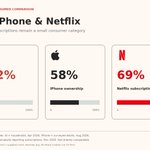
Kinda crazy how super intelligence costs the same as Netflix, yet the average person still picks Netflix.
Access or privilege was never the problem.
The average person just chooses to stay stupid.
Soon, ads might not target humans at all.
Your AI shopping assistant negotiates with a company’s AI sales agent.
Neither needs to show you an ad.
The next trillion-dollar marketing problem?
Figuring out how to manipulate the machine making decisions for you.
The perfect business model:
One algorithm makes you insecure.
Another sells you confidence.
A third measures how emotionally engaged you are.
1000 mathematicians pledged to keep AI out of math. Yet they accepted a computer-assisted proof back in 1976.
The problem is not AI. It's AI doing it faster.
newscientist.com/article/259…

Brilliant post!
And in economics, there are really only two worldviews.
The first is collectivism. The idea that the State knows better than you. That it must plan production, set prices, run companies, decide what you earn, what you buy, and eventually what you think. The individual is just a cog serving a grand collective project: the class, the nation, the race, the people.
The second is freedom. Capitalism, property, individual liberty, individual responsibility. The idea that millions of people creating value for one another produce infinitely more prosperity than an office of planners, however brilliant they may be.

My post about Hitler and the far right got millions of views. Clearly, it hit a nerve. So today I'm going to show you, step by step, why the notion of "far right" as it's used in France makes almost no sense. And why the people who wield it are usually the last ones who should be lecturing anyone.
Let's start with the only question that matters: what makes a political system work or fail? To a very large extent, it's the economy. A country that produces wealth, that lets its citizens create, trade and build, stays standing. A country that destroys that collapses, no matter how beautiful its slogans are.
And in economics, there are really only two worldviews.
The first is collectivism. The idea that the State knows better than you. That it must plan production, set prices, run companies, decide what you earn, what you buy, and eventually what you think. The individual is just a cog serving a grand collective project: the class, the nation, the race, the people.
The second is freedom. Capitalism, property, individual liberty, individual responsibility. The idea that millions of people creating value for one another produce infinitely more prosperity than an office of planners, however brilliant they may be.
Now look at the list of the great totalitarian regimes of the 20th century. Stalin: total planning, forced collectivization, millions dead. Mao: the Great Leap Forward and the deadliest famine in human history. Pol Pot: money abolished, cities emptied, nearly a quarter of Cambodia's population exterminated. Mussolini, the man who coined the word fascism: "Everything within the State, nothing outside the State, nothing against the State." And Hitler, leader of the National Socialist German Workers' Party, whose program proclaimed "the common good before individual good." He subjected the entire German economy to State plans: the Four-Year Plan, frozen prices and wages, unions dissolved into a single state labor front, industrialists producing whatever the regime decided.
Their flags were different. Their designated enemies were different. But the machinery was the same: the individual doesn't exist, only the collective matters, and the State decides everything.
Why does it always end in totalitarianism? Because collectivism doesn't work. And when a system doesn't work, it has only two options: admit failure or force people. They always choose force.
Ludwig von Mises proved it as early as 1920: without free prices, without a market, a planner simply cannot know what to produce, how much, or at what cost. He is flying blind. A planned economy isn't a less efficient version of the market. It's an impossibility.
Friedrich Hayek drew the political conclusion in 1944 in The Road to Serfdom, a book he dedicated "to the socialists of all parties." One chapter is titled "The Socialist Roots of Naziism." Another, "Why the Worst Get on Top." For Hayek, controlling the economy isn't controlling one sector among others. It is "the control of the means for all our ends." Whoever controls your bread controls your life. Then your speech. Then your thoughts.
Milton Friedman put it his own way: a society that puts equality before freedom ends up with neither.
So we know exactly what works. It's not an opinion. It's a century of real-world experiments. Listen to the Austrian school, Mises and Hayek, with Friedman from Chicago alongside them: economic freedom, limited government, individual responsibility.
And this is where we get to the great accusatory inversion. Part of the left-wing press spends its time screaming fascism. Why? Because the fascism fantasy is the best way to never talk about the track record of their own ideas. Deep down, they know: if their collectivist program were applied all the way, it wouldn't work, because a collective economy cannot work. And an economy that doesn't work always ends up having to coerce, surveil and ban. In other words, it becomes exactly what they claim to be fighting. The real heirs of totalitarian logic are not the ones being pointed at.
So who gets called "far right" in 2026? People who want safe cities. People who want to keep their culture. People who just want to live a peaceful life, raise their kids, and not have to board up their shop every weekend. People who want the law to apply to everyone.
If that's the far right, then the word no longer means anything. And maybe that was the point.

Apollo reached the Moon on one rocket in 1969. Now NASA says Starship needs 22 launches just to refuel. 🤔
arstechnica.com/space/2026/1…

H◉llO retweeted
Just say it out loud to get it over with:
"This 'internet' of computing machines and protocols is really more of a limited peacetime prototype or demo that got out of control and was somehow accidently pushed into production a few decades ago. Shoulda said so earlier."
Awkward.

The most exclusive clubs of 2040 might ban smartphones, smart glasses, AI assistants, wearables, smart rings, watches…anything digital.
No recording. No transcription. No algorithms. No data.
Just humans without producing data.
A moment nobody can monetize.
Dopamine from a new partner lasts about 18 months.
After that, your brain files the one you love under familiar and the spark stops firing.
And that’s madly in love explained.
SpaceX launches the satellites, Starlink carries the signal, its turbines make the power, its chips run the AI models. Grok answers the questions. Tesla’s robots do all the work.
Every layer of the global computer would be owned by one company, SpaceX.
zerohedge.com/news/2026-10-2…

Few things in life are satisfying as throwing money at the problem or hiring someone competent to handle it on your behalf.
Europe is struggling with real hard problems and they are posting nonsense like this.
Completely out of touch.


H◉llO retweeted

SAMSUNG ANNOUNCED IT WILL ENABLE CRYPTO PAYMENTS TO 82,000,000 GALAXY DEVICES STARTING NEXT WEEK
THE WORLD'S LARGEST SMARTPHONE COMPANY IS OFFICIALLY EMBRACING #BITCOIN AND CRYPTO
THIS IS MASSIVE 🔥

People call genetic enhancement unfair because some children might get advantages.
Children already inherit advantages in genes, wealth, and geography.
Same shit.
A few years ago, Silicon Valley wanted to deliver your groceries in 15 minutes.
Now the latest SV unicorn is producing GMO war dogs 😃

JUST IN: Palmer Luckey's genetically modified military dog startup, Warhound, comes out of stealth, aiming to create enhanced canines for the U.S. military.


Readers added context they thought people might want to know
This is NOT Palmer's company at all, his company Anduril is only supplying the tech for the dogs, and this is a wholly owed Collosal entiity
x.com/palmerluckey/s…