
@platonia_xyz | prev: risk @gauntlet_xyz 🎯 🤖
Joined April 2013
- Tweets78
- Following1.2K
- Followers982
- Likes655

1/ The analysis from the lending risk service provider @chaoslabs shows a fundamental misunderstanding of how Morpho works.


6/ However, Morpho’s isolated markets and the need to explicitly opt in to each market create additional operational overhead for curators. In contrast, Aave lenders automatically earn yield from new collateral assets enabled debt once they are onboarded.
7/ In summary:
- Morpho: liquidity is actively managed, with trust placed in curators to optimize risk-adjusted yield. Only capital allocated to individual isolated markets is at risk, and there is no cross-contagion between markets.
- Pool Model: risk depends on market segmentation (e.g., assets in Core vs. Prime instances in Aave) and features like e-mode and isolation mode, where risk from one asset could potentially affect all others in the same market instance. Illiquidity risk due to collateral rehypothecation applies within this type of market.
Morpho's design is not suboptimal, it's just taking different tradeoffs for DeFi lending design.
Oracle Extractable Value (OEV) is an optimization rather than a structural improvement to liquidation design.
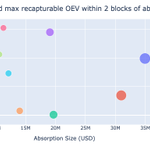
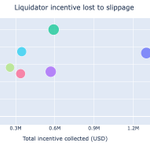
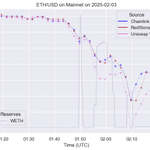
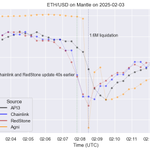
@victatorships dives into empirical OEV data from @compoundfinance and shares some thoughtful takeaways. 🧵
It is naive to frame OEV as a simple win-win for increasing protocol revenue.
OEV solutions redistribute profits from liquidators to block builders, OEV providers, and the protocol itself. In return, they introduce additional risk through varying levels of latency.
Although the tradeoffs remain difficult to quantify, @victatorships brings a valuable perspective to the OEV conversation.
Read the full analysis here: comp.xyz/t/oev-rfp-process-u…
