

Exploring what makes and breaks value across business, systems, and life. Designer turned author. Writing Journeys to Value.
United Kingdom
Joined March 2009
- Tweets1.5K
- Following1.5K
- Followers521
- Likes14.5K


School:
"[Son] scratched the bottom of his left leg on a twig during forest school. Cleaned and a plaster applied."
Me:
Clearly, we need to ban twigs.
Ian Batterbee retweeted

What improv taught me about why innovation falls out of sync uxdesign.cc/what-improv-taug…


Ian Batterbee retweeted
Forget your “lovable” products; the real leverage point was always learning. uxdesign.cc/forget-your-lova…

Storms are not isolated events; they arise from systems, often initiated by the smallest disturbances.
Meteorologist Edward Lorenz popularised the metaphor of a butterfly flapping its wings, which can shape hurricanes far away.
He referred to this concept as the Chaos Theory.
medium.com/p/the-butterfly-a…

We talk a lot about “delivering” value, but how do we know once it arrives?
We spend time learning how to communicate value, yet often overlook something that’s just as important: listening.
While we think of empathy as expressed through words, it's the pauses, signals, and the space we give others that do most of the work.
When we pause and listen, we gain insight into others’ perspectives.
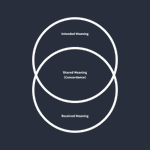
And when intended meaning and received meaning begin to overlap, something interesting happens:
Two minds emotionally sync in a phenomenon known as concordance.
Without that alignment, the value we try to communicate – often in story form – never quite lands.
That’s when it gets lost. That’s when a story gap opens.

ALT Diagram showing two overlapping circles labelled “Intended Meaning” and “Received Meaning,” with the overlap labelled “Shared Meaning (Concordance).”
If you're interested in learning more about concordances and how gaps emerge in communication, you can read more about them in my latest Journeys to Value post:
journeystovalue.substack.com…
Ian Batterbee retweeted
Nothing is certain — not even the “right” design process uxdesign.cc/nothing-is-certa…

Interesting analysis of why Tesla is discontinuing Model S and X to start production on robotics:
youtube.com/watch?v=b-1G9p1V…
One part stood out.
Musk doesn’t really care about bad sales quarters.
Is he crazy or onto something we’re missing?
What most people don’t see beneath the numbers is the R&D, innovation, and experimentation. These are the engines for long-term growth.
When we fixate too much on numbers, we lose sight of what really matters. And innovation gets stuck.
The pattern of fixating on numbers, metrics, and values we think are important is something I’ve written about recently:
substack.com/home/post/p-186…
It's easy to fixate on a goal that overlooks what really matters.
I've done it myself – plenty of times.
Lately, I've been exploring this pattern as a value mirage.
It usually starts as a subtle focus on something that looks important. Then, under pressure, it strengthens, looping back on itself.
In the loop:
1. A signal appears
Revenue, growth, conversion, output.
"This is what we need to achieve."
2. We assign meaning to it
"This matters because..."
3. Commitment follows
"We're going to make this work."
4. Metrics reinforce the story
"These numbers will validate it."
5. Justification replaces any questioning
"The data proves we’re right."
Under pressure, that loop tightens and tightens.
We double down on meaning, commitment, metrics, and justification – all in pursuit of the signal.
But that signal often holds little value.
Value mirages don't usually start with bad intentions or bad metrics.
They tend to emerge when pressure pulls us away from learning.
I've written more about value mirage, including how it plays over time, inside product teams, through a banking scandal, and in a startup built on a medical illusion.
Link in the comments.
#SystemsThinking #DecisionMaking #Leadership #Learning

ALT Diagram showing a self-reinforcing loop where signals are given meaning, leading to commitment, metrics, and justification.
We chase what we think is important –
time, profit, growth, bargains, metrics, even “the future”.
But often we’re chasing value mirages: things that look like value, but quietly aren’t.
In this piece, I explore how that happens – through time, product teams, a banking scandal, and a startup built on a medical illusion.
Read the full story: open.substack.com/pub/journe…


In many organisations, teams lock onto familiar methods, inherited frameworks, past success stories, or dominant “This is how it’s done” narratives.
In other words, it’s a fixed mindset that turns a path into a goal itself – rather than a means to an end.
Read the full story: journeystovalue.substack.com…

The Death Spiral.
It's a pattern that emerges in organisations – and in life – more often than we'd like to admit.
It begins when we double down on the very behaviours that once led to success. At first, these changes seem rational and even responsible.
But over time, they slowly pull systems into a downward "death spiral."
In otherwords: "That's how things have always been done."
Product teams fall into this trap more often than they realise.
Here's how the spiral unfolds:
1. Confidence builds in what worked before
2. Optimisation becomes the default approach
3. Learning slows as decisions turn reactive
4. Signals are ignored if they challenge the path
5. Past decisions begin dictating the future
6. Adaptation fails, and recovery becomes unlikely
So how does this show up in practice?
A product team runs A/B testing repeatedly, not to learn, but to squeeze results from the same narrow set of variables.
Apple have been stuck in Groundhog Day for years, with constant "same-shirt" iPhone releases.
BlackBerry, once a leader in the smartphone market, locked into a path that no longer aligned with market reality.
For some, the cost is market share, but for others, it's human life.
The NASA Challenger disaster of 1986 happened despite the leadership's confidence that launch conditions were acceptable.
Eight climbers lost their lives in the Mount Everest disaster of 1996 when commitment to a narrow goal overtook learning.
The Great Leap Forward – driven by a revolutionary certainty – led to the largest man-made famine in recorded history.
All different contexts, but the same pattern:
Path fixation.
It's the tendency to confuse commitment with progress, sticking to familiar paths even after the conditions that initially created value have changed.
Path fixation isn’t necessarily about choosing the wrong path; it’s about sticking to the right one for too long.
Every journey requires reorientation.
Even if we don’t abandon our paths entirely, we must explore the terrain around them – to discover alternatives, adapt to changing conditions, and remain open to learning.
That's why:
#learning matters
#research matters
#systemsthinking matters
#journeyorchestration matters
Take a look at the comments to learn more about path fixation.

ALT A dark spiral diagram showing six stages of a corporate death spiral, moving from outer confidence to inner failure.
You can learn more about path fixation in my Journeys to Value post:
journeystovalue.substack.com…
“We have an innovation problem. Not because we lack models, tools, or intelligence, but because we lack the right mindset.”
In this article, I explore:
Why innovation systems struggle to produce real value
How systems come under pressure when learning stops
What Journeys to Value is really about
Hope to see you there
Love to hear your thoughts
The Path We Stopped Questioning
open.substack.com/pub/journe…

ALT Silhouette of a person standing alone in a long corridor, framed by a row of windows.
Ian Batterbee retweeted
2.5 billion prompts later, there is still no system uxdesign.cc/2-5-billion-prom…
