
Enjoy #Math, #Chess, #Go / #Weiqi / #Baduk, #badminton, and #basketball.
Murfreesboro, TN
Joined September 2009
- Tweets8K
- Following2.2K
- Followers2K
- Likes17.1K


Wisarut Suwanprasert retweeted

Our paper on the availability of wage information in job postings is now in Labour Economics. Data is high quality and tells an important story: employers really don't tend to include wages in their ads. Important facts for thinking through how labor markets work.

Wisarut Suwanprasert retweeted

We develop a methodology for revealing the weights that import tariffs place on groups in society. Our estimates imply that redistributive motives across sectors -- rather than across states -- account for a significant fraction of US tariff variation.
econometricsociety.org/publi…

Wisarut Suwanprasert retweeted

I asked AI to review this paper as an IR professor.

Developing a tractable framework for analyzing geopolitics as a network of coordination and strategic influence, from @ErnestLiuEcon, Stephen J. Redding, Bennett Smith-Worthington, and @david_yang nber.org/papers/w35951

Turns out I’ve been doing research on geopolitics without even realizing it!
Looking back at my work on military coups, sanctions following coups, trade policy uncertainty, and the Greenland tariff threat, I’m starting to see a common thread!
Wisarut Suwanprasert retweeted
Review of Economic Studies is happy to announce the launch of the new journal, Review of Economic Studies: Insights. This is an open-access, general-interest economics journal that will publish short papers with a fast review process and accept/reject decisions.
1/4


Wisarut Suwanprasert retweeted

In a recent paper in the European Economic Review, @ccoyne1, @AndrQuintas5 & I discuss ways Hayek & Scott overlap, as well as ways they differ.
Read it on @SSRN: papers.ssrn.com/sol3/papers.…


Wisarut Suwanprasert retweeted

Really cool!
"Global Pension Reform Database 1952 – 2025: From Narrative to Data Using AI" by Yudong Rao and Boele Bonthuis.
"This paper introduces the Global Pension Reform Database (GPRD), the first dataset to provide systematic coverage of pension reforms across 142 advanced, emerging, and developing economies from 1952 to 2025. Leveraging artificial intelligence (AI) through a ring-fenced, locally hosted large language model (LLM), we extract and classify more than 4,000 pension reform episodes from the Economist Intelligence Unit and the U.S. Social Security Administration by type, timing, status, and generosity, enabling consistent cross-country and historical analysis. Stylized facts show that pension reform has shifted from an advanced-economy phenomenon to a global and recurring policy tool, often clustered around fiscal and macroeconomic crises. An empirical application demonstrates its analytical potential: in non-advanced economies, implemented pension reforms are associated with statistically significant and persistent declines in the public debt-to-GDP ratio, suggesting that such reforms can contribute to sustained fiscal consolidation."
imf.org/en/publications/wp/i…

Wisarut Suwanprasert retweeted

Unpopular Academic Advice #12: Being reliable matters more than being perfect.
I’ve noticed an interesting paradox in academia, especially among junior scholars. Some care so much about their reputation that they hesitate to share work until it’s perfect. I understand the instinct. Early in your career, every piece of work can feel like a test of your ability.
But imagine two collaborators. One sends you messy code on Friday and says, “It runs, but it’s not pretty. Let me know if anything is unclear.” The other promises beautifully documented code next Friday. Then the Friday after that. Three months later, you’re still waiting.
Who would you rather work with again?
We can clean up messy code. We can fix mistakes. But it’s much harder to rebuild lost trust.
The irony is that trying too hard to protect your reputation can end up doing more damage to it than the imperfect work you were afraid to share.
Wisarut Suwanprasert retweeted
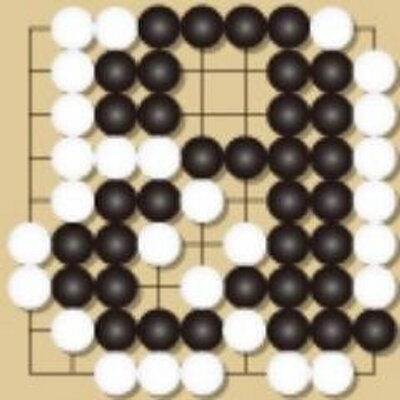
伊)現在、両対局者の感想戦が続いています。感想戦が終わった後、新名人の記者会見をお届けします。
youtube.com/live/zx29k7hPzi8…

Wisarut Suwanprasert retweeted

Econ PhD job market candidate database is live for 2026-2027
- 678 candidates from 86 institutions so far
- this year aiming to add all Bschool Econ adjacent PhDs
- filter by field/institution and JMP title/abstract
- JMCs can update their own records
- connect Codex/Claude Code to the database as you please
Dm/comment as new schools post their JMCs and I’ll add them, or if you have issues
econ.now/candidates


I'm making a database of every 2025-2026 econ PhD job market candidate: econ.now/candidates
- 18 institutions and 307 candidates so far
- Filter by institution/field/advisor
- CVs, JMPs, links to candidate site
Will be adding every finance/econ candidate over coming weeks!

Wisarut Suwanprasert retweeted

Jason Furman has launched Econvitals, a new macroeconomics system. It uses about 500,000 lines of code that he vibe coded using AI models to create a data layer that pulls about 110 sources, including a Fedspeak tracker and a fiscal simulator. (1/4)
Wisarut Suwanprasert retweeted

My GitHub list of free datasets is up to 125+ entries across 30+ categories. Take a look at github.com/toddrjones/datase…


Two PhD students from the same program sent identical emails to a friend of mine and me, requesting replication code.
Coincidence? Class assignment? Or are we participants in a randomized experiment?


Wisarut Suwanprasert retweeted

arxiv.org/abs/2610.02022 Across six judges, we find that seemingly small prompt design choices have large consequences; e.g., simply telling the judge that reviewers found one idea novel and the other not can change its verdict on more than half of the identical idea pairs it is shown, shifting pairwise accuracy by over 50 points and occasionally pushing it below chance. The same change helps one judge and hurts another. Retrieval and larger reasoning budgets help little, and two purpose-built novelty evaluators are outperformed by our cheapest prompted baseline. These results raise questions about reported novelty gains of automated ideation systems, and call for robust novelty evaluation methods.

Wisarut Suwanprasert retweeted

New paper: "AI Article Reviews Dominate Human Peer Reviews at Their Best: Evidence and Policy Choices" See: GaryKing.org/peerless. with Steven Worthington. Comments welcome!

Wisarut Suwanprasert retweeted

Papers rejected by Nature:
1933 · Fermi’s theory of beta decay (“too remote from reality”)
1937 · Krebs’ citric acid cycle (Nobel Prize, 1953)
1973 · Lauterbur’s first MRI paper (Nobel Prize, 2003)
Wisarut Suwanprasert retweeted

A problem from the International Math Olympiad (1979).
Let p/q (lowest terms) equal the following alternating sum. Prove that p is divisible by 1979:


