
• Student-led network supporting democratic transition • Protecting the voice of Iran's people in campuses abroad 🦁☀️
Joined October 2026
- Tweets106
- Following121
- Followers125
- Likes101




Iranian Students For Democracy retweeted

A coordinated mass-reporting campaign backed by the Islamist regime in Iran has been targeting Iran-based, anti-regime, pro-Pahlavi accounts on X, leading to their suspension.
Many of these accounts are eventually restored, sometimes after days or even months, because the reports against them are baseless. But the damage is already done. Suspensions, especially repeated ones, can completely derail an account’s growth, reach, and ability to communicate.
This is a deliberate, coordinated attempt by the regime to manipulate and control the Iran narrative on X.
It is essential that @X and @Support investigate this abuse and take action against accounts engaged in systematic, meritless mass reporting of dissidents.
This is particularly urgent for dissidents inside Iran. They are risking their lives to tell the world what is happening in their country. They should not also have to fight coordinated efforts by the regime to silence them on X.
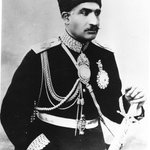
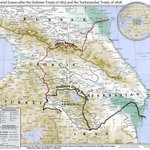
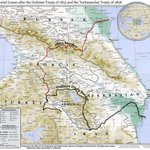
101 YEARS AGO: THE END OF THE QAJAR DYNASTY
1/7: On October 31, 1925, Iran's parliament voted to end 101 years of Qajar rule.
But what led to the collapse of the Qajar dynasty, and how did Reza Shah Pahlavi rise to power?
A historical thread 🧵👇

6/7: Who Opposed the End of Qajar Rule?
Four prominent political figures opposed the parliamentary move to end the Qajar dynasty in 1925:
• Mohammad Mosaddegh
• Seyyed Hassan Modarres
• Hossein Ala
• Yahya Dowlatabadi
Their opposition reflected concerns about constitutional procedures and the transfer of power to Reza Khan Pahlavi.
7/7: The Beginning of a New Era
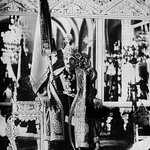
In December 1925, a constituent assembly formally transferred the crown to Reza Shah Pahlavi.
The Pahlavi era would bring major changes in infrastructure, education, state institutions, and national administration, alongside an increasingly centralized political system.
The fall of the Qajars marked one of the most consequential turning points in modern Iranian history.
A century later, its legacy remains part of Iran's national conversation.

6/7 — Who Opposed the End of Qajar Rule?
Four prominent political figures opposed the parliamentary move to end the Qajar dynasty in 1925:
• Mohammad Mosaddegh
• Seyyed Hassan Modarres
• Hossein Ala
• Yahya Dowlatabadi
Their opposition reflected concerns about constitutional procedures and the transfer of power to Reza Khan Pahlavi.
7/7 — The Beginning of a New Era
In December 1925, a constituent assembly formally transferred the crown to Reza Shah Pahlavi.
The Pahlavi era would bring major changes in infrastructure, education, state institutions, and national administration, alongside an increasingly centralized political system.
The fall of the Qajars marked one of the most consequential turning points in modern Iranian history.
A century later, its legacy remains part of Iran's national conversation.
