







Darren Jacoby retweeted

A good design system makes it harder for both humans and AI agents to make bad decisions.
In this ideal setup, tokens come in two layers:
- *Primitives* are the raw values without meaning: sand.1000 is rgb(130, 130, 124).
- *Semantic tokens* define roles: content-tertiary points to sand.1000 in light mode and ink.1000 in dark mode.
This has two benefits:
1. Your agent refers to roles, not arbitrary values.
2. Theme switching happens automatically by changing the primitives behind the semantic tokens.
Both of these benefit agents and humans because they reduce the margin for error.
You, and your agent, are less likely to use content-tertiary for a heading than an arbitrary hex value like #432154. The token communicates its purpose, a raw hex value has no real meaning to it.
And when theming is handled through semantic tokens, you don't have to rely on manually adding Tailwind's dark: modifier everywhere.
This is nothing new fwiw, this approached has worked for years. What works well for humans, will likely work well for agents as well.
Darren Jacoby retweeted
I’ve been exploring design systems for AI for UI more and more, and it’s clear to me that there are real benefits to them.
The biggest one is shortening the feedback loop.
Your agent’s output no longer requires 20 prompts to get it right, because it uses the right primitives.
All the small papercuts will also be fixed in the right way, because the agent knows what shadow variable it should use for a popover.
The result is a system that feels consistent.
Consistency makes the system predictable, and once a system is predictable, it’s a joy to use for your users. They no longer have to guess what to do, they just do it and get to their goals faster.
The best part is that these benefits compound.
As your design system gets more robust, you can extend it into other areas of your product, so the benefit will only get bigger in the future.
Darren Jacoby retweeted
If I was hiring today, I’d hire 2x fewer people and pay them 2x as much.
One person can do much more today. You need people that have agency and can make the right decisions with higher probability.
But I never had a company, so this might be a stupid take, who knows.
Darren Jacoby retweeted

We will all be learning in coming weeks & months, that most human-made software:
▫️ Was really slow
▫️ Had many security vulnerabilities
▫️ Was under-specified and incorrect
AI will rewrite it all. Many times. It will make it fast, cost-efficient, and secure. It will think about failure modes we couldn't wrap our heads around.
It will prove, formally verify, load test, harden. It will turn memory-unsafe foundations into robust, optimized ones. If you ask, it'll thoroughly document it, teach you about it, make diagrams, animations, and slide decks.
In many ways, we are witnessing the true birth of software engineering.
Darren Jacoby retweeted
does Jev understand colour?
incredible model, very cheap and fast. definitely feels like a leap forward for creating new UX/UI paradigms on top of modern language models.
Thoughts on locking in state for WooCommerce? I've always thought it would make sense. #WordPress

3
349
It's been a while! Brand new plugin to bring gesture-based actions to the block editor for a faster authoring experience. 0.0.1 pre-release.
github.com/darrenjacoby/gute…
2
504
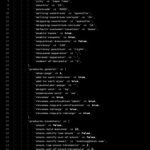
Intervention 2.0.0-rc.5 tagged. You can now update `wp-admin` options via the backend and save to the database or export to a config file. github.com/darrenjacoby/inte…

1
2
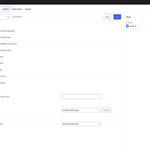
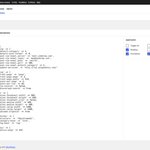
Full featured interface for Intervention is almost ready. WordPress admin settings can be edited via Tools→Intervention and saved to the database or exported. If you are feeling adventurous or want to help with testing; github.com/soberwp/intervent…
1
3

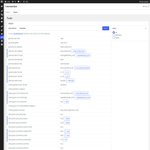
Intervention import tool coming together! Import provides an easy way to compare database and config file values, with the option to import those values to the database.

Tiny JS range function for CSS clamp with React and Tailwind JIT, just pass in a `min`, `max`, `from` and `to` 😅gist.github.com/darrenjacoby…

JIT mode working with `tailwindcss-fl` thanks to github.com/darrenjacoby/tail…

1
I started mapping out wp-admin styles to a tailwind.config file to bring some sanity to building option pages, still needs a lot of work and explanation, but for now trying to extract common styles is the goal. github.com/darrenjacoby/wp-a…
2
It feels like a missed opportunity that WordPress does not have an official style guide for plugin authors. It's hard to know the correct route to take; match existing styles, or consider new styles from the block editor. (think form inputs)
6


Lots more in the pipeline for the coming months.

New option for `wp-admin.$role.appearance.menus`. You can now limit the maximum menu depth for all menus or a specific menu.
github.com/soberwp/intervent…

1
1