





Pinned Tweet
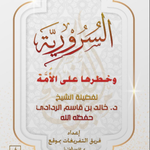
I've been working on a PDF refutation of a Khariji telegram channel called "Truth Remains". I handpicked 18 doubts from this channel which I answer in detail. This channel gets frequently cited by many Khawarij as some sort of primary reference to return back to, and none of these people have bothered to critically analyze what’s being promoted in this channel and whether it aligns with the truth or not. This channel is filled with countless blunders.
anyone can download it from the link below, بارك الله فيكم.
tr.ee/zaoW4FaMA0


Jad 🇸🇾 retweeted
you’re making a lot of premises which you have to substantiate.
1. How do you know that Haftar established secularism in the areas he ruled in? We demand tangible proof
2. How do you know Shaykh Rabi’ Bin Hadi al-Madkhali knew that Haftar was going to establish secularism and still called to fight under him?
3. How do you know Shaykh Rabi’ Bin Hadi al-Madkhali knew that Haftar was going to unalive Muslim women?
3. The situation in Libya before was complicated, with many different factions seeking authority, especially since the UN-elected government GNA was known to kill Muslims, along with other factions like IS-L, why was it wrong for Shaykh Rabi’ to give a fatwa for Muslims to support Haftar, even though he had done this based on what some Salafis told him? This is an ijtihadi issue after all.
Jad 🇸🇾 retweeted
al-Imam , al-Muhaddith Nāṣir al-Dīn al-Albānī was a man of the Sunnah.
Shaykh Muḥammad ibn Ibrāhīm āl al-Shaykh stated:
"Nāṣir ad-Dīn al-Albānī, and he is a man of Sunnah, a supporter of the truth and a confronter of the people of falsehood."
Fatāwā wa-Rasāʾil (vol. 4, p. 92)

Jad 🇸🇾 retweeted
also Al-Ghunayman:
— Seeking judgement to other than the Shari'a is minor disbelief
— Legislating man-made laws is minor disbelief

Shaykh al-Ghunaymān was asked:
Q: Our Shaykh, Someone said, that regarding ruling by man-made laws, the scholars are in agreement that one who rules by man-made laws is not takfired unless he deems it permissible (meaning istiḥlāl), alters the law or rejects the ruling of Allah.
Is this, may Allah preserve you, Shaykh, correct?
A: It is not correct. This is the speech of the Murjiʾah.
Jad 🇸🇾 retweeted
Dawla preacher Abdullah al-Faisal al-Khariji:
- Ibn 'Abbas is known for making mistakes
- Ibn 'Abbas "kufr duna kufr" tafsir is mistaken
- We should leave Ibn 'Abbas tafsir of 5:44 and stick to Ibn Taymiyyah and Ibn Kathir's fatawa
- I hate Salafis for using the tafsir of Ibn 'Abbas to prove that not ruling by the Shari'a is minor kufr

Jad 🇸🇾 retweeted
According to Imam al-Shafi'i رحمه الله تعالى, the following actions are not clear disbelief:
- Exposing the vulnerable secrets of a Muslim to the disbelievers in times of warfare
- aiding a disbeliever by warning him that the Muslims intend to launch a surprise attack against him so that he may take precaution
- giving the disbelievers advance notice to cause harm to the Muslims.
He uses the story of Hatib رضي الله عنه as evidence.
Full quote: nitter.gq/jado375/status/2086404…


Imam al-Shāfi‘ī رحمه الله was asked regarding the one who takes the Mushrikeen as allies, and exposes the vulnerabilities of the Muslims by informing the Mushrikeen of their secrets, does this make his blood permissible to spill?
To which he replied:
"The blood of a person who has attained the sacred inviolability of Islam is not permissible to spill except if he commits murder, or commits adultery after being married, or commits clear disbelief after his Iman and then remains steadfast upon that disbelief.
Exposing the vulnerable secrets of a Muslim, or aiding a disbeliever by warning him that the Muslims intend to launch a surprise attack against him so that he may take precaution, or giving him advance notice to cause harm to the Muslims, does not constitute clear disbelief.
It was said to al-Shāfi‘ī: 'Did you say this based on personal preference or Qiyās?'
He replied: 'I said it based on what no Muslim who knows it is permitted, in my view, to contradict, namely, the explicitly stated Sunnah after deducing from the Book of Allah.'
It was said to al-Shāfi‘ī: 'Then mention the Sunnah regarding it.'
He said: 'Sufyān ibn ‘Uyaynah informed us, from ‘Amr ibn Dīnār, from al-Ḥasan ibn Muḥammad, from ‘Ubayd Allāh ibn Abī Rāfi‘, who said: I heard ‘Alī say: The Messenger of Allah ﷺ sent me, al-Miqdād, and al-Zubayr, saying: “Set out until you reach Rawḍat Khākh, for there is a woman on a camel there carrying a letter.” So we set out, our horses galloping, until we reached the woman. We said to her: “Bring out the letter.” She said: “I have no letter with me.” We said: “You will either bring out the letter, or you will strip off your clothes.” So she produced it from her hair braids, and we brought it to the Messenger of Allah ﷺ. It contained a letter from Ḥāṭib ibn Abī Balta‘ah to some people among the polytheists in Makkah, informing them of some of the affairs of the Prophet ﷺ. The Prophet ﷺ said: “What is this, O Ḥāṭib?” He replied: “Do not be hasty with me, O Messenger of Allah! I was a man attached to Quraysh, but I was not from among them. The Muhājirūn who are with you have relatives in Makkah who protect their families, but I have no kinship there. So I wanted, since I lacked that, to acquire a favor with them so they would protect my family. By Allah, I did not do it out of doubt in my religion, nor out of preference for disbelief after Islam.” The Messenger of Allah ﷺ said: “He has spoken the truth to you.” ‘Umar said: “O Messenger of Allah, let me strike the neck of this hypocrite!” The Prophet ﷺ replied: “He witnessed Badr! And what do you know? Perhaps Allah, the Mighty and Majestic, looked upon the people of Badr and said: ‘Do whatever you wish, for I have forgiven you.’” He said: Then the verse was revealed: {O you who believe, do not take My enemy and your enemy as allies...} [Surah al-Mumtaḥanah 60:1].'
Al-Shāfi‘ī, may Allah the Exalted have mercy on him, said:
'In this Hadith, alongside what we have described to you is the rejection of passing judgment based on mere suspicions. Because when the writing of the letter was open to the possibility of being as Ḥāṭib said, that he did not do it out of doubt in Islam, but rather did it to protect his family, and that it was a lapse rather than a turning away from Islam, and it also carried the possibility of the uglier meaning [i.e., treason/apostasy], his own statement regarding his underlying motivation was accepted.
The ruling of the Messenger of Allah ﷺ regarding him, by not executing him and not applying the worst-case assumption that arises in minds, is the standard. No one could ever commit an act against anyone greater in outward appearance than this act against the Prophet ﷺ, because the command of the Messenger of Allah ﷺ is vastly grander than that of any human being after him.
Therefore, if the one who communicated secretly with the Mushrikeen regarding the affairs of the Messenger of Allah ﷺ while the Messenger of Allah ﷺ intended to catch them off guard, was believed by him, and the Prophet ﷺ did not fault him based on the strongest suspicion that comes to mind, accepting his excuse, then anyone after him who does less than what Ḥāṭib did is even more entitled to have his excuse accepted just as it was accepted from Ḥāṭib.'


According to Imam al-Shafi'i رحمه الله تعالى, the following actions are not clear disbelief:
- Exposing the vulnerable secrets of a Muslim to the disbelievers in times of warfare
- aiding a disbeliever by warning him that the Muslims intend to launch a surprise attack against him so that he may take precaution
- giving the disbelievers advance notice to cause harm to the Muslims.
He uses the story of Hatib رضي الله عنه as evidence.
Full quote: nitter.gq/jado375/status/2086404…
Imam al-Shāfi‘ī رحمه الله was asked regarding the one who takes the Mushrikeen as allies, and exposes the vulnerabilities of the Muslims by informing the Mushrikeen of their secrets, does this make his blood permissible to spill?
To which he replied:
"The blood of a person who has attained the sacred inviolability of Islam is not permissible to spill except if he commits murder, or commits adultery after being married, or commits clear disbelief after his Iman and then remains steadfast upon that disbelief.
Exposing the vulnerable secrets of a Muslim, or aiding a disbeliever by warning him that the Muslims intend to launch a surprise attack against him so that he may take precaution, or giving him advance notice to cause harm to the Muslims, does not constitute clear disbelief.
It was said to al-Shāfi‘ī: 'Did you say this based on personal preference or Qiyās?'
He replied: 'I said it based on what no Muslim who knows it is permitted, in my view, to contradict, namely, the explicitly stated Sunnah after deducing from the Book of Allah.'
It was said to al-Shāfi‘ī: 'Then mention the Sunnah regarding it.'
He said: 'Sufyān ibn ‘Uyaynah informed us, from ‘Amr ibn Dīnār, from al-Ḥasan ibn Muḥammad, from ‘Ubayd Allāh ibn Abī Rāfi‘, who said: I heard ‘Alī say: The Messenger of Allah ﷺ sent me, al-Miqdād, and al-Zubayr, saying: “Set out until you reach Rawḍat Khākh, for there is a woman on a camel there carrying a letter.” So we set out, our horses galloping, until we reached the woman. We said to her: “Bring out the letter.” She said: “I have no letter with me.” We said: “You will either bring out the letter, or you will strip off your clothes.” So she produced it from her hair braids, and we brought it to the Messenger of Allah ﷺ. It contained a letter from Ḥāṭib ibn Abī Balta‘ah to some people among the polytheists in Makkah, informing them of some of the affairs of the Prophet ﷺ. The Prophet ﷺ said: “What is this, O Ḥāṭib?” He replied: “Do not be hasty with me, O Messenger of Allah! I was a man attached to Quraysh, but I was not from among them. The Muhājirūn who are with you have relatives in Makkah who protect their families, but I have no kinship there. So I wanted, since I lacked that, to acquire a favor with them so they would protect my family. By Allah, I did not do it out of doubt in my religion, nor out of preference for disbelief after Islam.” The Messenger of Allah ﷺ said: “He has spoken the truth to you.” ‘Umar said: “O Messenger of Allah, let me strike the neck of this hypocrite!” The Prophet ﷺ replied: “He witnessed Badr! And what do you know? Perhaps Allah, the Mighty and Majestic, looked upon the people of Badr and said: ‘Do whatever you wish, for I have forgiven you.’” He said: Then the verse was revealed: {O you who believe, do not take My enemy and your enemy as allies...} [Surah al-Mumtaḥanah 60:1].'
Al-Shāfi‘ī, may Allah the Exalted have mercy on him, said:
'In this Hadith, alongside what we have described to you is the rejection of passing judgment based on mere suspicions. Because when the writing of the letter was open to the possibility of being as Ḥāṭib said, that he did not do it out of doubt in Islam, but rather did it to protect his family, and that it was a lapse rather than a turning away from Islam, and it also carried the possibility of the uglier meaning [i.e., treason/apostasy], his own statement regarding his underlying motivation was accepted.
The ruling of the Messenger of Allah ﷺ regarding him, by not executing him and not applying the worst-case assumption that arises in minds, is the standard. No one could ever commit an act against anyone greater in outward appearance than this act against the Prophet ﷺ, because the command of the Messenger of Allah ﷺ is vastly grander than that of any human being after him.
Therefore, if the one who communicated secretly with the Mushrikeen regarding the affairs of the Messenger of Allah ﷺ while the Messenger of Allah ﷺ intended to catch them off guard, was believed by him, and the Prophet ﷺ did not fault him based on the strongest suspicion that comes to mind, accepting his excuse, then anyone after him who does less than what Ḥāṭib did is even more entitled to have his excuse accepted just as it was accepted from Ḥāṭib.'


Jad 🇸🇾 retweeted

"All this compounds on his ignorance of usul" and it's him saying these kufr statements and him arguing that saying "I love Judaism, venerate Judaism, and stand for Judaism" isn't a qawl of kufr and him saying "I don't believe in the Shari'ah isn't kufr while I said it is kufr.


Jad 🇸🇾 retweeted
Both S͟hayk͟h Ibn ʿUthaymīn and S͟hayk͟h Ibn Bāz agreed with S͟hayk͟h al-Albani that there is no difference between the one who rules by a man-made law, and the one who institutes this law or places this man-made law to rule by in his country.
Ibn al-ʿUthaymīn comments in al-Albani's book, Kitāb Fitnat al-Takfīr stating the following:
"Accordingly, by our interpretation of this verse as mentioned, we rule that ruling by other than what Allāh has revealed is not disbelief that expels one from the fold of Islam, but it is practical disbelief, because the ruler by that has gone out of the correct path.
There is no distinction in that between the man who takes a man-made law from others and applies it in his country, and the one who originates a law and sets this man-made law."

Jad 🇸🇾 retweeted
Imam ʿAbd ar-Raḥmān as-Saʿdī رحمه الله تعالى explains the sayings of Allah: "And whoever does not judge by what Allāh has revealed - then it is those who are the disbelievers."
"And whoever does not judge by what Allāh has revealed - then it is those who are the unjust." stating:
"Judging by other than what Allah has revealed is among the deeds of the people of disbelief. It may be disbelief that expels one from the religion, and that is if one believes it to be permissible and allowed. Or it may be an major sin among the major sins, and an act of [minor] disbelief whose perpetrator has deserved severe punishment."
"Ibn ʿAbbās said: 'a disbelief less than [major] disbelief, a wrongdoing less than [major] wrongdoing, and a transgression less than [major] transgression. Thus, it constitutes major wrongdoing when one deems it permissible, and a grave, major sin when committed without deeming it permissible."
Taysīr al-Karīm al-Raḥmān fī Tafsīr Kalām al-Mannān

unavailable
Jad 🇸🇾 retweeted

Question posed to Shaykh Ibn Bāz (رحمه الله):
“Is it permissible for a Muslim woman engaged in daʿwah to use the media to spread the call to Allāh?”
Answer:
“There is no doubt that calling to Allāh is among the most important duties and among the best acts of worship through which one draws nearer to Him.
However, a woman undertaking this work in the field of daʿwah through television or radio entails many problems and grave dangers, including being alone with men, displaying her adornment, speaking in a soft, alluring manner, and other harms.
What appears to me from the principles of the pure Sharīʿah is that this is not permissible for her, because her participation in television and radio leads to many harms, including failing to observe ḥijāb, speaking in a soft, alluring manner, displaying her adornment, and being alone with men.
All of this greatly harms society and leads to widespread corruption.
My conclusion, therefore, is that I consider it impermissible for her to participate in radio or television. As for contributing to the press through writing and submitting beneficial articles, there is nothing wrong with this.”
Al-Marʾah al-Muslimah al-Muʿāṣirah: Iʿdāduhā wa Masʾūliyyatuhā fī al-Daʿwah, by Dr. Aḥmad ibn Muḥammad ibn ʿAbd Allāh Abābaṭayn, pp. 429–430.
This fatwā was recorded on an audio cassette on Tuesday, 23 Shaʿbān 1407 AH.
1 - The Shaykh states:
“including being alone with men, displaying her adornment, speaking in a soft, alluring manner, and other harms.”
These dangers have all been manifested by these so-called dāʿiyāt. If they wish to deny these allegations, then I have no issue with bringing forth the evidence.
Rather, even in her latest video, she has failed to observe the ḥijāb mentioned by Shaykh Ibn Bāz (رحمه الله).
2 - The Shaykh states:
“Failing to observe ḥijāb.”
This shoddy garment that this girl has worn is not the ḥijāb that Shaykh Ibn Bāz (رحمه الله) ever described or approved of.
Rather, we have explicit statements from the ʿUlamāʾ concerning the ruling on wearing tight clothing, whether it outlines the body itself or the face.
3 - What you have brought from the Shaykh in your video is ALL general.
Yet here is a specific fatwa and it goes against you.

This quoted post is unavailable.
Jad 🇸🇾 retweeted

Est-il permis à un État musulman de coopérer avec un État non musulman afin de repousser le danger des kharijites ?
« Aider les polythéistes et leur apporter son soutien contre les musulmans par admiration pour eux et pour leur religion, par amour pour eux et pour leur religion, en les préférant aux musulmans et en préférant leur religion à la religion de l'islam : c'est cela qui constitue de la mécréance.Quant à la coopération avec les mécréants pour repousser et abolir ce que l'islam réprouve, et combattre ceux qui s'y adonnent, comme ceux qui pratiquent ce qu'on appelle le terrorisme qui relève de la voie des Khawârij, lesquels déclarent les musulmans mécréants et les tuent, et commettent des actes de sabotage visant à terroriser les gens, qu'ils soient musulmans ou mécréants , ainsi que le fait de coopérer avec eux ou de solliciter leur aide dans des affaires permises, tout cela est autorisé.»
At-Ta‘lîq ‘alâ Ta‘lîqât Samâhat ash-Shaykh Ibn Bâz ‘alâ Nawâqid al-Islâm, p. 299.

Jad 🇸🇾 retweeted
A fact that many do not know!
When the prime minister of Egypt, al-Nuqrāshi was assassinated by al-Ikhwān. Shaykh Ahmad Shākir wrote an article denouncing the Ikhwān as criminal Khawārij and asked Allah to have mercy on the martyr al-Nuqrāshi.
جمهرة مقالات أحمد شاكر ج١ ص٤٧٢


Jad 🇸🇾 retweeted
هل يجوز لدولة مسلمة أن تتعاون مع دولة غير مسلمة لدفع ضرر الخوارج؟
Is it permissible for a Muslim state to cooperate with a non-Muslim state to repel the harm of the Kharijites?
The Former Mufti of Jazan region in Saudi Arabia, S͟hayk͟h Aḥmad ibn Yaḥyá al-Najmī رحمه الله تعالى said:
"Assisting the polytheists and aiding them against the Muslims out of admiration for them and their religion, out of love for them and their religion, out of preferring them to the Muslims, and out of preferring their religion to the religion of Islam: this is what constitutes disbelief.
As for cooperating with the disbelievers regarding that which Islam forbids—meaning: to push it [Islam] away, invalidate it, or wage war against its people, such as that which is called 'terrorism,' which is the religion of the Kharijites who declare Muslims to be disbelievers and kill them, and who carry out acts of sabotage that terrorize the people; whether they [the victims] are Muslims or disbelievers—likewise, cooperating with them [the disbelievers] in this, or seeking their assistance in what is mubāḥ (permitted), then that is permissible."
Al-Ta‘līq ‘alā Ta‘līqāt Samāḥat al-Shaykh Ibn Bāz ‘alā Nawāqiḍ al-Islām p.299
