





Abu ʿAbdur-Razzāq retweeted

RULING ON PERFORMING THE MARRIAGE (NIKAH) IN THE MOSQUE
✍️- Shaykh Abu Ahmad Kaleemuddin Yusuf Madani
(Islamic University of Madinah)
There is no authentic (Sahih) Hadith of the Prophet (peace and blessings of Allah be upon him) available in this regard that encourages us to perform the Nikah in the mosque, or points towards any specific virtue of doing so.
Although there is a Hadith that commands performing the Nikah in the mosque, that Hadith is weak (Da'if), and therefore cannot be used as a valid legal argument (Istidlal).
There is a difference of opinion among the scholars regarding performing the Nikah in the mosque:
The Hanafis, Shafi'is, and Hanbalis consider performing the Nikah in the mosque to be recommended (Mustahabb).
Accordingly, Shaykh al-Islam Ibn Taymiyyah (may Allah have mercy on him) states that since Nikah is an act of worship, it is recommended to conduct it in the mosque.
Ibn al-Qayyim (may Allah have mercy on him) expressed the same view.
(Al-Fatawa al-Kubra 3/123, I'lam al-Muwaqqi'in 3/102, Mirqat al-Mafatih 5/2072, At-Taysir bi-Sharh al-Jami' as-Saghir 1/176, Dalil al-Falihin 8/520)
The Malikis consider performing the Nikah in the mosque to be permissible (Ja'iz).
Hattab al-Ru'ayni al-Maliki (may Allah have mercy on him) states that an explicit view from the people of knowledge regarding it being recommended is not found, but it is valid to the extent of permissibility.
(Mawahib al-Jalil 3/408)
Shaykh Ibn 'Uthaymin (may Allah have mercy on him) states that there is no evidence establishing the recommendation (Istihbab) of performing Nikah in the mosque.
If a Nikah happens to take place in a mosque by coincidence, there is no harm. However, making a formal arrangement, inviting people specifically for it, and viewing it as recommended (Mustahabb) has no supporting evidence.
(Liqa' al-Bab al-Maftuh 17/67)
A person asked Shaykh Ibn 'Uthaymin (may Allah have mercy on him):
"Shaykh al-Islam Ibn Taymiyyah and Ibn al-Qayyim (may Allah have mercy on them) consider performing Nikah in the mosque to be Mustahabb, whereas you call it an innovation (Bid'ah). Why is that?"
The Shaykh replied: "Did Shaykh al-Islam Ibn Taymiyyah or Ibn al-Qayyim present any proof for performing Nikah in the mosque?" The questioner said: "No." The Shaykh responded: "Then it is an innovation (Bid'ah)."
(Al-Kanz al-Thamin, p. 144)
The Permanent Committee for Scholarly Research and Ifta (Saudi Arabia) stated: Performing Nikah in the mosque is not a Sunnah; the Hadith narrated in this regard is weak (Da'if).
(Fatawa al-Lajnah al-Da'imah – First Collection 18/113)
The Permanent Committee was asked:
"Is maintaining consistency and strict adherence to conducting marriages in mosques a Sunnah or an innovation (Bid'ah)?"
Answer: Islamic law has granted flexibility regarding conducting marriages in mosques or elsewhere. However, there is no authentic evidence indicating that performing Nikah in the mosque is a Sunnah.
Therefore, whoever strictly adheres to and habitually insists on performing Nikah in the mosque, it becomes an innovation (Bid me'ah).
(Fatawa al-Lajnah al-Da'imah 18/110)
In another place, the Permanent Committee states: Habitually insisting on performing Nikah in the mosque and treating it as a Sunnah is an innovation (Bid'ah).
The Prophet (peace and blessings of Allah be upon him) said: "Whoever introduces into this affair of ours that which is not part of it, it will be rejected."
(Fatawa al-Lajnah al-Da'imah 18/111)
Shaykh al-Albani (may Allah have mercy on him) was asked: "Is performing Nikah in the mosque a Sunnah?"
He replied: "It is not a Sunnah; rather, it is an innovation (Bid'ah)."
(Tasjilat Mutafarriqah, Tape 49, 43:58)
Shaykh ʿAbdul-ʿAzīz Ibn Rayyis Ar-Rayyis حفظه الله said:
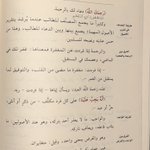
His statement: «We pass it on, as … It has come» — this phrase is used by the Sunnī Salafī and is also used by the Mufawwiḍ Khalafī. And As-Saffārīnī affirmed the creed of Tafwīḍ in his explanation (of his text). Thus,

He’s taking the view of al-Saffarini and others
islamweb.net/ar/library/cont…
this phrase is upon a false meaning, namely, Tafwīḍ. This is the fifth issue, and it is one of the most severe issues with As-Saffārīnī رحمه الله.
And he said:
And As-Saffārīnī رحمه الله has erred in this matter and thought that the creed of the Salaf was Tafwīḍ. This is one
1
4
104
Allāh said:
“And the mosques are for Allāh (Alone): so invoke not anyone along with Allāh.”
[Sūrah Al-Jinn: 18]
Shaykh Muhammad Ibn Ibrahim Al Ash-Shaykh رحمه الله said:
“Thus, the verse encompasses three generalities: the generality of supplication, the generality of those who

Abu ʿAbdur-Razzāq retweeted
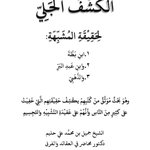
Shaykh Abdul Qadir Al Jilani said :
"The sign of the Jahmiyyah is that they call Ahl al-Sunnah 'Mushabbihah'
(those who declare Allah to be like the creation)."


Shaykh Ṣāliḥ Ibn ʿAbdul-ʿAzīz Āl Ash-Shaykh حفظه الله said:
And maʿrifah is synonymous with ʿilm concerning created beings in most contexts. However, regarding Allāh عز وجل then He is described with ʿilm, but He is not described with maʿrifah; and this is because ʿilm may not


is a type of dispraise attached to it; nevertheless, this is not absolute, because it has come in the authentic ḥadīth wherein is the dispatching of Muʿādh to Yemen, that the Prophet ﷺ said to him: «Let the very first thing to which you call them be the worship of Allāh; then
1
3
21
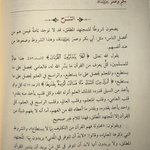
Shaykh Muḥammad ibn Ibrāhīm Āl ash-Shaykh رحمه الله said:
Raḥmah, when it comes alone without Maghfirah, then it means: you being forgiven for the past actions and being protected from sins in the future.
And if it (Maghfirah) comes alone, (then it means): forgiveness for the

Some Ashʿarīs and their opinion of Imām Ibn ʿAbdul-Barr رحمه الله:
Abul-Faraj Ibnul-Jawzī said:
I am indeed astonished by a man from al-Andalus, known as Ibn ʿAbdul-Barr, who authored the book At-Tamhīd. In it, he mentioned the ḥadīth concerning the descent (of Allāh) to the
Zaynud-Dīn Al-ʿIrāqī said:
This is the statement of Ibn ʿAbd al-Barr, and he is one of those who affirm direction [for Allah], so beware of him. An I have only mentioned it to draw attention to it, lest anyone be deceived by it.
Ṭarḥ al-Tathrīb 2/382
1
4
212
