

Founder of LEVO. We manage $45M+/year in Amazon search spend: https://nitter.gq/t.co/EMSb50dSeP Process-led PPC & DSP.
Proven Amazon Strategies 👉
Joined January 2022
- Tweets4K
- Following455
- Followers3.2K
- Likes3.5K




Pinned Tweet
Amazon's Product Opportunity Explorer will replace old product research methods.
All of the data you need is in POE.
And it's right there in your seller account.
A thread on how to use this powerful tool.🧵
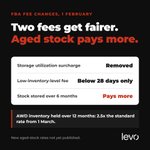
Two of the most complained-about FBA fees change on 1 February.
The storage utilization surcharge is removed.
Building stock ahead of a big event will no longer push your storage rate up.
The low-inventory-level fee gets a fairer test.
Right now it's based on trailing 30- and 90-day sales.
A sudden demand spike can make your days of supply look low and trigger the fee. End-of-season and end-of-life products get caught the same way.
From February, it only applies below 28 days of supply, measured on actual shipments in the four weeks before the check and the four weeks after it.
If demand drops off after the spike, you pay no fee.
The trade-off is on aged stock.
The aged inventory surcharge and the monthly storage fee merge into one rate based on how long a unit has been in storage. Stock that sells within six months pays the same or less. Older stock pays more.
AWD moves to age-based storage on 1 March, and inventory held over 12 months is charged 2.5x the standard rate.
The new rates aren't in the announcement yet, so we don't yet know how steep the aged pricing will be.
For accounts that sell through their stock steadily, this should be a net saving. For accounts carrying slow stock, January is the month to clear it.

1
1
54
Jake Martin | Amazon Advertising 🛠 retweeted
Launching a new product & want to know the cost per click in advance?
It's hard to know exactly, but one thing you can do is:
- Search for sub-niche in Product Opportunity Explorer
- Copy all of the KWs in the Search Terms tab
- Paste them into a new manual ad campaign
(1/2)
Jake Martin | Amazon Advertising 🛠 retweeted
Your competitor just cut their price on Amazon.
Should you match it?
First, work out how they can afford it: lower costs, or giving up margin to take market share.
If they're buying market share and they're bigger than you, it's a fight you'll probably lose, because they can keep cutting for longer than you can.
A price war hits your profit either way.
We manage $45m a year in Amazon ad spend.
Here are four ways I'd compete instead, from A+ content to where you focus your PPC.
Jake Martin | Amazon Advertising 🛠 retweeted
Amazon FBA hack #5:
Before targeting misspellings of keywords in your listing, make sure that Amazon isn't currently redirecting the search result to the correct spelling.
If they're already redirecting the traffic to the correct spelling, it's a waste of space.
Jake Martin | Amazon Advertising 🛠 retweeted
If your Brand Store mentions "Prime Day" anywhere, expect it to be rejected.
Amazon updated its peak event Store guidance on Nov 13.
The main points:
🔺 No "Prime" or "Prime Day", even inside images
🔺 No urgency, price or superlative claims ("Hurry", "Save 50%", "Huge savings")
🔺 Deals only through the Featured Deals widget, which needs at least 4 products
Stores are due 48 hours before an event. Moderation can take up to 3 business days.
A rejection close to the deadline can leave you without a Black Friday page.
If you're reusing creative from Prime Day or last year, check the text on every image and submit early.
Jake Martin | Amazon Advertising 🛠 retweeted
The 'warmer' a potential customer is, the more you can talk about yourself and what you offer.
The 'colder' a potential customer is, the more you need to patter interrupt, get their attention, and give value without reciprocation.
Jake Martin | Amazon Advertising 🛠 retweeted
A dog joint supplement we work with was getting sales from searches for lift harnesses.
Claude spotted why.
A harness and a joint supplement are completely different products, but the person searching for either one has a dog that's struggling to get around.
Another client sells a fibre supplement in bite form, and it was selling to people searching for fibre gummies.
Your discovery campaigns are already finding customers like this.
Here's the one prompt that shows you who they are, and how to bid on them.
Jake Martin | Amazon Advertising 🛠 retweeted
Brand Positioning Statements 🧵
Three categories can be used to describe your brand's positioning:
Functional (solves a problem/supplies a tangible benefit)
Symbolic (gives a feeling of belonging or self-perception benefit)
Experiential (gives physical or mental stimulation)
Jake Martin | Amazon Advertising 🛠 retweeted
To connect with your audience, you need to understand what motivates them.
A good exercise is running through Maslow's hierarchy of needs, to see where your brand fits into the system.
Which needs are you fulfilling?
👇🧵
Jake Martin | Amazon Advertising 🛠 retweeted
Amazon now lets eligible online stores feed their catalogs into Amazon search and Alexa for Shopping.
No referral fee. No FBA. No ad spend needed.
The program is called Shop Direct, and it has been running since last year.
What's new (4 Nov) is a self-serve Merchant Workspace. A store registers, verifies its website and connects a product feed through Feedonomics, Salsify, CEDCommerce, VersaFeed or the SP-API.
The products show in search with a "Shop Direct" label. Shoppers either click through to the brand's own site, or Amazon's Buy for Me agent places the order there for them.
Amazon says these products already appear in hundreds of millions of searches a month.
Why would Amazon send shoppers away from its own store?
Because it wants Alexa for Shopping to be where every shopping trip starts, even when Amazon doesn't stock the item. It says use of its agentic features is up more than 8x since January.
What it means for sellers:
- More competition in search from brands that pay nothing to be there. A Prime offer with reviews should still win most of those clicks, but it's worth checking your main category searches for Shop Direct labels
- A new channel for products you don't sell on Amazon. Existing Amazon sellers can apply through [email protected]
- Your website's catalog feed now matters on Amazon too. If an AI agent pulls from your DTC catalog, missing attributes and weak titles will cost you there as well
Amazon is building a shopping agent that covers the whole web, with its own store at the centre.
Ever wondered what Amazon’s keyword ranking algorithm is looking for?
Discover the factors that boost or lower your keyword ranks with my Amazon ranking breakdown.
Get it here now: go.levo.agency/ranking

77
Jake Martin | Amazon Advertising 🛠 retweeted
The reason that people buy from brands is because it reduces their chances of having a bad experience.
1. Find out who you serve
2. Build your messaging around making a connection with 'your person'
3. Delight them so that they feel comfortable buying from you time & time again
Jake Martin | Amazon Advertising 🛠 retweeted
Your TACOS keeps rising and you can't see where the money's going.
We manage $45m a year in Amazon ad spend.
Two filters in the ad console show you where to cut first.
One finds campaigns spending money without a single sale.
Some of those earned their budget months ago, and the sales have since dried up.
The other finds campaigns making sales, but not very efficiently.
Here's how to set up both, and what to do with what they find.
Jake Martin | Amazon Advertising 🛠 retweeted
Reverse ASIN your own product to find new PPC targets.
If a product is ranking bottom of page 1 or page 2 for a keyword, it means that the algo has determined a relevance relationship between your product and the search term.
Test out the most relevant search terms in PPC.
Jake Martin | Amazon Advertising 🛠 retweeted
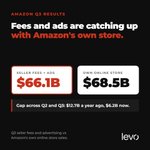
$66.1 billion.
That's what Amazon earned from seller fees and advertising in Q3.
Its own online store sales were $68.5 billion.
So what Amazon charges sellers and advertisers is now equal to 96.6% of its own online store sales, up from 89.3% a year ago.
Prime Day moving into Q2 flatters that comparison. Even so, across Q2 and Q3 together the gap halved, from $12.7B to $6.2B.
Marketplace Pulse expects the two figures to cross around spring 2028.
Amazon's retail business still competes with you for the sale.
More and more, though, you're also Amazon's customer, paying for access to its shoppers, fulfillment and ad placements.
Since 2024, revenue from fees and ads has grown about 10 points faster than Amazon's online store sales.
So the number to track is contribution margin per SKU, after referral fees, FBA, storage, promotions and ads. ACOS alone won't tell you whether that access is paying back.
Know which SKUs can carry the cost, and which can't.
