

Author of 'Mahabharata 3136 BCE: Validation of the Traditional Date' Write to [email protected] to get my books https://nitter.gq/t.co/0UEcqru0yw
India
Joined April 2011
- Tweets39.5K
- Following573
- Followers11.1K
- Likes15.6K


Pinned Tweet
Did Vālmīki ever say that the Rāma Setu ran north–south?
There are only two relevant references to the southern shore (dakṣiṇaṃ tīram / dakṣiṇaṃ pāram):
Sampāti tells the vānaras to proceed to the southern shore.
On reaching the seacoast, Rāma wonders how they can cross the ocean and reach the southern shore.
That is all.
Yet, interpreting the ancient geography through the lens of modern coastal orientations, researchers have often looked past the Rāma Setu, which runs broadly east–west, and shifted the search for Laṅkā and the Setu to locations far to the south—even towards the equatorial region or Gujarat.
But have they transported themselves to Vālmīki's geographical world? No.
Now, important scientific research is providing another perspective.
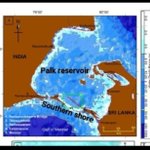
Bathymetric research of the Palk Strait by Dubey et al. indicates that the Palk region was not simply an open extension of the Bay of Bengal. It contained a vast freshwater reservoir, about 35 m deep and ~15,000 sq. km in extent, bounded by Rāmeśvaram, Pāmban, intervening shallow stretches of land and Talaimannar.
Those shallow stretches are significant. According to the research, people could have used this region as a causeway until around 7,000 years ago, before a sudden rise in sea level inundated its boundaries.
Now reconsider Vālmīki's words.
When Sampāti speaks of the southern shore, why assume he meant some distant southern coastline? The southern boundary of this Palk reservoir provides a much more immediate geographical meaning.
The vānaras, led by Aṅgada, had already traversed the coastal region. The southern shore offered the shortest practical route towards Rāvaṇa's Laṅkā in southern Sri Lanka.
When they reached Rāmeśvaram, however, the ancient pathway was no longer completely above water. Hence Rāma's question: How are we to cross the ocean and reach the southern shore?
The solution was the Setu.
And setu means a bund, embankment, causeway or structure enabling passage across water.
In this interpretation, Rāma was not constructing an imaginary bridge across the entire sea. He was strengthening or raising the shallow, partially submerged causeway across the Palk reservoir so that the vānaras could cross.
This also gives us a potential chronological marker.
If the scientific evidence indicates that the southern boundary of this ancient freshwater reservoir was inundated around 7,000 years ago, it provides an important environmental clue for dating the Rāma episode.
The point is not to force modern geography upon Vālmīki.
It is precisely the opposite:
Let Vālmīki's words lead us to the ancient geography—and then see whether geology and bathymetry support it.
More such evidence is discussed in my book Ramayana 5114 BCE: Decoding the Date and Myths.
Study the Bharateeya past through its own texts, geography and scientific evidence.
Our history deserves investigation—not dismissal.
#Ramayana_5114BCE


The four-faced Brahma is a Cosmic being. Anyone who meditates intensely upon Him can tap into cosmic or universal energies. This happens irrespective of whether the seeker is virtuous or villainous.
Ravana was not the only one blessed by Brahma; his son Indrajit and Kabandha too received His boons. Even the very birth of Tataka was the result of a boon granted by Brahma to her father.
A closer examination of the boons granted to these villainous characters reveals that they were often designed to challenge even the gods and virtuous beings. Yet, such boons invariably contained a caveat that left them vulnerable.
Ravana, for instance, sought immortality, which Brahma declined to grant. He then sought immunity from an extensive list of beings, but overlooked humans, whom he considered insignificant. This omission ultimately became the loophole through which his downfall was brought about.
In contrast, virtuous beings such as Bhagiratha and Hanuman received boons from Brahma without such caveats.
Thus, Brahma's boons essentially represent the highest fruits attainable through human endeavour. However, how far those boons protect or empower the recipient depends ultimately on the recipient's own aspirations, character and choices.
My book addresses this fascinating dimension of the Valmiki Ramayana, besides exploring several other questions and lesser-known features of the epic.
#Ramayana_5114BCE


While watching Ramayana, I genuinely don't understand one thing. Ravana is openly asking Brahma Ji for a boon that even God should be powerless before him, that nature cannot harm him, and that neither humans nor animals should be able to kill him. Basically, he's asking for a form of immortality while making his intentions pretty clear.
Didn't Brahma Ji realise that someone asking for such a boon, with the ambition of becoming more powerful than God himself, could eventually misuse that power? Wasn't that a red flag big enough to question whether he should be granted such a boon in the first place? 😭
What was Brahma Ji thinking here?
We often hear stories of daughters-in-law who grow distant from their mothers-in-law. But Lalitha Amma’s story goes far beyond that. Her own daughters stayed away for 40 years. No calls, no visits, not even a final goodbye.Yet in their silence, her cousins and neighbours became her real family. They stood by her in life and gave her dignity in death. That quiet love is what truly matters.Blood can walk away. Kindness stays.
Call your Amma while you still can. Presence is the greatest gift.
OM Shanti. 🙏

What does one even say after reading something like this?
Mrs. Lalitha Krishnamurthy passed away in Mumbai on 13th November. A newspaper announcement is now asking her children and relatives to come forward because their whereabouts are unknown.
It’s terribly sad.
I don’t know what happened in this family. Perhaps the children have their reasons. Perhaps there were years of disagreements, bitterness, hurt or circumstances we know nothing about.
And I certainly wouldn’t presume that parents are always right or children always wrong.
But surely, whatever the circumstances, one cannot be so disconnected that one doesn’t even know what’s happening in a parent’s life?
You may not want to speak to them. You may have decided never to see them again. You may even have perfectly valid reasons for keeping your distance.
But not knowing whether they are alive, ill, alone or struggling? How does one make peace with that?
A mother passes away and someone has to put an advertisement in a newspaper hoping to find her children.
That is heartbreaking.
We speak endlessly about family, relationships, values and traditions. Yet we seem to be reaching a point where even knowing whether our parents are alive has become optional.
I know there are exceptions and some family relationships are genuinely beyond repair. But surely there must be some space left for basic humanity?
I don’t know whether her children were aware of her condition or her passing. I hope they are found.
And I hope this announcement makes at least a few people pick up the phone and call a parent they haven’t spoken to in years.
Because one day, there may be nobody left to answer.
Om Shanti. 🙏

A beautiful new companion for devotees!
After the warm response to the Naalayira Divya Prabandham app, @strikersree
has created Desika Sthothram — the timeless stotras of Swami Vedanta Desikan (Kavi Tarkika Simham) right on your phone. Read in Tamil, Telugu, Kannada, Malayalam, Devanagari or English. Fully offline & free.
@dushyanthsridar

Adiyaen !! Namaskaram. Following the good response for Naalayira Divya Prabhandham App, I developed Desika Sthothram App for the ardent reciters and learners. Kindly spread the word !!
nitter.gq/strikersree/status/211…
Jayasree Saranathan retweeted

Adiyaen !! Namaskaram. Following the good response for Naalayira Divya Prabhandham App, I developed Desika Sthothram App for the ardent reciters and learners. Kindly spread the word !!
nitter.gq/strikersree/status/211…
கவிதார்க்கிக ஸிம்ஹாய கல்யாண குணஸாலிநே ।
ஸ்ரீமதே வேங்கடேசாய வேதாந்த குரவே நம: ॥
Experience the timeless stotras of Swami Vedanta Desikan on your fingertips!
Available in Tamil, Telugu, Kannada, Malayalam, Devanagari and English !
iOS: apps.apple.com/us/app/desika…
Calling Android Users:
The Android build is currently in Closed Testing! If you’d like early access to test the app and share your feedback before the public launch, join our testing group:
Join Android Closed Testing: forms.gle/VfxWse5gscNH3s4T7
#VedantaDesika #SriVaishnavism #DesikaSthothram #iOS #AndroidDev #ClosedTesting #Bhakti #Sanskrit #Tamil #Telugu #Kannada #Malayalam
A close reading of the Vālmīki Rāmāyaṇa shows that the Rāma Setu region was a natural causeway that was inundated just before Rāma was about to cross it. Modern research suggests that the Palk Strait was once a freshwater reservoir, with its southern boundary formed by Rāmeśwaram, Pamban, a series of ridges and Talaimannar.
Śūrpaṇakhā and others crossed this natural causeway on foot, while Rāvaṇa travelled along this route in his Puṣpaka Vimāna (which, on a careful reading of the Vālmīki Rāmāyaṇa, was a chariot, not an aircraft).
This was the Dakṣiṇam Tīram referred to by Sampāti and Rāma. Although sea levels were rising, the passage remained usable until Rāma reached Rāmeśwaram, by which time it had been completely submerged. Rāma's three-day wait, hoping that the sea would recede and the passage would become accessible, makes sense in this context.
Śūrpaṇakhā therefore reached Laṅkā by crossing this natural causeway.
Read my pinned tweet and my book, where I present the research and evidence supporting this reconstruction.
nitter.gq/jayasartn/status/20872…
@pvnatarajan


After Lakshman cut off Shurpanakha’s nose and ears, she went to Khar and Dushan, who were later killed by Lord Rama. But how did she then reach Lanka to meet Ravana? How did she cross the vast ocean despite her injuries? Did she fly or use supernatural powers? With no known bridge connecting the mainland to Lanka, isn't this an illogical gap in the #Ramayana worth questioning?

The last paragraph forms the very core of the Rāmāyaṇa as a work of Bhakti.
The Rāmāyaṇa is fundamentally about the relationship between Paramātma and Jīvātma, and their eventual reunion after the Jīvātma gets lost in Samsāra. Rāma represents Paramātma and Sītā represents Jīvātma, whom Paramātma loses in the forest of Samsāra. Yet, Paramātma does not abandon the Jīvātma. He pursues it, searches for it and ultimately brings it back to its rightful abode. This is precisely what Rāma does for Sītā.
The Jīvātma, too, has the power (Shakti) to liberate itself from Samsāra. Sītā demonstrated this very capacity. She could have freed herself by her own power, but she chose not to. Our ancient Āchāryas explained that relinquishing one's Swa-Shakti, surrendering the belief that one can secure one's own liberation, is an essential aspect of the Jīvātma's surrender to Paramātma.
This is beautifully brought out in Sundara Kāṇḍa, when Sītā speaks to Hanumān. She refuses his offer to carry her back to Rāma. She also refuses to exercise her own extraordinary power to escape. She wants Rāma himself to come and release her from her bondage. She sets aside her Swa-Shakti and waits, with her entire being immersed in thoughts of Rāma.
That is precisely what is expected of us, the Jīvātmas lost in Samsāra. We must remain immersed in thoughts of Him, with unwavering Bhakti. Bhakti is like an unbroken stream of oil flowing from one vessel to another. It is Paramātma's responsibility to seek out the surrendered Jīvātma and bring it back to Him.
This is the spiritual essence of the Rāmāyaṇa. It is, at its very core, a work of Bhakti.
Now, what does Namit Malhotra's Rāmāyaṇa show us?
Sītā runs ahead of Rāma to confront the 14,000 demons of Janasthāna. She rushes with a weapon to protect (!) Rāma when she hears Mārīcha's cries as the golden deer. These are not minor cinematic liberties. They turn the very philosophy of the Rāmāyaṇa upside down. The Sītā who is meant to embody the Jīvātma's surrender to Paramātma is portrayed as someone who takes matters into her own hands, even assuming the role of Rāma's protector.
Now perhaps people will understand why I am so vehemently opposed to this movie. It does not merely deviate from a few episodes of Vālmīki's Rāmāyaṇa. It undermines its very core theme.
Without Bhakti, one should not touch the Rāmāyaṇa.
There are people who question or disagree with the date I have established for the Rāmāyaṇa, accusing me of committing apachāra. But neither that date nor my book emerged in isolation from devotion. It was my devotion that led me to explore and uncover portions of the Rāmāyaṇa that had remained untouched or inadequately examined. Those who have read my book will understand what I mean.
Coming back to those verses I referred to, they are reproduced in my blog. jayasreesaranathan.blogspot.…
They are exceedingly dear to me. I recite them every day, waiting for Rāma and Lakṣmaṇa to appear before me, just as Sītā waited for Rāma.
The serious illness I have endured over the last few years has, in its own way, brought me closer to this state of surrender. Thoughts of Him, sustained by the daily recitation of those verses, have taken away my fear of death. I do not fear death. I only wait for that blessed moment when I may behold Rāma and Lakṣmaṇa.
The Rāmāyaṇa is not merely a book to be researched, dated, interpreted or debated. It is a path of surrender, a means of Bhakti, and ultimately, a lifelong wait for Him.
Jai Śrī Rām!
#Ramayana #RamayanaMovie @malhotra_namit
See next tweet below.


I have spoken about the core theme of the Ramayana - the relationship between the Paramatma and the Jivatma in my interview to a Tamil channel.
youtu.be/3EPZDLxGEos?si=5NyI…
1
183

Apparently, the Gandhi household had its own dining customs—perhaps even the furniture was different!


Jayasree Saranathan retweeted

Now Namit bots will write paragraphs on this scene
Calling it subtle acting
Creative choice to appeal Western audience
& Mock us for calling out this Ravanayana
Regarding (b), where is the evidence of Ravana's arrogance or menace in that shot? He calmly picks up Sita’s anklet, almost as though he is admiring a souvenir! Valmiki's Ravana was an abductor consumed by lust and arrogance, not a composed gentleman displaying psychological warfare. In fact such a scene comes in Lanka when Ravana shows the illusory head of Rama to Sita to convey that Rana was killed. I doubt the director has the guts to show that scene in Part - 2.

This is the only scene of direct confrontation between Ravana and Sita in Namit Malhotra’s Ramayana, and it takes place inside the Pushpaka Vimana.
Look at Ravana’s face. Is there any sign of lust or anger? He appears utterly nonchalant as he picks up Sita’s anklet from the floor and tears it apart, piece by piece, while looking at her.
The Valmiki Ramayana gives a different account. While struggling to escape Ravana, one of Sita’s anklets slipped off and fell to the ground. She tied the other anklet along with her jewels in a piece of her upper garment and dropped the bundle towards the five Vanaras—Sugreeva, Hanuman, Nila, Nala and Tara—whom she spotted on Rishyamuka Parvata.
The movie neither shows the bundle being thrown nor explains how the anklet came to be on the floor of the Pushpaka Vimana. Sita is merely shown removing some jewellery.
So what exactly is the director trying to convey by showing Ravana casually picking up and tearing Sita’s anklet while gazing at her without any apparent emotion?
What is the intended meaning of this scene? Can anyone explain?
#RamayanaMovie

Shame 😭 Ravanayan is being promoted as Ramayan.
@MIB_India @EduMinOfIndia @MinOfCultureGoI @narendramodi @AmitShah @dushyanthsridar

Yes, confirmed. Nitesh Tiwari’s Ramayana (Ranbir Kapoor as Rama, Yash as Ravana, Sai Pallavi as Sita) is scheduled to open the BRICS cinema segment at the 57th IFFI in Goa, 20-28 November 2026.
Multiple outlets including Variety, ANI and Indian media report the official announcement by Goa CM Pramod Sawant and festival director Ashutosh Gowariker. IFFI is run by the Ministry of Information & Broadcasting.
The following account of Rama and Sita’s wedding was prepared by my ten-year-old granddaughter, strictly based on the Valmiki Ramayana. What is interesting is how different the description is from the wedding scenes we are accustomed to seeing.
According to the Valmiki Ramayana, the central features of the wedding included the tying of auspicious sacred threads on the wrists of the bride and groom by their respective families, followed by Dasharatha pouring water into Rama’s hands as part of the Kanyadana ceremony.
Now, think of how Namit Malhotra’s Ramayana depicts the wedding. Rama and Sita exchange garlands, a familiar feature of Hindu weddings today. However, this exchange of garlands is not mentioned in Valmiki’s account.
Panigrahana — the taking of the bride’s hand by the groom — was a central feature of marriage in those days. It is fascinating to see how wedding customs have evolved over time and how modern cinematic depictions sometimes reflect familiar contemporary practices rather than the details recorded in the original epic.
A ten-year-old's careful reading has thus brought out an interesting distinction between the ancient text and its modern visual interpretations!
#RamayanaMovie
youtube.com/watch?v=dJsOIpPp…

Namit Malhotra's Pushpaka vimana and Valmiki Ramayana's Pushpaka vimana: a comparison.
The lotus-shaped Puṣpaka Vimāna shown in Namit Malhotra's Ramayana is an artistic interpretation. It does not correspond to the description of the vehicle used by Rāvaṇa to abduct Sītā in Vālmīki's text. The golden wheels, horses, charioteer, parasol and other chariot features are conspicuously absent from that representation. Nor does the lotus-shaped design convey the elaborate, multi-storeyed architectural structure that Hanumān inspected in Laṅkā. The film's visualisation, therefore, should not be mistaken for Vālmīki's description of Puṣpaka.
In contrast the Rāmāyaṇa describes different forms of Puṣpaka Vimāna. The word Vimāna has several Sanskrit meanings, including palace, royal seat, temple tower and celestial vehicle. King Janaka refers to Kubera’s Puṣpaka as a royal seat (VR: 1-70-3), while Hanumān discovers an elaborate, multi-storeyed structure in Laṅkā (VR: 5-8; 5-9-14). This need not be the same as the vehicle Rāvaṇa used to abduct Sītā.
That vehicle was kept in a yānaśālā (vehicle shed) and had a charioteer (VR: 3-35-4). Vālmīki calls it an uttamaṃ ratham, an excellent chariot (VR: 3-35-5), and describes it as vimānam iva tam ratham — a chariot resembling a Vimāna (VR: 3-42-9).
It had golden wheels, a parasol and animals for pulling it. Rāma found evidence of horse hooves and chariot wheels (VR: 3-65-7). Rāvaṇa is also described as hata aśvo hata sārathiḥ, deprived of horses and charioteer (VR: 3-51-19).
Though it ascended into the sky during the abduction (VR: 3-53-1), its physical features unmistakably identify it as a remarkable wheeled all- terrain chariot which ran faster, as if flying in the air.
The attached pages are from my book 'Ramayana 5114 BCE'.
#RamayanaMovie


Here is a thread of 187 tweets on 'snippets from the Ramayana' based on the Valmiki Ramayana. Unknown facts are covered in this thread, which would be useful for people seeking true info after seeing Namit Malhotra's Ramayana.
#Ramayana

Starting today, a series of lesser-known and interesting snippets from the Ramayana will be tweeted everyday.
#Snippets from the Ramayana (1)
Rama's mother, Kausalya, kept a pet myna. On the night of exile, Rama lamented that the myna brought more joy to his mother than he, as her son, did.

Starting today, a series of lesser-known and interesting snippets from the Ramayana will be tweeted everyday.
#Snippets from the Ramayana (1)
Rama's mother, Kausalya, kept a pet myna. On the night of exile, Rama lamented that the myna brought more joy to his mother than he, as her son, did.
#Snippets from the Ramayana (181)
Vibhishana wasn't alone when he sought refuge in Rama's camp. He was accompanied by four loyal rakshasas, leaving behind his wife Sarama and daughters Anala and Trijata in Lanka. Vibhishana had taken a risk leaving his family behind, but his righteousness saved them from Ravana's wrath.

1
1
159
Jayasree Saranathan retweeted

Banning may not be possible.
BTW, they have nominated themselves for OSCAR
Least we can all do is to email the OSCAR team & let them know how we feel: that this is an aberration of our Sacred History.
Save image. Use QR scanner. Locate Image. Send. Simple!
#RamayanaMovie

#BanNamitMalhotraRamayana must be the slogan. Can't we move the court to ban the movie of Namit Malhotra's Ramayana, @jsaideepak ji?

Cinematic liberty is a farce, majority of the people involved with this trade are puppets of an ecosystem driven by an anti-national propoganda mechanism. They're worse than barbarics. They're a blot to humanity. #BoycottRamayana Distorting historical facts is just one aspect.
